

A vented skylight does something a fixed pane never can: it opens to release the hot, stale air that collects near your ceiling and pulls fresh daylight and cool breezes into the rooms below. For Toronto homeowners dealing with warm, humid summer afternoons, a vented skylight turns a stuffy upper floor, a steamy bathroom, or a windowless kitchen into a comfortable, naturally lit space. This guide walks through the vented skylight options available for GTA homes, what they cost, how they are installed, and the benefits that make them one of the most practical daylighting upgrades you can make. Whether you are replacing a tired old unit or planning a brand-new opening, understanding how a vented skylight works will help you invest wisely.
At Toronto Skylight Installers, we have fitted fresh-air skylights into century homes in the Annex, mid-century bungalows in Scarborough, and new builds across Vaughan and Markham. The right model depends on your roof pitch, the room below, and how you want to control it. Below we break down every choice so you can plan your project with confidence.
What Is a Vented Skylight and How Does It Work?
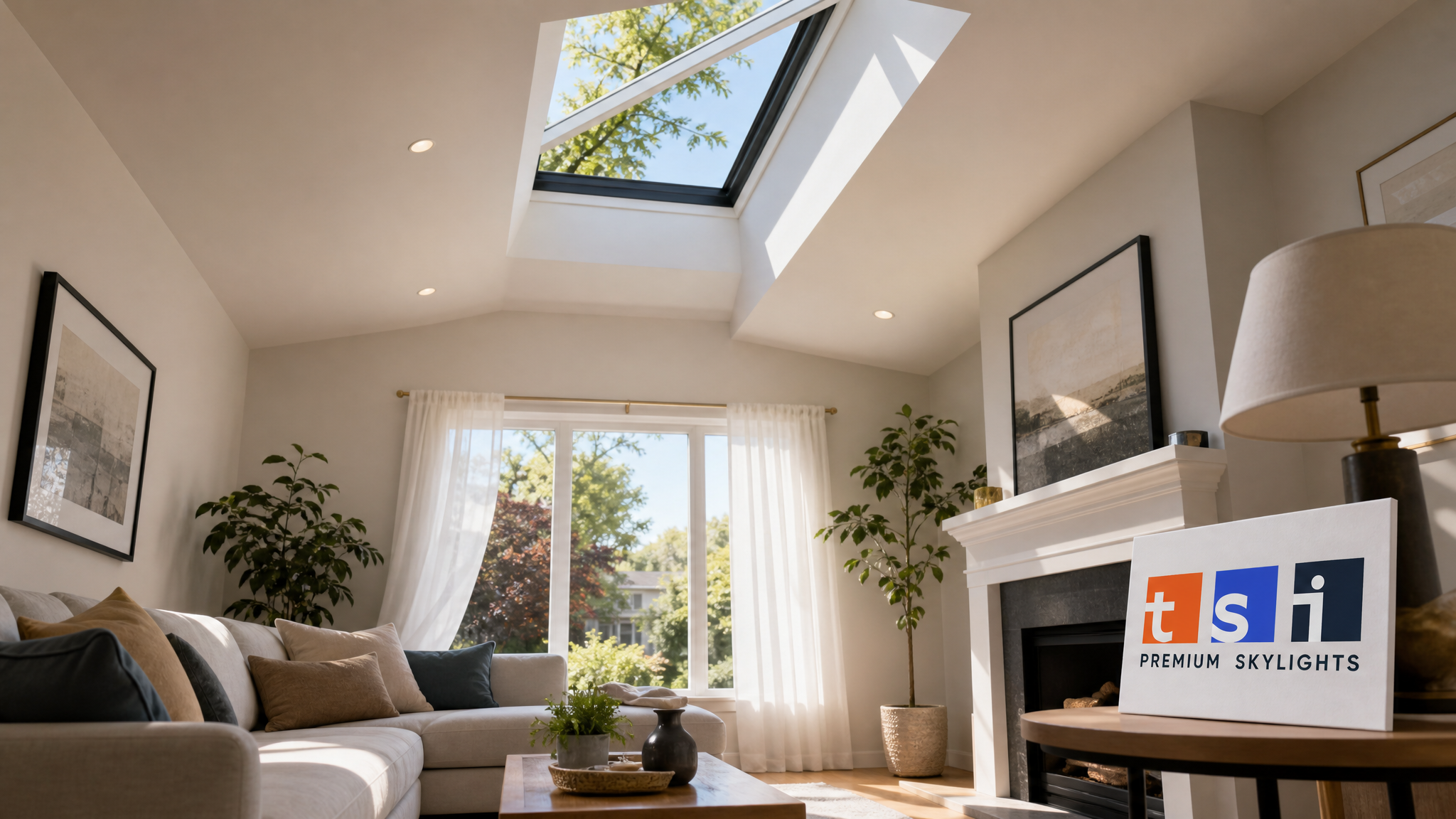
A vented skylight, sometimes called a venting or fresh-air skylight, is a roof window designed to open rather than remain sealed. Unlike a fixed unit that only admits light, a vented skylight has an operable sash on a hinge, usually mounted along the top edge, that tilts outward to create an air gap between the glass and the curb. That gap lets rising warm air escape while cooler, fresher air is drawn in from lower windows and doors, creating a natural convection loop often called the stack effect.
The physics are simple and work in your favour. Hot air rises and collects at the highest point in a room, which is exactly where a skylight sits. When you open a vented skylight, that trapped heat exits through the roof instead of lingering at head height. On a still July day this passive airflow can noticeably lower the temperature on an upper floor without touching the thermostat. Because the opening is at the peak of the room, a vented skylight ventilates more efficiently than a wall window of the same size.
Vented skylights come in three main control types: solar-powered, electric, and manual. Each opens the same way but differs in how the sash is driven and how you operate it. Modern units also include rain sensors that close the skylight automatically at the first drop, so a sudden GTA thunderstorm will not catch you off guard. If you are weighing a vented model against a sealed one, our team can help you compare during a skylight installation consultation.
Types of Vented Skylights for Toronto Homes
Choosing the right operating mechanism is the biggest decision you will make. All three types deliver fresh air and daylight, but they suit different rooms, budgets, and roof access situations. Here is how the main vented skylight options compare.
Solar-powered fresh-air skylights use a small roof-mounted solar panel to charge an internal battery that drives the opening motor. They require no wiring, which keeps installation simple and clean, and they qualify in many cases for energy-efficiency incentives because the operating power is entirely renewable. A solar powered skylight is ideal for rooms where running electrical cable through a finished ceiling would be disruptive.
Electric fresh-air skylights connect to your home’s electrical system and open with a wall switch or remote. They are a strong choice when a skylight sits directly above a shower or over a two-storey great room where reaching a manual crank is impossible. Because they draw household power, they open and close quickly and reliably regardless of cloud cover.
Manual fresh-air skylights open with a hand crank, a twist handle, or a telescoping control rod. They are the most affordable vented skylight and work well in rooms where the unit is within comfortable reach, such as a single-storey addition, a home office, or a walk-in closet. With no motor or wiring, there is less to maintain over the life of the unit.
| Vented Skylight Type | How It Opens | Best For | Wiring Needed |
|---|---|---|---|
| Solar-powered fresh-air | Solar battery motor, remote | Finished ceilings, hard-to-wire spaces | None |
| Electric fresh-air | Household power, wall switch or remote | High ceilings, bathrooms, great rooms | Yes |
| Manual fresh-air | Hand crank or control rod | Reachable, single-storey rooms | None |
| Flat-roof vented | Electric or solar, curb-mounted | Modern flat and low-slope roofs | Depends on model |
Homes with a flat or low-slope roof are not left out. A flat roof skylight can be ordered in a vented configuration with a curb-mounted frame that keeps the glass raised above pooling water. If your priority is daylight in a hallway or closet rather than airflow, a sun tunnel skylight is a compact alternative, though it does not vent.
Benefits of Installing a Vented Skylight
The appeal of a vented skylight goes well beyond a nicer view of the sky. The combination of daylight and airflow addresses real comfort and health issues that Toronto homeowners face, especially in older houses with poor cross-ventilation.
Natural cooling and lower energy use. By venting trapped heat out through the roof, a vented skylight reduces the load on your air conditioner. On mild summer evenings you may be able to skip the AC entirely, letting the stack effect flush warm air out overnight. Over a season, that reduced runtime shows up on your hydro bill.
Moisture and humidity control. Bathrooms and kitchens generate steam and cooking humidity that a fan alone struggles to clear. An operable vented skylight vents that moisture straight up and out, protecting paint, grout, and drywall from mould and helping the room dry faster.
Better air quality. Opening a vented skylight for even a short period exchanges stale indoor air for fresh outdoor air, diluting cooking odours, off-gassing from furnishings, and everyday indoor pollutants. This passive ventilation is particularly valuable in tightly sealed modern homes.
Abundant daylight. Like any skylight, a vented unit floods a room with natural light, reducing the need for daytime electric lighting and making small or interior rooms feel larger and more welcoming. The difference in a windowless bathroom or a dim stair landing can be dramatic.
Vented Skylight Costs in the Greater Toronto Area
Budget is understandably one of the first questions homeowners ask. The total cost of a vented skylight project in the GTA depends on the operating type, the glazing package, the roof material, and whether you are creating a new opening or replacing an existing one. The figures below are typical installed ranges to help you plan; a firm quote always follows an on-site assessment.
A manual vented skylight is the most economical because there is no motor or wiring. Solar and electric models cost more up front but add convenience and, in the solar case, may offset part of the price through energy incentives. New openings cost more than replacements because they involve cutting the roof deck, framing the opening, and finishing an interior light shaft.
| Project Type | Typical Installed Range | Key Cost Drivers |
|---|---|---|
| Manual vented skylight (replacement) | $1,500 – $2,800 | Unit size, glazing, roof access |
| Solar vented skylight (replacement) | $2,400 – $4,200 | Motor, blinds, sensor package |
| Electric vented skylight (replacement) | $2,600 – $4,500 | Electrical run, controls |
| New vented skylight opening | $3,500 – $6,500+ | Framing, light shaft, drywall, paint |
Several factors can move a project within these ranges. A steeply pitched or slate roof is harder to work on safely and adds labour. Upgraded glazing such as laminated glass with a low-emissivity coating raises the unit price but improves comfort and UV protection. Optional accessories like remote-controlled blackout blinds, rain sensors, and insect screens add cost but boost everyday usability. When you request a new skylight installation, we itemise each of these so there are no surprises. If your existing skylight is fogged, leaking, or simply dated, a straightforward skylight replacement is often the most cost-effective way to gain venting.
The Vented Skylight Installation Process
A professional vented skylight installation is a careful, sequenced job, and doing it right is what separates a decades-long leak-free skylight from a callback waiting to happen. Here is what to expect when our crew arrives at your Toronto home.
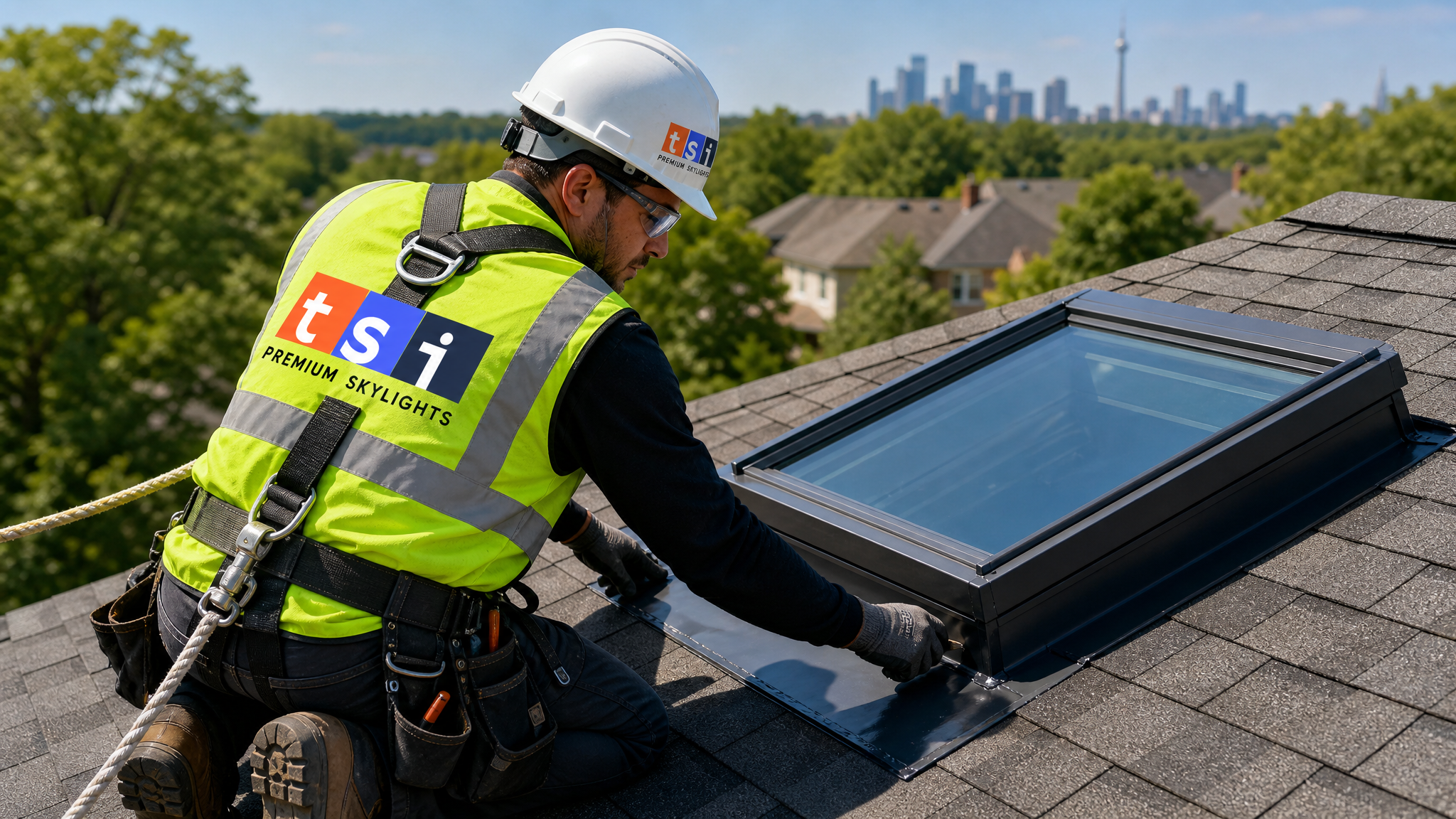
First, we confirm the exact placement from inside and out, checking rafter locations so the opening lands cleanly between structural members wherever possible. We then set up fall protection and prepare the work area. The roof covering is carefully removed around the marked opening, the deck is cut, and the opening is framed with headers to carry the load.
Next comes the critical waterproofing stage. The vented skylight is set onto its curb or deck-mounted frame, and a manufacturer-matched flashing kit is layered with the underlayment and shingles so water is always directed over the top of the flashing, never behind it. This step-by-step flashing sequence is the single most important defence against leaks. For solar and electric units, the sensor and motor connections are tested before the roof is closed up.
Inside, we build or refinish the light shaft, insulate around the frame, and finish the drywall and paint so the skylight looks like it was always part of the room. Finally, we test the opening mechanism, the rain sensor, and any blinds, and we walk you through operating and maintaining your new vented skylight. Should a unit ever need attention down the road, our skylight repairs team handles seals, flashing, and motor service.

Choosing the Right Vented Skylight for Each Room
Not every room calls for the same vented skylight. Matching the unit to the space ensures you get the ventilation and light you actually need without overspending. Below is a room-by-room guide based on projects we complete across the GTA.
In a bathroom, moisture control is the priority, so an electric or solar vented skylight with a rain sensor and a laminated, coated glass unit works best; it clears steam quickly and closes itself if a shower turns into an afternoon storm. In a kitchen, a vented skylight over the range area helps exhaust cooking heat and humidity, complementing your hood fan. For a bedroom, a solar vented skylight with a remote blackout blind gives you cool night air plus full darkness for sleep. In a two-storey great room or stairwell, an electric or solar model is essential because the unit is far out of reach.
| Room | Recommended Vented Skylight | Key Accessory | Main Benefit |
|---|---|---|---|
| Bathroom | Electric or solar fresh-air | Rain sensor, coated glass | Fast steam and humidity clearing |
| Kitchen | Solar or electric fresh-air | Insect screen | Exhausts cooking heat and odours |
| Bedroom | Solar fresh-air | Blackout blind | Cool night air with full darkness |
| Great room / stairwell | Electric or solar fresh-air | Remote control | Ventilation in unreachable spaces |
| Home office / closet | Manual fresh-air | Control rod | Affordable daylight and airflow |
Commercial spaces have their own requirements around size, glazing safety, and code, which is why we offer dedicated commercial skylights for retail, office, and institutional buildings. Whatever the room, our advice is always to size the vented skylight to the space and pick a control type that you will comfortably use, because the best skylight is the one you actually open.
Maintaining Your Vented Skylight
A quality vented skylight is a long-term investment that rewards a little routine care. Because it has moving parts and seals, a few simple habits keep it operating smoothly and leak-free for its full lifespan, which for a modern unit is commonly twenty years or more.
Twice a year, wipe the glass and the gasket where the sash meets the frame, clearing away dust, pollen, and any leaf debris that could interfere with a tight seal. Test the opening and closing through its full range so the motor or crank stays free-moving, and confirm the rain sensor still triggers. Keep the exterior flashing clear of debris so water always has a clean path to run off. For solar models, an occasional wipe of the small solar panel keeps the battery charging efficiently.
If you notice condensation between the panes, a stiff or noisy mechanism, or any sign of moisture on the interior frame, call for service rather than waiting. Catching a failing seal or worn flashing early is far cheaper than repairing water damage later. Our team is available for both scheduled maintenance and prompt repairs across Toronto and the surrounding region.
What is the difference between a vented skylight and a fixed skylight?
How much does a vented skylight cost in Toronto?
Do vented skylights leak when it rains?
Which vented skylight is best for a bathroom?
Can a vented skylight be installed on a flat roof?
Does a solar vented skylight qualify for any incentives?
Ready to Add a Vented Skylight to Your Home?
A vented skylight is one of the smartest daylighting and comfort upgrades a Toronto homeowner can make, delivering cool fresh air, brighter rooms, and better moisture control all at once. Whether you want a solar model for a hard-to-reach great room, an electric unit over a steamy bathroom, or a simple manual crank for a home office, the team at Toronto Skylight Installers will help you choose, size, and install the right vented skylight for every space.
Call us today at (416) 365-7557 or request a free inspection to get started.
Toronto Skylight Installers proudly serves Toronto, Mississauga, Markham, Vaughan, Brampton and Oakville.