

A cracked or fogged skylight pane raises one question before anything else: can the glass be swapped on its own, or does the whole unit need to come out? Skylight glass replacement is sometimes the sensible, economical fix, and sometimes it is money spent on a frame and flashing that will fail in a few years anyway. The difference comes down to what broke, how old the unit is and what condition everything around the glass is in.
This guide walks through how we assess damaged skylight glass on a service call: reading the crack or the fog, judging whether the frame is worth keeping, and explaining what a glass-only job involves compared with a complete replacement.
When Skylight Glass Replacement Makes Sense
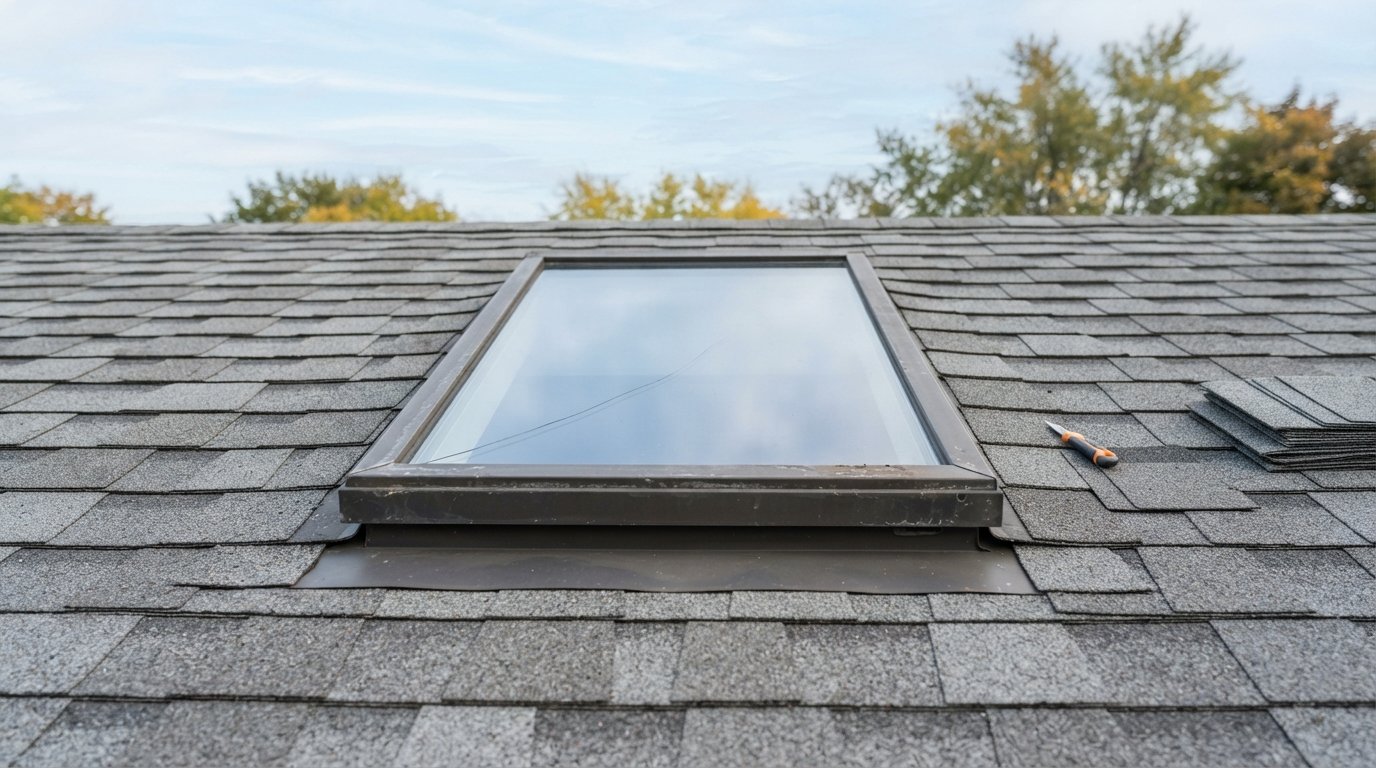
Skylight glass replacement makes sense when the damage is limited to the glass itself and everything that holds it is sound. In practice that means the frame is solid, the flashing is watertight, the unit is not near the end of its service life and replacement glass can actually be sourced for that model. When all four are true, a glass-only repair can restore the unit for considerably less than a full tear-out.
It makes much less sense when the glass failure is just the most visible symptom of an ageing unit. A skylight that has fogged after twenty-plus years on the roof is usually telling you the seals, gaskets and flashing are the same age. Replacing only the glass leaves every other ageing component in place, and the next failure often arrives within a few seasons.
Our skylight repairs service covers both outcomes: we assess the glass and the surrounding unit on the same visit and give you both options where both are realistic.
Reading The Damage: Cracks, Fog And Film
Different kinds of glass failure have different causes, and the cause affects whether a glass swap will last. Before anyone orders glass, it is worth identifying exactly what you are looking at.
Stress cracks
A thermal stress crack usually starts at the edge of a pane and runs inward, often at roughly a right angle to the edge before wandering. It happens when one part of the glass is much hotter or colder than another, for example when the centre is in strong sun while the edge is shaded and cold inside the frame. Tight glazing, a chipped edge from manufacturing or handling, or a frame that has shifted can make a pane more vulnerable. A single stress crack in an otherwise sound unit is a classic candidate for skylight glass replacement, though it is worth asking why the pane was stressed so the new one does not follow.
Impact cracks
An impact crack has a point of origin, often a small crater, with lines radiating outward like a star or web. Hail, falling branches, dropped tools during roof work and thrown objects are the usual causes. Tempered outer glass behaves differently: when it breaks it tends to shatter completely into small granular pieces rather than cracking in a line. If your outer pane has crumbled, it was almost certainly tempered, and the sealed unit behind it is now exposed.
Fogging between panes
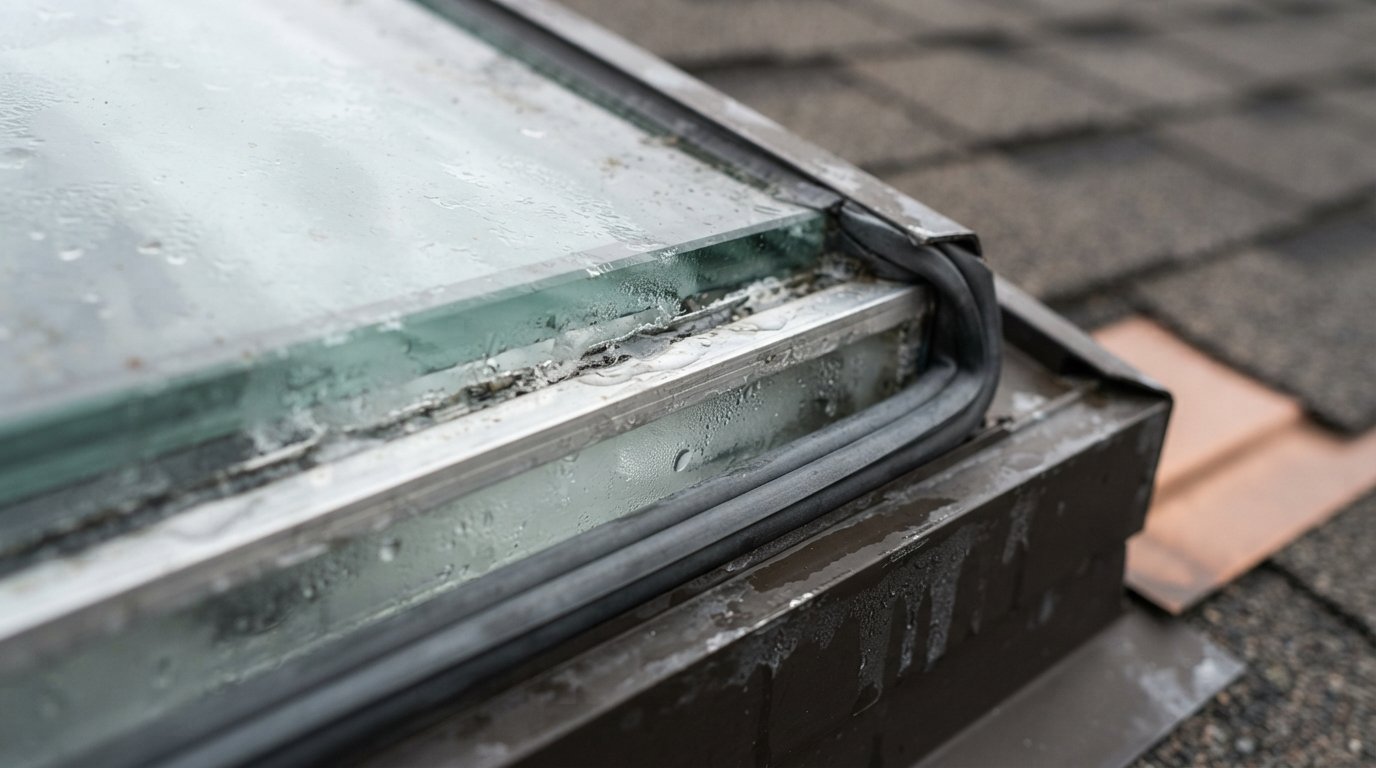
Fog, haze or water droplets trapped between two panes mean the edge seal of the insulating glass unit has failed. Moist air has entered the gap, and any insulating gas has escaped. You cannot clean it because it is inside the sealed unit. Fogging does not usually cause a leak on its own, but it reduces light, looks poor and signals that the unit has lost much of its insulating value.
Condensation that is not a failed seal
Before assuming a seal has failed, check which surface the moisture is on. Droplets on the room side of the glass are condensation from indoor humidity, which is a ventilation and shaft insulation issue. Dew on the outside surface on a cool, clear autumn morning is normal and burns off. Only moisture trapped between the panes points to skylight glass replacement.
| What you see | Likely cause | Usual first step |
|---|---|---|
| One crack running in from an edge | Thermal stress, edge damage, frame movement | Check frame and glazing, then consider a glass swap |
| Star or web pattern from a single point | Impact from hail, branches or tools | Temporary protection, then glass or unit assessment |
| Outer pane crumbled into small pieces | Tempered glass broken by impact or edge damage | Cover the opening promptly; assess inner pane and seals |
| Haze or droplets between panes | Failed insulating glass edge seal | Compare glass cost with replacement given unit age |
| Droplets on the room-side glass | Indoor humidity and cold surfaces | Improve ventilation and shaft insulation, not glass |
| Water dripping around the frame | Flashing, gasket or frame failure | Leak investigation before any glass decision |
Laminated Inner Panes And Why They Matter
Overhead glass is a safety issue in a way that wall glass is not. If a skylight pane breaks, it falls toward the people below. That is why most current residential skylights use a laminated inner pane: two layers of glass bonded to a plastic interlayer that holds fragments in place if the glass cracks. A cracked laminated pane typically shows a spider-web pattern but stays in the frame.
This matters for skylight glass replacement in two ways. First, any replacement glass should match or improve on the original safety specification, not downgrade it to save money. A reputable glass supplier or manufacturer will build the sealed unit with the correct laminated and tempered layers when given the specification. Second, older skylights sometimes have plain annealed inner glass or no inner safety layer at all. If your existing unit falls into that category, a full replacement may be the only way to get laminated protection over a hallway, kitchen or bed.
Building codes and manufacturers both treat skylight glazing as a safety concern. Requirements change over time, so confirm current rules with your municipality and follow the manufacturer’s specification for any glass that goes over living space.
Frame, Flashing And Age: The Real Decision
The glass is rarely the deciding factor. What decides between skylight glass replacement and a full new unit is everything the glass sits in. On a site visit we look at the following, usually from both the roof and the room below.
- Unit age. Many skylights are designed for a long service life, but seals, gaskets and flashing all age. Once a unit is roughly twenty years old or more, the value of investing in new glass drops quickly.
- Frame condition. Soft wood, swollen joints, rusted fasteners or a warped sash mean the new glass will sit in a failing frame.
- Flashing condition. Lifted step flashing, heavy sealant patches or rust suggest the flashing is due, and flashing work usually means removing the unit anyway.
- Parts availability. Some manufacturers supply replacement glass or complete sashes for current and recent models. Older or discontinued units, and some site-built skylights, need a custom sealed unit made to measure.
- Roof timing. If the roof is due for replacement within a few years, that is usually the time to replace the whole skylight with a new flashing kit.
- Energy performance. Older double glazing without low-emissivity coatings loses much more heat than current units. Replacing the entire unit upgrades the glass package, the frame and the flashing at once.
| Check | Points toward a glass swap | Points toward a new unit |
|---|---|---|
| Age of skylight | Well within its expected service life | Roughly twenty years or older |
| Frame and sash | Solid, square, no soft spots | Rot, swelling, rusted fasteners or warping |
| Flashing | Tight, no heavy sealant patches, no past leaks | Lifted, rusted or repeatedly patched |
| Glass availability | Manufacturer glass or sash still offered | Discontinued model with no clear glazing detail |
| Roof condition | Roofing has many years left | Roof replacement planned within a few years |
| Inner pane safety | Laminated inner pane can be matched | Original lacks laminated protection |
The honest summary: a young unit with a single broken pane is a glass job. An old unit with fogged glass, tired flashing and a roof nearing its end is a replacement job, even if the fog is the only thing bothering you today.
How A Glass-Only Swap Is Done
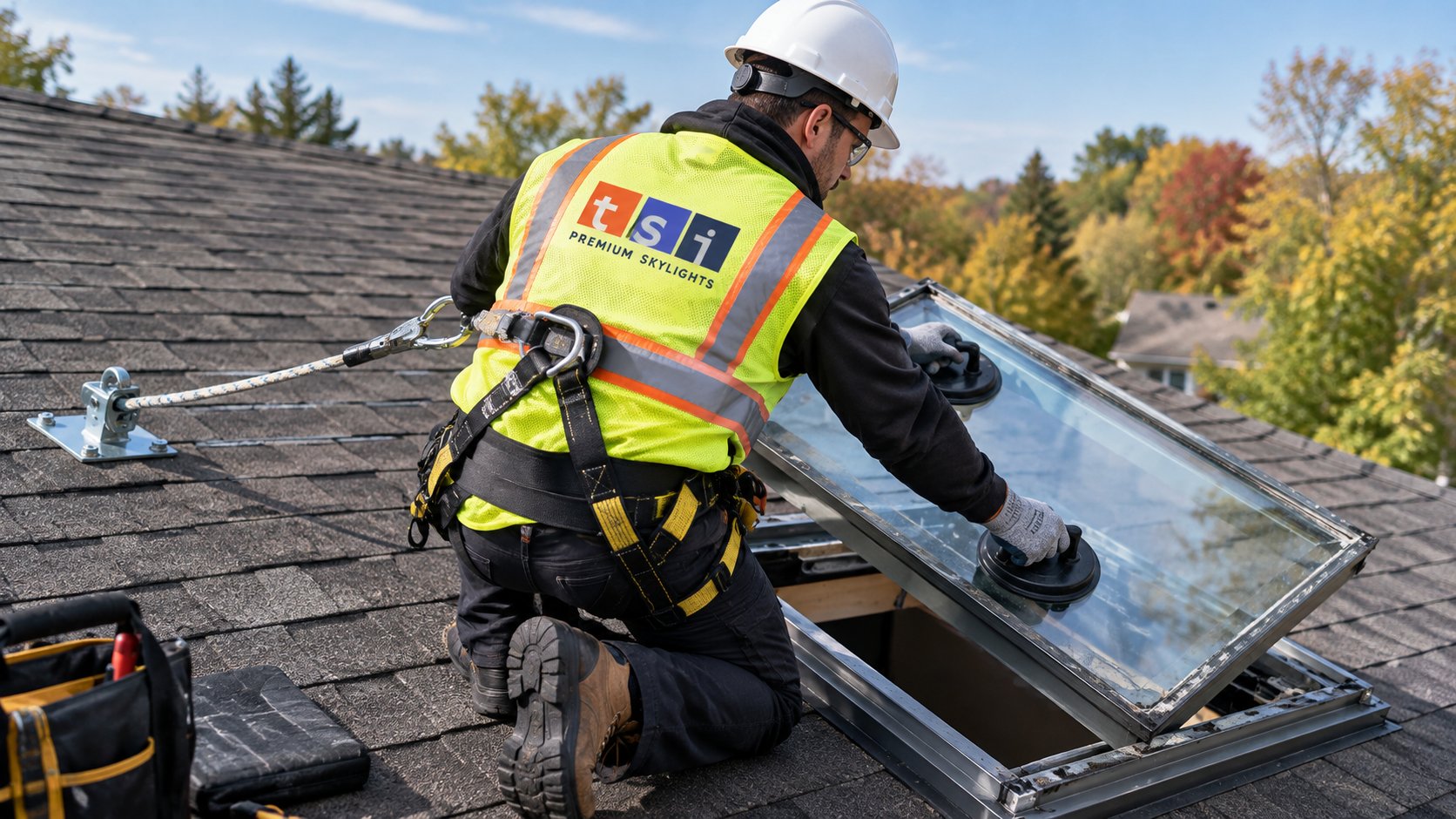
When the assessment points to skylight glass replacement, the work follows a fairly consistent sequence. The details vary between manufacturers, and some units have glass that is replaced by swapping the entire sash, but the overall approach looks like this:
- Measure and identify. The technician records the model and serial information if a label survives, or measures the glass, the frame opening and the glazing depth for a custom unit. Glass thickness and the laminated and tempered layers are noted.
- Order the glass. Manufacturer glass or a custom sealed unit is ordered. Custom units usually take some time to fabricate, so a temporary cover may be needed in the meantime if the outer pane is broken.
- Protect the room. Drop sheets go down inside, and the work area under the skylight is cleared because glass fragments can fall during removal.
- Remove the old glass. Exterior cladding, glazing stops or clips are removed, the old glazing tape or sealant is cut, and the pane is lifted out, usually with suction cups.
- Prepare the frame. Old tape and sealant are cleaned off, setting blocks are checked or replaced, and the frame is inspected for hidden rot now that it is exposed.
- Set the new unit. New glazing tape or gaskets go in, the glass is set on its blocks so its edges never touch the frame directly, and stops and cladding are reinstalled.
- Seal and test. Joints are sealed as the manufacturer specifies and the unit is checked for gaps. A water test is often done where access allows.
A key point: the flashing stays untouched in a glass-only swap. That is exactly why the flashing must be in good condition before this route is chosen. If step 5 reveals soft wood, the plan usually changes to a full replacement.
When To Replace The Whole Unit Instead
Full replacement is the better value when the glass problem is one of several ageing issues. A new unit comes with a new frame, current glazing and, most importantly, a new flashing kit and underlayment collar that ties properly into the roof. Our skylight replacement service covers that process from removal to finishing.
There is also a practical reason. Removing old glass from an aged frame can loosen brittle cladding, crack weathered gaskets or reveal rot that was hidden behind the stops. Once that happens, you are paying for a glass swap plus unexpected frame repairs, which can approach the cost of a new unit without delivering the same result.
If the roof opening is a standard size, a modern replacement often fits the existing opening with little or no reframing. If you want a different size or a venting model instead of a fixed one, the whole-unit route is the time to do it. We handle these decisions for homeowners across the GTA, including our Peel Region skylight installation, replacement and repair team, and the same checklist applies wherever the house is.
| Factor | Glass-only swap | Full unit replacement |
|---|---|---|
| What is replaced | Sealed glass unit or sash only | Frame, glass, flashing kit and underlayment collar |
| Flashing | Existing flashing reused | New flashing integrated with roofing |
| Best suited to | Younger units with sound frame and flashing | Older units, fogged glass plus other wear |
| Interior disruption | Usually minimal | Some drywall touch-up at the shaft is common |
| Typical cost range (estimate) | Often around $500 to $1,800, varies with glass size and access | Often around $1,800 to $4,500 or more, varies with unit, roof and finishing |
These figures are broad estimates only. Unit size, glass specification, roof pitch, height, access and interior work all move the number, so treat a site visit as the only reliable way to price a specific skylight.
Temporary Protection After Breakage
If the outer pane has shattered or an impact has cracked both layers, the priority is keeping water out until the repair. A laminated inner pane usually holds together, but it is not designed to be the only barrier against rain. A professional can secure a temporary cover over the unit so that water sheds over it rather than pooling. For urgent situations our emergency skylight repairs team can make the opening safe.
We advise homeowners not to climb onto the roof to tape plastic over a broken skylight. Broken glass edges, a slippery surface and the open hole itself make it one of the more dangerous small jobs on a house. From inside, clear the floor below, keep people out of the area and put a bucket or towels down if water is getting through.
Autumn is a good time to deal with a cracked or fogged unit. Leaving damaged glass through the freeze-thaw months invites water into the glazing channel, where it can freeze, expand and widen cracks or push on seals.
Questions To Ask Your Contractor
Whether you end up with skylight glass replacement or a new unit, a few questions help you judge the proposal:
- Did you inspect the flashing and frame from the roof, or only the glass from inside?
- Is replacement glass available from the manufacturer, or will a custom sealed unit be made?
- Will the new inner pane be laminated, and what is the outer pane?
- Does the new glass include a low-emissivity coating and insulating gas fill?
- What happens if hidden rot is found when the old glass comes out?
- If you recommend full replacement, what makes the glass-only option poor value here?
- How long is the lead time, and what protects the opening in the meantime?
A contractor who can answer these clearly has looked at the whole skylight, not just the pane that caught your eye.
Skylight Glass Questions We Hear Often
Can I replace just the glass in my skylight?
Why is there fog between my skylight panes?
Is a cracked skylight dangerous?
How long does skylight glass replacement take?
What causes a skylight pane to crack with no impact?
Is a new skylight more energy efficient than new glass?
Book A Skylight Glass Replacement Assessment
If your skylight has a cracked or fogged pane, an assessment of the glass, frame and flashing together will tell you whether a glass swap or a new unit is the better investment. Toronto Skylight Installers will inspect from the roof and the room below and explain both options where both are realistic.
Call us today at (416) 365-7557 or request a free estimate.
Serving homeowners in Peel Region and across the wider GTA with skylight installation, replacement and repair.