

Every October, porches and patios across Ontario empty out as tender plants come inside for the winter. Then the same problem appears in many homes: there is not enough good light to go around. Windowsills fill up, leaves start to yellow, and stems stretch toward the glass. Skylights for indoor plants can change that picture, because light from overhead behaves differently from light through a wall window. They can also scorch leaves, drip condensation or chill tropical plants if they are not planned with plants in mind.
We look at how skylight light compares with window light, what glass coatings do in general terms, where to put plants relative to a skylight, and how to handle heat, shading, humidity and condensation through the year.
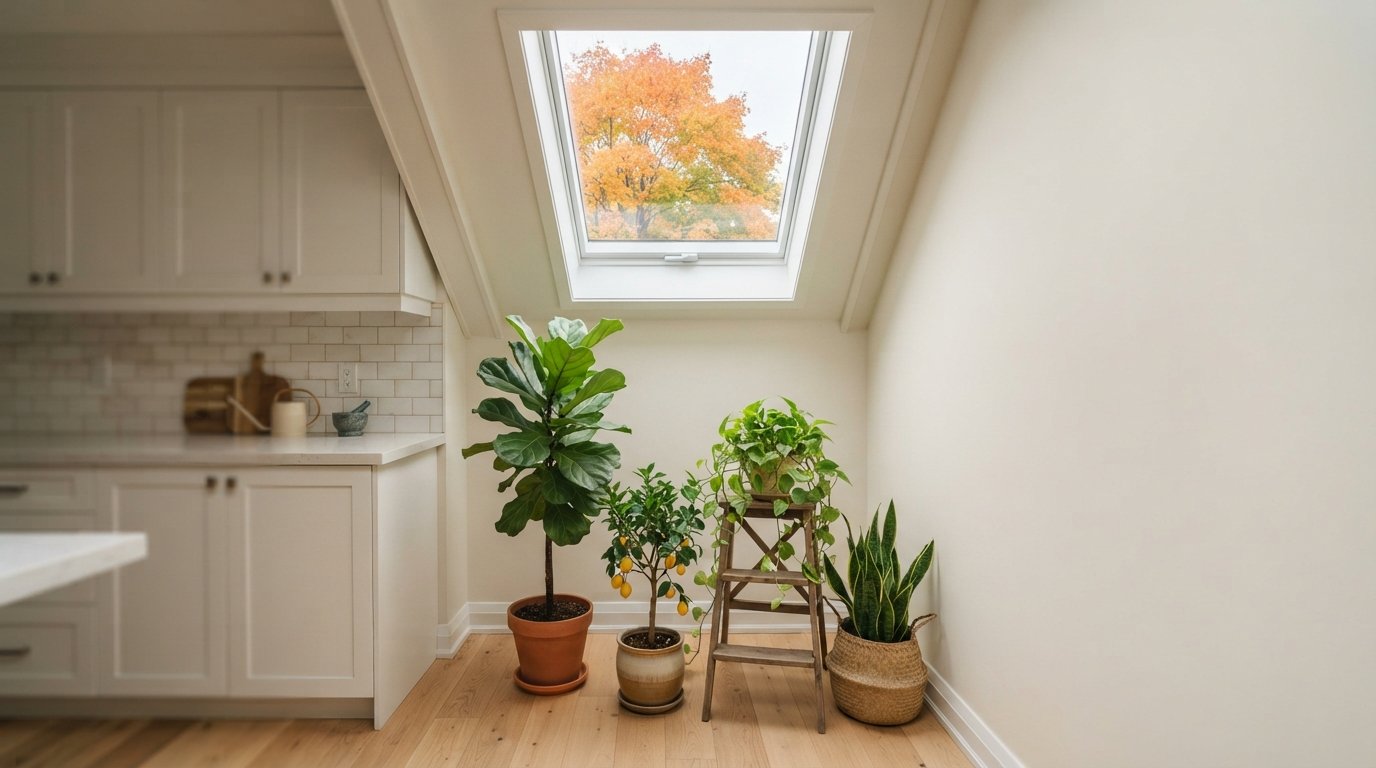
How skylights for indoor plants compare with windows
A vertical window sees only part of the sky, roughly the half in front of it, and much of that view may be blocked by neighbouring houses, fences and trees. A skylight looks up at the open sky, so it collects light from a much larger portion of the sky dome, including the brightest part overhead. On overcast autumn days, when most light is diffuse, that difference is often especially noticeable.
The direction of light matters for plants as well:
- Window light comes from the side. Plants lean toward it, and the back of the plant gets little light unless you rotate the pot regularly.
- Skylight light comes from above. It falls on the top of the canopy, which encourages more upright, even growth.
- Light falls off with distance. With either source, light drops quickly as you move away. A plant a couple of metres back from a window may get only a fraction of what the sill gets. Under a skylight, the brightest zone is directly below and slightly to one side, depending on the sun’s angle.
How much light a skylight adds depends on its size, the roof direction, the glass, and especially the shaft. A skylight in a vaulted ceiling delivers its light straight into the room. A skylight at the top of a long, narrow shaft delivers far less, because each bounce off the shaft walls absorbs some of the light. If you are planning a new opening, our skylight installation page explains the options for shafts and ceilings.
| Feature | Wall window | Skylight |
|---|---|---|
| Part of the sky it sees | Roughly the half in front of it, often partly blocked | A large portion of the open sky above |
| Direction of light on plants | From the side, plants lean | From above, more even growth |
| Overcast days | Light drops sharply away from the glass | Diffuse overhead light reaches further into the room |
| Summer heat | Depends on orientation and shading | Can be intense directly below; shades often needed |
| Winter cold surface | Cold glass near the pot | Cold glass above, usually further from leaves |
What glass coatings mean for plants
Most modern skylights use insulated glass with a low-e coating, and many have a laminated inner pane. Homeowners who grow plants often ask whether those features block the light plants need. In general terms:
- Plants use mainly visible light for photosynthesis, the same broad range of light we see. Most of the heat in sunlight comes from infrared, which plants do not need for growth.
- Low-e coatings are designed to reduce heat transfer, and many also reduce the amount of solar heat coming through, while still transmitting much of the visible light. The balance varies by product: some coatings let through more visible light than others.
- Laminated glass and many coatings block most ultraviolet light. That protects floors and fabrics from fading. Most common houseplants grow well without UV, so this is rarely a concern for typical indoor plants.
- Tinted or heavily reflective glass reduces visible light more noticeably, which is good for heat control but less ideal over a plant collection.
If plants are a priority, ask for the glass’s visible transmittance and solar heat gain values from the manufacturer’s current product documents, and compare options. A glass with relatively high visible transmittance and moderate solar heat gain is often a good balance for a plant room, but the right choice depends on the roof direction and how much summer heat the room already gets.
Placement: which plants go where
Getting the most from skylights for indoor plants is about matching each plant to the light it needs. The patch of direct sun travels across the room as the day goes on, and its path shifts with the seasons. In autumn and winter, the low sun throws the bright patch further from the opening; in summer it falls closer to straight below.
| Plant light needs | Typical examples | Placement under or near a skylight |
|---|---|---|
| High light | Cacti, many succulents, citrus, rosemary, bay | Directly under or in the path of the sun patch, watch for summer scorch |
| Bright, filtered light | Fiddle-leaf fig, rubber plant, many palms, hibiscus | Slightly to the side of the brightest area, or under a light-filtering shade |
| Medium light | Pothos, philodendron, dracaena, peace lily | Further from the opening, in bright indirect light |
| Low light tolerant | Snake plant, ZZ plant, cast iron plant | Edges of the room, away from direct sun |
| Sensitive to cold surfaces | Many tropical foliage plants | Away from drips and cold downdrafts below the glass in winter |
Some practical tips:
- Watch the sun patch. Over a few days, note where direct sun falls in the morning, at midday and in the afternoon. Put the highest-light plants in that path.
- Use height. Plant stands bring smaller plants closer to the light. Taller plants can sit on the floor.
- Rotate occasionally. Even under a skylight, the sun’s angle gives one side more light. A quarter turn every week or two keeps growth even.
- Measure if you want precision. An inexpensive handheld lux reader shows how light levels change across the room and through the seasons.
Winter light: what a skylight can and cannot do
In the GTA, winter days are short and often grey. Skylights for indoor plants help a great deal, but they cannot create more daylight hours. Plants that need very high light, such as citrus or some succulents, may still struggle in midwinter without help.
Many plant owners combine a skylight with a modest grow light for the darkest weeks. The skylight provides the bulk of the light on bright days, and the grow light fills in on dark afternoons. A skylight on a south or west-facing roof plane gives the most winter light; north-facing units give gentler, more even light that suits foliage plants better than sun-lovers.

Heat and shading through the seasons
The same overhead sun that makes skylights for indoor plants so useful in winter can be too strong in summer. Leaves directly under an unshaded skylight on a south or west roof can scorch, especially plants that spent the winter in lower light and are suddenly exposed.
- Light-filtering shades soften and diffuse the sun, which suits most foliage plants in summer. See our light-filtering skylight shades for options.
- Moving plants seasonally is often the simplest approach: high-light plants under the skylight in winter, sensitive foliage plants pulled back in summer.
- Venting skylights release heat that builds up at the ceiling. In a sunroom or kitchen full of plants, an opening unit near the high point helps keep summer temperatures in check. Electric fresh-air skylights with rain sensors can be opened on a schedule or by remote.
- Glass choice matters most on south and west roofs, where a coating that reduces solar heat gain can keep the room more comfortable for both people and plants.
For rooms where light is the only goal and heat is manageable, a fixed skylight is the simplest choice and seals tightly through the winter.
Humidity and condensation
Plants release moisture through their leaves, and watering adds more. A room full of plants can be noticeably more humid than the rest of the house, which tropical plants enjoy. The trade-off is condensation. In cold weather, the skylight glass and frame are often the coldest surfaces in the room, and humid air condenses on them first.
| What you see | Likely cause | What usually helps |
|---|---|---|
| Glass fogging on cold mornings | High humidity from plants and watering | Run ventilation, water in the morning, reduce humidifier use |
| Drips onto leaves or soil below | Condensation running off the frame | Move plants out of the drip line, improve ventilation, check the shaft |
| Mould or staining on shaft walls | Humid air meeting a cold, poorly insulated shaft | Insulate and air seal the shaft, lower humidity |
| Leaf scorch in summer | Strong overhead sun without shading | Light-filtering shade or move plants back |
| Yellowing or drooping tropical plants in winter | Cold air sinking from the glass, low light | Move plants away from the downdraft, add supplemental light |
Practical steps to keep both plants and skylight happy:
- Keep humidity reasonable. Tropical plants like moist air, but the house does not. In the colder months, aim for humidity levels that keep the skylight mostly clear, and use a hygrometer to check.
- Water in the morning so excess moisture evaporates during the day rather than overnight when the glass is coldest.
- Keep ventilation running. A bathroom fan, kitchen hood or whole-house ventilation system removes humid air.
- Insulate the shaft. A well-insulated, air-sealed shaft keeps its surfaces warmer and drier.
- Let the glass dry. A shade closed overnight cuts heat loss, but in a plant-filled room it can also hold humid air against the cold glass, so open it in the morning and let any condensation dry off.
Persistent dripping, especially if it continues after you have lowered humidity, may point to a shaft or air sealing problem worth having inspected.
Choosing the right room
Skylights for indoor plants work best in rooms where people also want the light, because the skylight then earns its place all year. A few rooms tend to suit plants particularly well.
- Kitchens and dining areas. Herbs, citrus and trailing plants do well near the work area, and a kitchen usually has ventilation already in place to handle cooking moisture.
- Sunrooms and rear additions. Many additions in the GTA have low-slope or vaulted ceilings with no shaft, which delivers the most light per opening. Watch summer heat in these rooms, since they often have large windows as well.
- Stair landings and upper halls. Tall plants such as palms and fiddle-leaf figs can use the height, and the light spreads down the stairwell.
- Bathrooms. Ferns and other humidity-loving plants enjoy them, but the room needs a working exhaust fan, and the skylight will see more condensation than anywhere else.
Cold air is worth thinking about too. In winter, air cooled against the glass sinks toward the floor, and a tropical plant placed directly below can sit in a slow, chilly downdraft every night. Placing skylights for indoor plants slightly to one side of the main seating or growing area, or keeping sensitive plants a little out from the opening, avoids most of that. Modern insulated glass reduces the effect considerably compared with older single glazed units, which is one reason replacing an old, foggy skylight can help a plant collection as much as adding a new one.
Bringing outdoor plants in this autumn
Whether or not you add a skylight, the move indoors is easier on plants when it is gradual.
- Bring tender plants in before the first cold nights. Many gardeners bring tropical plants inside once nights begin dipping toward single digits, well before frost.
- Check for pests on leaves, stems and in the soil before bringing plants into the house.
- Acclimatize them. Plants that spent summer in bright outdoor light may drop some leaves when moved inside. A spot under a skylight eases that transition more than a dim corner.
- Group by needs. Put the plants that need the most light under the skylight and work outward.
Planning a skylight for a plant room
If you are adding skylights for indoor plants specifically, a few planning choices make a big difference:
- Roof direction: south and west give the most light and heat, north gives soft, even light.
- Shaft design: short, wide or flared shafts deliver much more light than long, narrow ones.
- Glass: compare visible transmittance and solar heat gain values in the manufacturer’s current documents.
- Venting and shading: plan for summer heat from the start.
- Smaller spaces: a sun tunnel can bring useful light to a small plant corner, hallway or bathroom, though it gives a focused circle rather than broad light.
Our Halton Region skylight installation, replacement and repair team can help you choose the roof plane, shaft and glass for a room where plants are a priority.
Do skylights give plants more light than windows?
Does low-e glass block the light plants need?
Can plants burn under a skylight?
Why does my skylight drip when I have a lot of plants?
Do plants need UV light from a skylight?
Which roof direction is best for skylights for indoor plants?
Planning skylights for indoor plants in your home
With the right roof direction, glass, shaft and shading, a skylight can make winter much easier on indoor plants. Toronto Skylight Installers can help you plan an opening that suits your plants and your room, and install it before the darkest months.
Call us today at (416) 365-7557 or request a free estimate.
Helping plant lovers in Halton Region and the wider GTA get more winter daylight.