

Commercial skylight maintenance tends to slip down the list until a dome cracks, a ceiling tile stains or a contractor reports that someone nearly stepped through a skylight under a drift. For property managers, the better approach is a short, predictable routine: inspect every unit each autumn before winter, keep a record of what you find, and plan replacements before failures force your hand. Late October is a practical window, after most leaves have fallen and before the first lasting snow.
This guide is written for managers of plazas, low-rise offices, warehouses, schools, places of worship and condominium common areas across the GTA. It covers what to inspect, what ageing domes and glazed units look like, where leaks start, how to keep crews safe around skylights, and how to turn inspection notes into a replacement plan.
Why commercial skylight maintenance belongs in the autumn plan
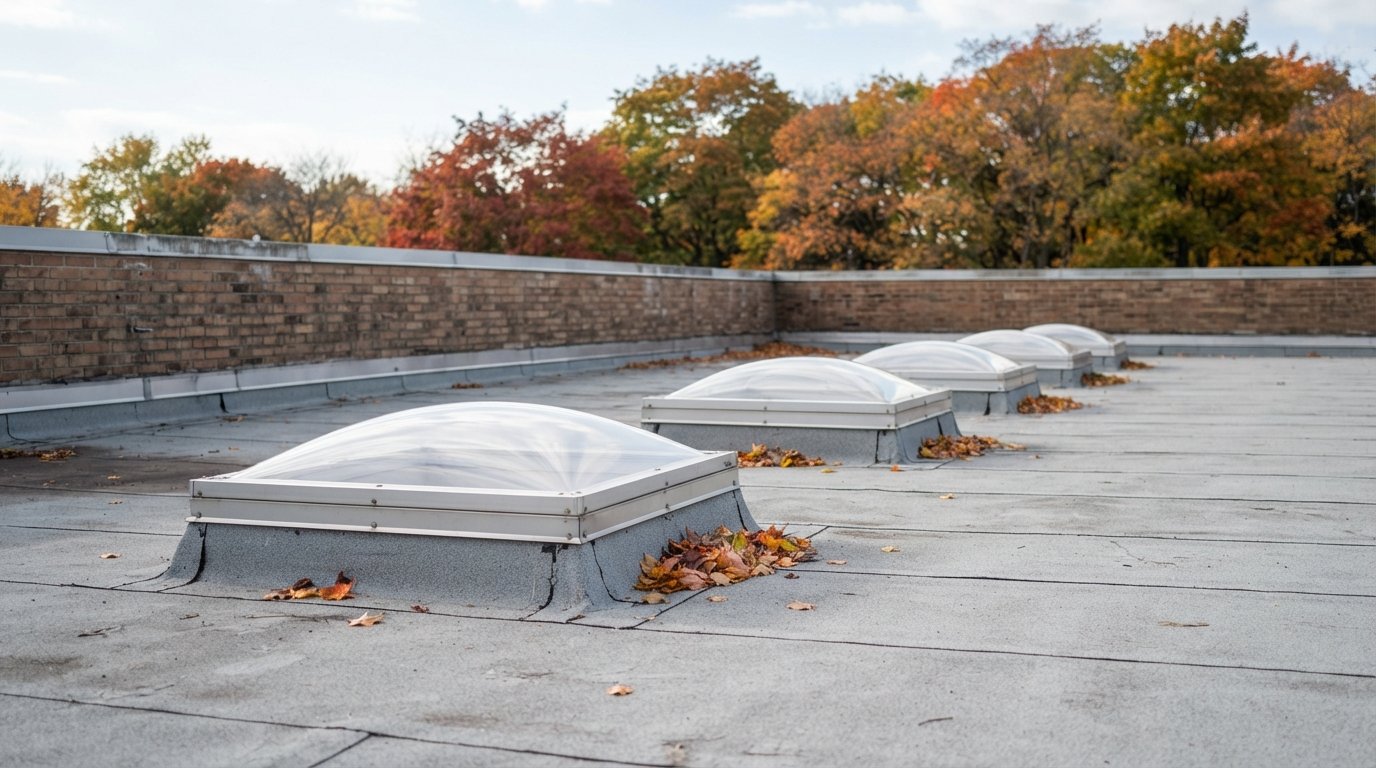
Most commercial roofs in Ontario are low-slope membranes with skylights on raised curbs: acrylic or polycarbonate domes, glazed units, or larger framed systems over atriums and corridors. Every one is a penetration in the roof and, for anyone working up there, a potential fall hazard. Autumn is when both risks build. Leaves and seed pods collect against curbs and in drains, cold nights start the freeze-thaw cycle that opens small gaps, and once snow arrives the skylights are hidden and the roof surface is no longer visible to inspect.
An autumn round of commercial skylight maintenance lets you catch loose fasteners, split gaskets and failing flashing while repairs are still simple, clear the drainage paths that winter meltwater will need, and mark skylight locations before snow clearing begins. If you are evaluating new or replacement units at the same time, our guide to commercial skylights outlines the main types and where each fits.
What an autumn inspection should cover
A useful inspection is systematic. Number every skylight on a roof plan and check each one against the same list, so the notes can be compared year to year.
| Component | What to look for | Why it matters | Typical response |
|---|---|---|---|
| Dome or glazing | Yellowing, crazing, cracks, chips, impact marks, fogging between layers | Weakened plastic is more likely to break under impact or load | Note and photograph; plan replacement when brittle or cracked |
| Frame and retainer | Corrosion, bent sections, gaps at corners | Distortion lets water past the seals | Tighten, reseal or replace the frame components |
| Gaskets and seals | Shrinking, hardening, cracking, gaps at corners | Aged gaskets are a common leak source on older units | Replace gaskets or reseal per the manufacturer |
| Fasteners | Loose, missing, rusted screws or washers | Loose retainers let domes shift in wind | Replace with compatible fasteners and sealing washers |
| Curb and flashing | Membrane lifting, open laps, cracked counterflashing, soft curb wood | Most curb leaks start here, not at the dome | Roofing repair by a qualified roofer, coordinated with the roof warranty |
| Drainage around the curb | Ponding, debris dams on the upslope side, blocked drains nearby | Standing water accelerates membrane wear and finds any weakness | Clear debris; consider a cricket on larger curbs |
| Interior side | Stains, condensation marks, damaged tiles, rust on the frame | Shows leaks or condensation you cannot see from the roof | Compare with roof findings and humidity conditions |
On larger portfolios, commercial skylight maintenance works best when the same person or firm inspects every building with the same checklist, so condition grades mean the same thing from site to site. Take photographs from the same angle each year. Over a few seasons, photos make it obvious which units are deteriorating and which are stable, and they are far more persuasive than a written note when you are asking an owner or a condominium board to fund replacements.
Dome crazing, yellowing and brittleness
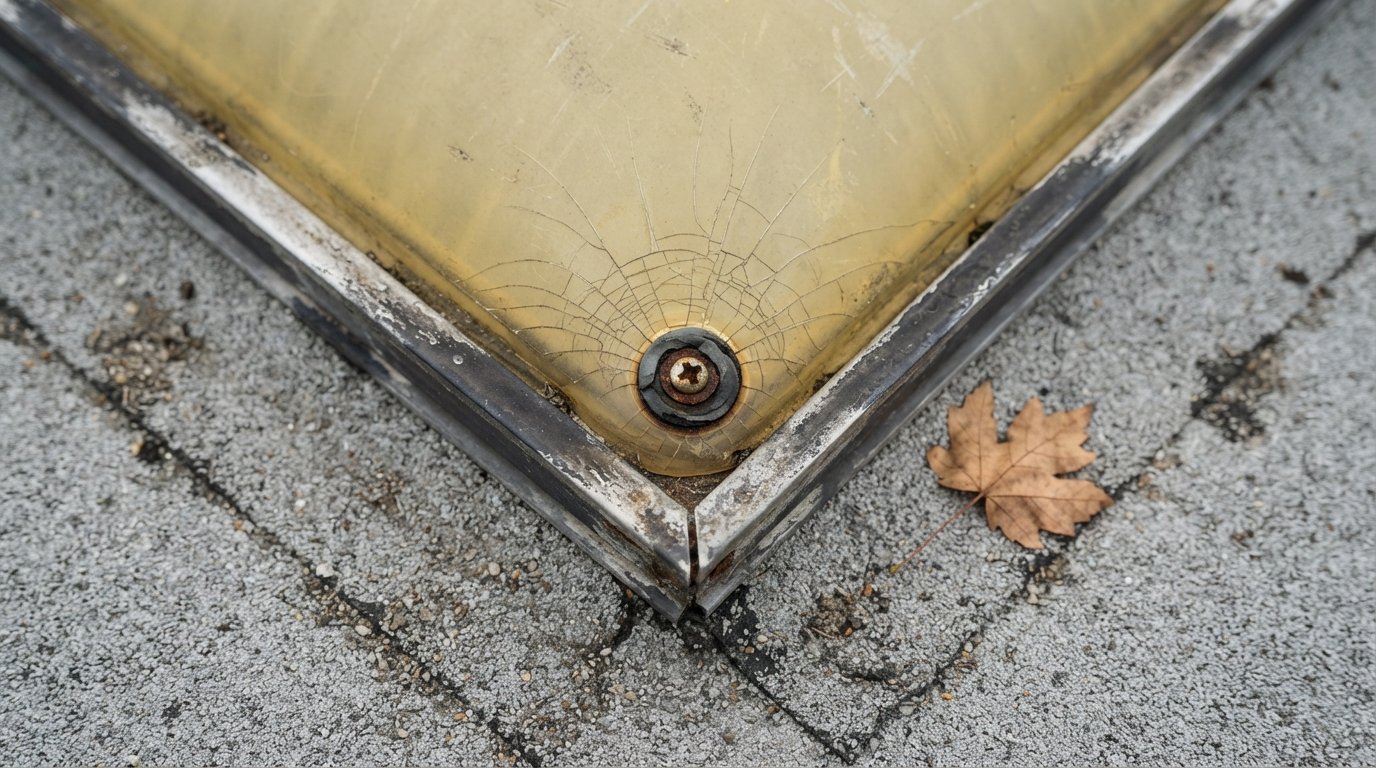
Plastic domes age in predictable ways. Acrylic gradually loses clarity and can develop crazing, a network of fine surface cracks that often starts near fasteners or edges where the material is stressed. Polycarbonate is far tougher against impact when new, but it yellows and becomes more brittle with long sun exposure, especially if its UV-protective surface has worn. Either material can also be damaged by harsh cleaners and solvents, which is why cleaning should follow the dome manufacturer’s instructions.
Yellowing is mainly a light problem. Crazing and brittleness are a safety and weather problem, because an aged dome may shatter under hail, a dropped tool, ice falling from a higher roof, or a person’s weight. Treat a dome that is crazed across its surface, cracked or noticeably brittle as a replacement candidate rather than something to patch.
| Condition | What you see | Risk | Planning response |
|---|---|---|---|
| Good | Clear or slightly hazy, no cracks, firm seals | Low | Routine annual inspection |
| Fair | Noticeable yellowing or haze, light localized crazing | Moderate, reduced daylight | Monitor closely; add to the replacement plan |
| Poor | Widespread crazing, brittleness, minor cracks, recurring seal issues | High for breakage and leaks | Budget replacement for the coming year |
| Failed | Through cracks, holes, missing pieces, active leaks | Immediate weather and fall-through hazard | Make safe now and replace as soon as practical |
Glazed commercial units age differently. Look for fogging between panes, which indicates a failed insulating seal, deteriorating glazing tape or silicone, and blocked weep holes in framed systems. Larger multi-panel systems should be reviewed by someone familiar with that system.
Gaskets, fasteners and the frame
On curb-mounted domes, the dome usually sits in a frame that is fastened to the curb, with gaskets or sealant between the layers. Gaskets lose elasticity with heat, cold and UV, then shrink at the corners and stop sealing. Fasteners loosen as the dome and frame expand and contract through the seasons, and older screws can rust, which stains the curb and eventually lets the retainer shift in wind.
During commercial skylight maintenance, a technician checks every fastener rather than a sample, replaces missing or corroded screws with compatible ones and sealing washers, and notes gasket condition at each corner. Over-tightening is its own problem: driving a screw hard against a plastic dome flange can start cracks. Mixing metals can cause corrosion, so replacement fasteners should match what the manufacturer specifies.
Curb flashing and drainage around the curbs
When a skylight leaks, the dome is often blamed, but the curb is the more common culprit. The roof membrane is carried up the side of the curb as base flashing and covered with metal counterflashing or a cap. Over time, laps open, the membrane pulls away from the curb, the counterflashing loosens, or the curb itself rots where water has been getting in. Repairs at the curb are roofing work and should be done with materials compatible with the existing membrane. If the roof is under a manufacturer or contractor warranty, check whether repairs must be carried out by an approved roofer.
Drainage is the other half of the picture. A curb is a dam on a low-slope roof, so leaves and grit collect on its upslope side and water ponds there after rain. Standing water ages the membrane faster, freezes against the curb in winter, and tests every seam. During the autumn round, clear debris from around curbs and from nearby drains and scuppers. If water regularly stands against a large curb, a roofer can advise on a cricket or saddle to divert it.
Curb height matters too. Roofing manufacturers and roofing standards set minimum flashing heights above the finished roof. When roofs are re-covered with added insulation, older curbs can end up too short, and that is worth flagging at the next roof replacement.
Preparing skylights for snow, ice and drifting
Winter loads skylights in ways that summer never does. Snow drifts against parapets, rooftop units and higher walls, and skylights near those features can end up under far more snow than the open roof. Ice and packed snow can slide from a higher roof onto domes below. Meltwater that cannot reach a drain refreezes against curbs night after night. Commercial skylight maintenance in autumn is your chance to reduce all of this before it starts.
- Look at what sits upslope or above each skylight. Domes below a higher roof edge, a parapet or a stair tower are most exposed to falling ice and drifting.
- Confirm drains and scuppers are clear after the last leaves have fallen, not just in early autumn.
- Set expectations for snow clearing. Shovels and snow blowers do real damage to domes and curb flashing, so agree on how close crews may work to skylights.
- Fix minor seal issues now. Sealants and membranes are much harder to apply properly in freezing weather.
Screens, fall protection and crew safety
Skylights are not designed to support a person’s weight, and an aged or snow-covered dome is easy to step on without realizing it. Ontario’s Occupational Health and Safety Act and its regulations, including the regulation for construction projects, require employers to protect workers from falls through openings and from heights, and workers on construction projects who use certain fall protection systems must complete approved working at heights training. The details depend on the type of work and the workplace, so confirm requirements with your health and safety advisor and the guidance from Ontario’s Ministry of Labour, Immigration, Training and Skills Development.
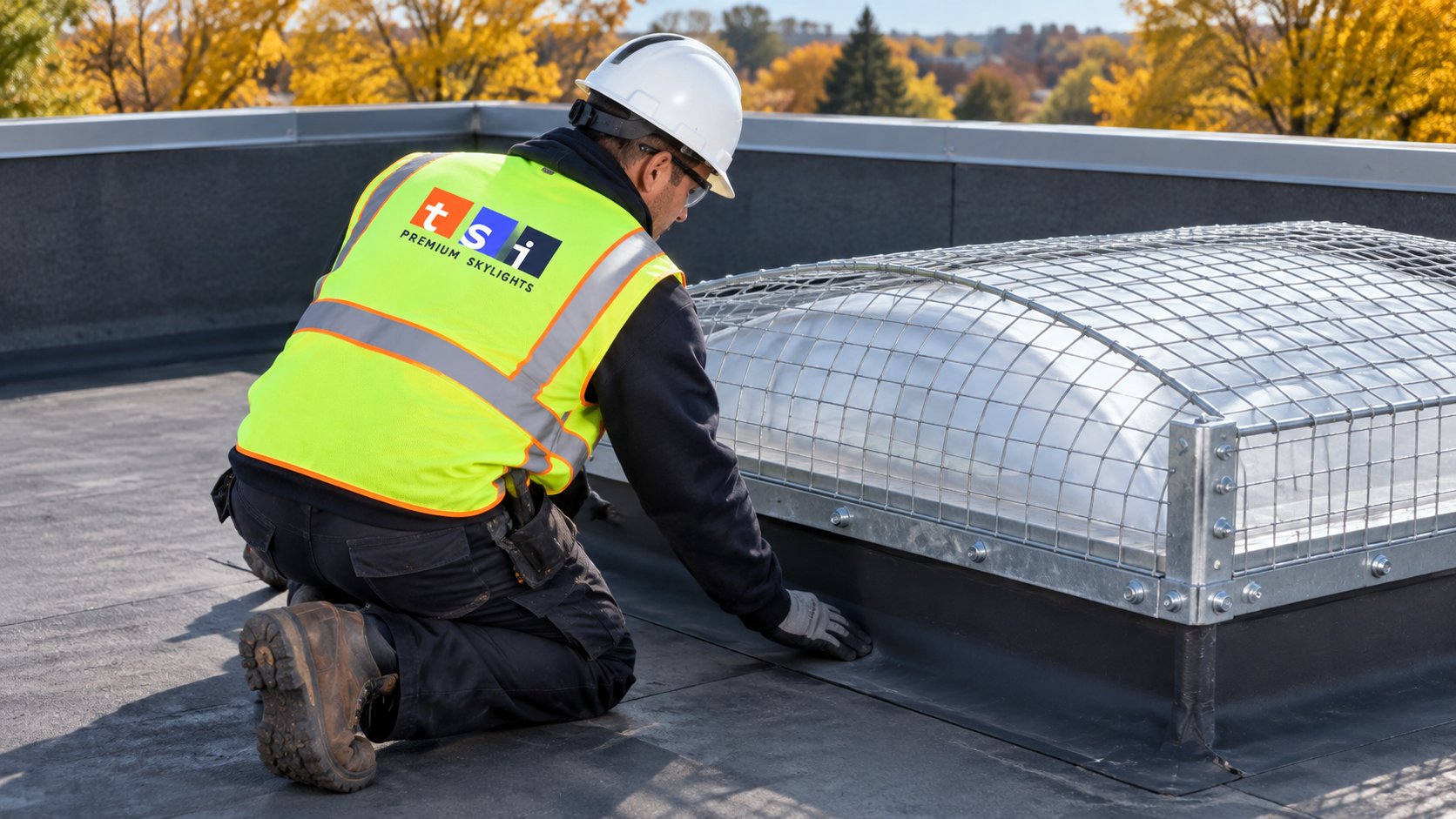
In practical terms, many buildings protect skylights with fall-protection screens fixed over or inside the curb, guardrails around the opening, or other engineered measures. Screens also add some protection against hail, vandalism and break-ins. Whatever your building uses, include it in the inspection: check that screens are secure and not corroded, and that they do not trap debris against the dome.
Before winter, two simple steps help everyone who will be on the roof:
- Mark skylight locations. Update the roof plan and give it to snow clearing, HVAC and roofing contractors so nobody walks onto a hidden dome under a drift.
- Brief your contractors. Make sure anyone shovelling snow or servicing rooftop units knows where the skylights are and how they are protected.
Interior checks, condensation and cleaning
The interior half of commercial skylight maintenance is often skipped. Inside, look for water stains on ceilings and walls around light wells, rust on interior frames, and stained or sagging ceiling tiles. Some marks come from condensation rather than leaks, especially in pools, kitchens, gyms and other humid spaces, where warm moist air meets a cold skylight in winter. Many commercial domes have condensation gutters or weep paths that need to stay clear. If marks appear only in cold weather and only on the inner surface, look at humidity and ventilation as well as the roof.
As part of commercial skylight maintenance, clean domes with the mild products the manufacturer recommends and soft cloths, working from the roof surface, never from the dome. Avoid ammonia-based glass cleaners, solvents and abrasive pads on acrylic and polycarbonate, since they can scratch the surface or cause crazing. Clean domes let more light through, which helps occupants and can reduce how much electric lighting runs during the day.
Records and replacement planning
The difference between reactive and planned commercial skylight maintenance is almost entirely a matter of record keeping. A simple register for each unit is enough: location number, size and type, approximate installation date, condition grade, photographs, and repairs carried out. Keep warranty documents and product details with it, and point anyone checking coverage to the manufacturer’s current warranty terms.
With a few years of notes, patterns emerge. You can group replacements by roof area to reduce mobilization and access costs, time them to coincide with roof replacement so curbs and flashing are rebuilt properly, and present boards or owners with a schedule rather than a surprise. Replacing a dome on a sound curb is usually a much smaller job than rebuilding a curb as well, so the condition of the curb often decides the scope. For buildings we look after through skylight installation, replacement and repair across Durham Region and the rest of the GTA, we recommend grading every unit so the most urgent ones are always at the top of the list.
| Task | Suggested timing | Who usually does it |
|---|---|---|
| Full inspection of domes, frames, gaskets, fasteners and curbs | Every autumn, before snow | Skylight technician or roofer with the right access and training |
| Debris clearing around curbs, drains and scuppers | Late autumn and spring, more often under trees | Maintenance staff or roofing contractor following roof safety rules |
| Post-storm or hail check | After severe weather | Technician or roofer |
| Interior check for stains and condensation | Early winter and during cold snaps | Property staff, reporting findings to the technician |
| Register update and condition grading | After each inspection | Property manager, using the inspection report |
| Replacement planning review | Annually, before budgets are set | Property manager with owner or board |
Replacement domes for existing curbs are available in a range of sizes and profiles. Our page on commercial skylight domes explains the options, and a site visit confirms whether your curbs can be reused.
Frequently asked questions
How often should commercial skylights be inspected?
What causes a dome to yellow or craze?
Where do most commercial skylight leaks start?
Do skylights need fall protection?
Can I replace just the dome and keep the curb?
What records should a property manager keep?
Book your commercial skylight maintenance before winter
An autumn inspection, a clear register and a replacement plan take the surprises out of skylights on your roofs. Toronto Skylight Installers inspects domes, glazed units, gaskets, fasteners and curbs, documents what we find, and helps you prioritize repairs and replacements. Call us today at (416) 365-7557 or request a free estimate.
Supporting property managers across Durham Region and the wider GTA with skylight inspections and replacements.