

If your house has an acrylic skylight, it is probably one of the clear or bronze bubble domes that went onto many Ontario roofs a few decades ago. Plenty are still up there, and a fair number are now cloudy, crazed or brittle. When it is time to replace one, the first decision is the glazing itself: another plastic dome, a tougher polycarbonate unit, or a modern sealed glass skylight. Each has a place, and the right answer depends on the roof, the room and what you want the skylight to do.
Below, the three materials are compared on the points that matter in practice: impact resistance, yellowing and crazing, UV, insulation, noise, condensation and cost, and explains where plastic domes are still the sensible choice.
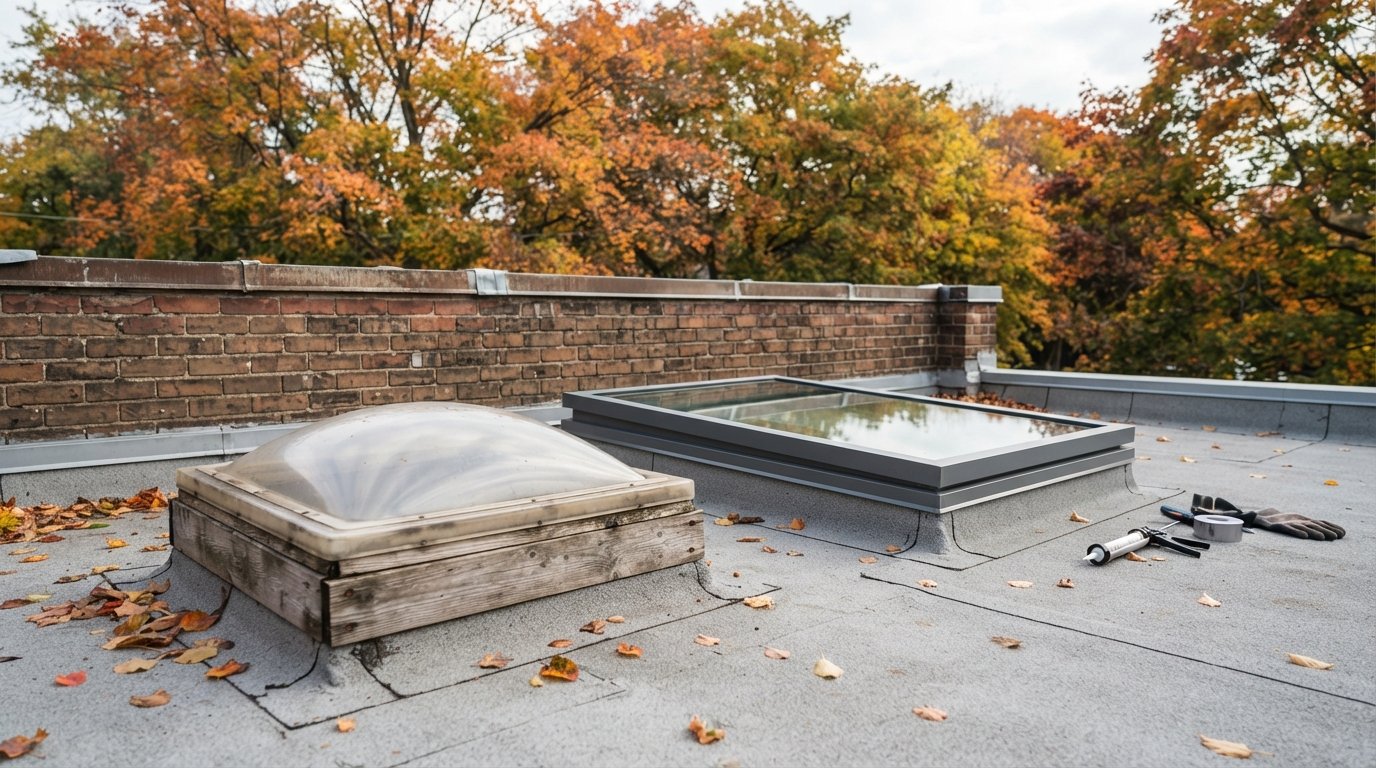
Acrylic skylight, polycarbonate or glass: the basic differences
An acrylic skylight uses a moulded dome of acrylic plastic, sometimes as a single layer and often as two layers with an air space between them. Acrylic is clear, light, and relatively stable in sunlight, which is why it became the standard material for domed residential and commercial skylights.
A polycarbonate skylight uses another clear plastic that is much tougher against impact. It is common on commercial roofs, roof hatches, some sun tunnel domes and protective covers. Its weaknesses are a softer surface that scratches more easily and a tendency to yellow over time unless it has an effective UV-protective layer.
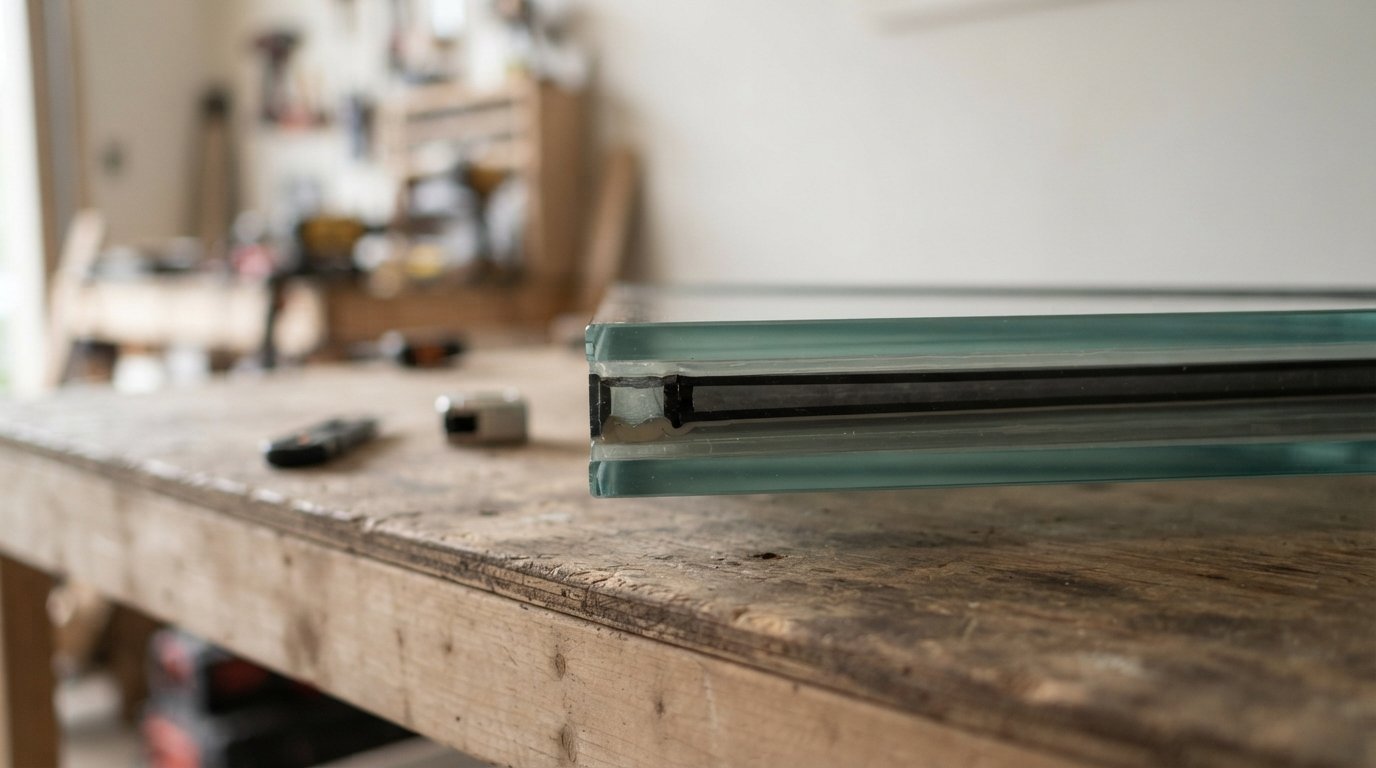
Glass skylights use sealed insulating glass units, usually two or three panes with a gas fill and low-emissivity coatings, set in a wood, vinyl, polyurethane or aluminum frame. Residential glass skylights normally combine a tempered outer pane with a laminated inner pane. VELUX’s Canadian catalogue, for example, notes that laminated glass is required as a minimum by local building codes in many areas for overhead skylights, and advises checking with your local code authority. If you are replacing an old dome, our skylight replacement service will confirm what glazing your project needs.
| Factor | Acrylic dome | Polycarbonate dome or cover | Glass unit (tempered outer, laminated inner) |
|---|---|---|---|
| Impact resistance | Moderate; becomes brittle with age | High when new; reduces as it ages | Tempered pane resists impact; laminated inner pane holds fragments if broken |
| Ageing in sunlight | Crazing and haze over the years | Yellowing and brittleness if UV protection wears | Glass itself does not yellow; seals and frames age instead |
| Scratch resistance | Fair | Lower, scratches easily | High |
| Insulation | Limited, even with two layers | Limited, similar to acrylic in dome form | Much better with Low-E coatings and gas fill |
| Rain noise | Noticeable drumming | Noticeable drumming | Quieter, especially with laminated glass |
| Condensation on cold nights | More likely on the inner layer | More likely on the inner layer | Less likely with a warm inner pane and good shaft sealing |
| Typical use today | Commercial domes, budget curb units, replacements on existing curbs | Commercial roofs, hatches, some sun tunnel domes, protective covers | Most residential skylights and roof windows |
Impact resistance and hail
New polycarbonate is the toughest of the three against a direct blow, which is why it is used where hail, falling branches or vandalism are concerns. Acrylic is less impact resistant, and both plastics lose toughness as they age in sunlight, so a twenty-year-old dome is not the material it was when new.
Glass skylights take a different approach. The outer tempered pane is several times stronger than ordinary glass and, if it does break, crumbles into small pieces. The inner laminated pane has a plastic interlayer that holds the fragments together, so a broken pane stays in the frame rather than falling into the room. That combination is the reason laminated inner glass is the norm overhead. Some manufacturers offer hail-related warranty coverage on certain laminated products; check the manufacturer’s current warranty documents for the specific unit.
There is also a safety angle that homeowners rarely consider. An aged acrylic skylight on a low-slope roof is easy to mistake for a solid surface, especially when it is covered in leaves or, later in the year, snow. Anyone working on the roof, whether a roofer, an HVAC technician or a chimney sweep, should know where the domes are, and a brittle dome should never be stepped on, leaned on or used to rest tools. If roof work is planned, replacing an old dome first is often simpler than protecting it.
Yellowing, crazing and UV
An ageing acrylic skylight usually tells you its age through its surface. First it loses some clarity. Then fine crazing appears, often near the edges and fasteners where the plastic is under stress from expansion and contraction. Eventually the dome becomes brittle enough that a sharp impact or a person’s weight could break it. Polycarbonate tends to yellow rather than craze, and a heavily yellowed dome transmits noticeably less light and casts a warm tint into the room.
Harsh cleaners speed this up. Ammonia-based window cleaners, solvents and abrasive pads can scratch plastic or trigger crazing, so any plastic dome should be cleaned only with the mild products its manufacturer recommends. Glass tolerates ordinary cleaning far better.
On UV, the details depend on the specific grade of plastic and glass. Laminated glass interlayers block most UV, which helps protect flooring and furniture from fading; VELUX describes its laminated inner pane as adding UV protection. Plastic glazing varies by product, so if fading is a concern, ask for the UV performance of the specific unit.
Insulation, noise and condensation
This is where glass has pulled clearly ahead. A double-layer acrylic skylight has an air gap between two thin plastic shells, but it cannot carry the low-emissivity coatings, gas fills and edge seals that modern glass units use. The result is a colder inner surface in winter, more heat loss, and more heat gain through the dome in summer.
That colder surface is also why plastic domes are more prone to condensation. On a cold autumn night, warm moist air from a kitchen or bathroom meets the inner dome and forms droplets, which many domes collect in a small condensation gutter in the frame. If the gutter is blocked or the shaft is poorly sealed, those droplets end up on the ceiling. A glass unit with a warm inner pane and a properly insulated, sealed shaft reduces condensation, although no skylight eliminates it in a very humid room.
Noise is the difference people notice first after an upgrade. Rain and hail drum on thin plastic. Laminated glass is noticeably quieter, which matters most over bedrooms.
Energy ratings make the comparison easier for glass. In Canada, ENERGY STAR certified skylights must meet a maximum U-factor set by Natural Resources Canada, and many residential glass skylights carry that certification. Thin plastic domes generally cannot reach the same insulating values. If energy performance is a priority, ask for the rated U-factor of the specific unit, whichever glazing you consider, and check Natural Resources Canada’s listings.
Light quality, tint and expansion
Plastic domes come in more than one colour. Clear domes give the most light and a view of the sky. Bronze or grey tints cut brightness and heat gain but also darken the room. White or opal domes diffuse the light, which softens glare and hides the sky; they are common in commercial buildings and over workspaces. An old acrylic skylight with a bronze tint that has also hazed can let in surprisingly little light, which is often the reason homeowners first ask about replacement.
Glass units look clearer and flatter, though Low-E coatings give a faint tint that most people stop noticing within a day. Some glass skylights can be paired with factory shades for light control, which is the usual way to manage glare without permanently dimming the room.
Expansion is the hidden installation issue. Acrylic and polycarbonate expand and contract far more with temperature than glass does. A good dome installation allows for that movement with oversized fastener holes, flexible gaskets and correct screw tension. When those details are wrong, the plastic is stressed at every fastener through each freeze and thaw, which is one reason crazing so often starts at the screws. If you are replacing an acrylic skylight with another dome, the fastening method matters as much as the dome itself.
Where plastic domes are still the right choice
Plastic domes are far from obsolete. On flat commercial roofs, domes shed water and debris well, are light enough for large curbs, and can be replaced without disturbing the roof membrane if the curb is sound. Polycarbonate is the usual choice for roof hatches and for protective covers. Many tubular skylights use a clear plastic dome on the roof, because its job is to collect light for the tube rather than to give a view.
Some newer residential flat roof units combine both materials. VELUX’s flat roof range in Canada, for example, includes models with a domed polycarbonate outer cover over an inner laminated glass unit in an insulated PVC frame, pairing the impact resistance and water shedding of a dome with the insulation and safety of glass. Our flat roof skylights page covers these options.
| Situation | Usual choice | Why |
|---|---|---|
| Pitched residential roof over a living space | Glass skylight with laminated inner pane | Insulation, quiet, clarity, and typical code expectations for overhead glazing |
| Flat residential roof | Glass flat roof unit, or a polycarbonate dome over glass | Water shedding on a low slope with the performance of sealed glass |
| Commercial low-slope roof with existing curbs | Acrylic or polycarbonate domes | Light weight, simple replacement on sound curbs, lower cost per unit |
| Area exposed to hail, branches or vandalism | Polycarbonate, or glass with a protective screen | Higher impact resistance |
| Hallway or bathroom daylight with no view needed | Sun tunnel with a plastic dome | The dome only needs to gather light for the tube |
Replacing an old dome: what usually changes
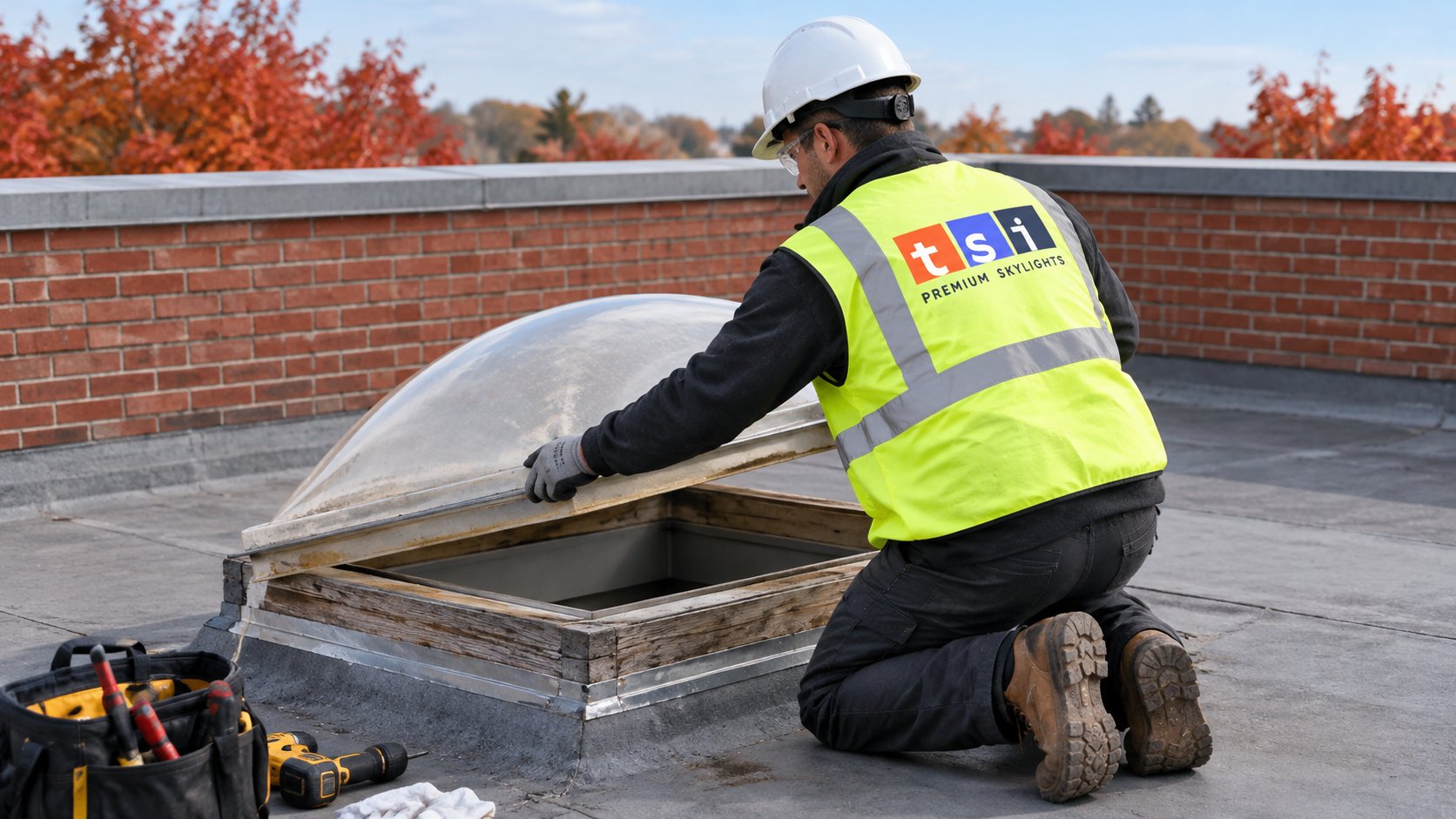
Swapping a tired acrylic skylight for glass is one of the most common upgrades we do, and it is rarely a straight swap. Old bubble domes usually sit on a site-built wooden curb. A glass replacement may go onto that curb, if it is sound, square and tall enough, or the curb may be removed and the opening converted to a deck-mounted unit with a matching skylight flashing kit. On a pitched roof, deck mounting gives a lower profile and integrates with the shingles; on a flat or very low-slope roof, a curb remains the norm.
Removing the old dome often reveals soft curb wood, tired flashing or a shaft with little insulation, and those are best fixed at the same time. When our Peel Region skylight installation, replacement and repair team quotes a dome-to-glass swap, the likely curb and shaft work is priced up front so there are fewer surprises once the old unit is off.
Cost: what to expect
An acrylic skylight dome costs less to buy than a glass unit of the same size, but the glazing is only part of the price. Access, curb work, flashing, shaft repairs and interior finishing often make up much of the total. The figures below are broad estimates in Canadian dollars that vary by house, size, access and scope.
| Project | What it usually includes | Typical range (estimate) |
|---|---|---|
| Replacement acrylic dome on a sound existing curb | Dome, fasteners, sealing | Often roughly $600 to $1,500 |
| Polycarbonate dome or cover on a sound curb | Dome, fasteners, sealing | Often roughly $700 to $1,800 |
| Glass curb-mounted unit replacing a dome | Unit, curb repair or rebuild, flashing | Often roughly $1,800 to $4,000 |
| Converting a domed opening to a deck-mounted glass unit | Curb removal, framing, unit, flashing kit, roofing tie-in, interior finish | Often roughly $2,500 to $5,500 |
Questions to ask before you choose
- Is the room under the skylight a bedroom or quiet space where rain noise would bother you?
- Is the roof pitched or flat, and is the existing curb sound enough to reuse?
- Is the area exposed to hail, overhanging branches or ice falling from a higher roof?
- Do you want a view of the sky, or just daylight?
- What glazing does your municipality expect overhead, and does the unit you are considering meet it?
- How will the replacement acrylic skylight or glass unit be fastened and flashed, and what happens to the shaft?
A written quote after a site visit is the only reliable number, because the condition of the curb and shaft is not visible until the old unit comes off.
Frequently asked questions
Is an acrylic or polycarbonate dome stronger?
Why is my old skylight dome cloudy and cracked?
Are glass skylights safe overhead?
Do plastic domes cause more condensation?
Can I replace a dome with glass on the same curb?
Where do plastic domes still make sense?
Replace an ageing acrylic skylight with the right glazing
Whether your old dome needs a like-for-like replacement or an upgrade to sealed glass, the right choice depends on your roof, curb and room. Toronto Skylight Installers can inspect the unit, curb and shaft and explain the glazing options clearly before you decide. Call us today at (416) 365-7557 or request a free estimate.
Swapping tired domes for better glazing in homes across Peel Region and the wider GTA.