

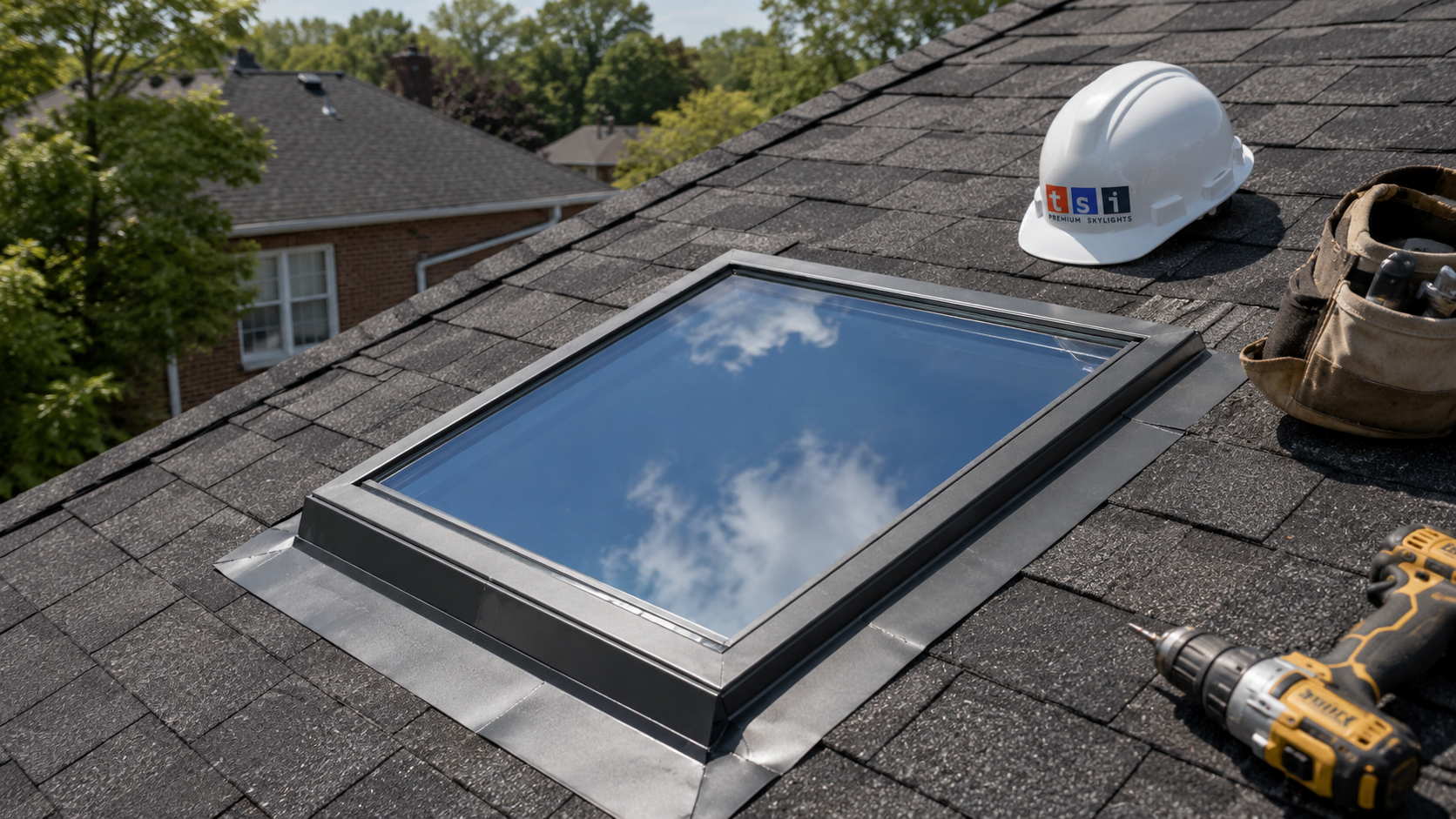
Daylight is the cheapest upgrade a house can get, and in Durham Region the simplest way to buy it is a fixed skylight. Pickering homes span several decades of construction, from postwar bungalows with shallow attics to newer subdivision two-storeys with steep engineered-truss roofs and estate-lot builds with complex rooflines, and each of those roof types can carry a fixed unit well when it is specified and flashed properly. A fixed skylight Pickering homeowners install today is a sealed, non-opening glass unit that exists for one purpose: to bring natural light into a room that has no practical wall for a window. This guide covers where fixed units belong, what a fixed skylight Pickering project costs in 2026, how the glass performs through an Ontario winter, and the installation details that decide whether the unit lasts twenty years or leaks in three.
Fixed Skylight Pickering Benefits: Why Non-Opening Units Win
The case for a fixed skylight Pickering property owners keep coming back to is simple. A non-opening unit has no hinge, no motor, no gasket that compresses and relaxes with every use, and no drainage channel around a moving sash. Fewer moving parts means fewer failure points, and in a climate that swings from minus twenty in February to plus thirty in July, failure points are where water eventually finds its way in.
There is also a light-per-dollar argument. Because a fixed unit spends nothing on venting hardware, more of the budget goes into the glass, the frame and the flashing. For the same money as a mid-range venting skylight, a fixed skylight Pickering installation can deliver a larger glazed area, better coated glass, or two units instead of one.
Local housing stock reinforces the point. Older brick homes closer to the lakeshore often have long, narrow floor plans with interior rooms that never see a wall window. Postwar bungalows tend to have low-slope roofs over rear additions where a fixed unit is the only sensible option. Newer subdivision homes north of the 401 frequently have deep second-floor hallways, stairwell landings and ensuite bathrooms boxed in by neighbouring walls. In every one of those cases, the shortest path to daylight goes through the roof, and a fixed skylight Pickering homeowners size correctly solves it in a single day of exterior work.
Homeowners comparing options across the region can review the full range of skylight installation and repair services available to Pickering homeowners before committing to a unit type, since the right answer depends as much on roof geometry as on the room below.
Fixed, Venting and Tubular Units Compared
Not every daylight problem is solved by the same product. Before settling on a fixed skylight Pickering installers can quote accurately, it helps to understand what the alternatives actually do.
A fixed unit is a sealed glass panel in a frame. It admits light and nothing else. Because the glazing is bonded permanently into the frame, the weather seal is continuous and there is no operating hardware to wear out. This is the default recommendation for stairwells, hallways, living rooms, home offices and any bedroom that already has adequate mechanical ventilation.
A venting unit, whether manual, electric or one of the solar powered fresh air skylight models, opens to exhaust heat and humidity. It earns its extra cost in kitchens, bathrooms and laundry rooms where moisture needs somewhere to go, and in tall spaces where stack-effect ventilation genuinely helps in the shoulder seasons.
A tubular unit, sold as a sun tunnel skylight, pipes daylight down a reflective shaft from a small roof dome. It is the right tool for a windowless powder room, walk-in closet or interior hallway where a full framed opening would mean cutting trusses and building a drywall shaft.
| Skylight Type | Typical Installed Cost (2026, GTA) | Best Application | Main Limitation |
|---|---|---|---|
| Fixed, deck-mounted on a sloped roof | $1,800 to $3,400 | Stairwells, living rooms, offices, bedrooms | No ventilation at all |
| Fixed, curb-mounted on a low-slope or flat roof | $2,400 to $4,600 | Rear additions, garage conversions, sunrooms | Requires a properly built and insulated curb |
| Manual venting | $2,600 to $4,200 | Bathrooms and kitchens within reach-pole range | Awkward to operate above 3 metres |
| Solar or electric venting | $3,200 to $5,600 | High ceilings, primary bathrooms, great rooms | Motor and controller add service points |
| Tubular sun tunnel | $950 to $1,900 | Closets, powder rooms, interior hallways | No view, smaller light footprint |
Ranges above assume standard residential access, asphalt shingle or single-ply membrane roofing, and no structural framing changes. Steep roofs, third-storey access, metal roofing and truss modification all push a fixed skylight Pickering quote toward the upper end or past it.
Where Fixed Skylights Work Best in Pickering Homes
Placement decides how well a fixed skylight performs, and it deserves more thought than most homeowners give it.
Orientation and slope
North-facing slopes deliver the softest, most consistent light with the least heat gain, which makes them ideal for home offices, studios and any room with a television or monitor. South-facing slopes deliver the most light and the most summer heat, so they need low-emissivity coated glass and, in many cases, an interior shade. East and west slopes fall between the two, with west exposures producing the strongest late-afternoon glare in summer.
Rooms that benefit most
- Stairwells and landings: often the single highest-impact location in a two-storey home, since one unit lights two floors at once.
- Great rooms with vaulted ceilings: a fixed skylight Pickering families install here removes the cave effect that deep floor plans create.
- Home offices and bedrooms on interior walls: daylight without sacrificing privacy or usable wall space.
- Kitchens with adequate range-hood exhaust: a fixed unit is perfectly appropriate when ventilation is already handled mechanically.
- Rear additions with low-slope roofs: a curb-mounted unit, or a purpose-built flat roof skylight, is usually the only workable option.
Where to be cautious
Avoid placing a unit directly above a bed unless the glass carries a good solar control coating and an interior blind is planned from the start. Avoid roof areas below a chimney, a large vent stack or a valley, because those locations concentrate both water and ice. On a shingle roof, keep at least 300 millimetres of clear field between the unit and any ridge, valley or hip so the flashing has room to shed properly.
Glazing, Coatings and Winter Performance
Glass specification is where a fixed skylight Pickering install either succeeds or disappoints. A skylight faces the sky, which means it radiates heat to a cold night sky far more aggressively than a vertical window does. That is why condensation, not leakage, is the most common complaint about older units.
Modern residential skylights use insulated glass with a warm-edge spacer, argon fill and at least one low-emissivity coating. Overhead glazing in Ontario also carries a safety requirement: the outer lite is tempered so it granulates rather than shattering into shards, and the inner lite is laminated so that if it breaks it stays bonded to its interlayer instead of falling into the room. Any quote that does not specify tempered-over-laminated construction should be questioned before it is signed.
The Ontario Building Code’s supplementary standard SB-12 sets maximum U-values for fenestration in new construction and additions. Replacement units in existing homes are not always held to the same threshold, but there is no good reason to install anything below current practice when the price difference is modest.
| Glazing Package | Approximate U-Value (W/m²K) | Relative Solar Heat Gain | Best Pickering Application |
|---|---|---|---|
| Double glazed, one low-e coating, argon fill | 1.5 to 1.8 | Moderate | North slopes, shaded exposures, budget-conscious projects |
| Double glazed, high-performance low-e, argon, warm-edge spacer | 1.2 to 1.5 | Lower | The general-purpose choice for most sloped roofs |
| Double glazed with solar control or tinted low-e | 1.2 to 1.5 | Low | South and west slopes, bedrooms, rooms with screens |
| Triple glazed, two low-e coatings | 0.9 to 1.2 | Low | Deep energy retrofits, rooms prone to condensation |
| Snow-load rated laminated build-up | 1.2 to 1.6 | Varies by coating | Low-slope roofs and areas prone to drifting snow |
Values shown are typical manufacturer ranges for residential units and vary by brand, size and frame material. Always confirm the rated numbers on the specific unit being quoted rather than assuming a category average.
What a Fixed Skylight Costs in Pickering in 2026
Pricing a fixed skylight Pickering project honestly means separating the unit from the labour and from the interior finishing, because homeowners are most often surprised by the third item.
The unit itself is the smaller share. Flashing kits are roof-specific and non-negotiable: an asphalt shingle kit differs from a tile kit, and a low-slope membrane detail differs from both. The interior light shaft, the drywall, the corner bead, the primer and the paint form a separate scope that can rival the cost of the skylight itself when the shaft has to pass through a deep attic.
| Line Item | Typical 2026 Range | What Drives the Range |
|---|---|---|
| Fixed skylight unit, standard residential size | $550 to $1,600 | Size, glazing package, frame finish, brand |
| Roof-specific flashing kit | $160 to $420 | Roof covering type and unit size |
| Roof opening, framing and installation labour | $800 to $1,800 | Slope, access, storey height, rafter versus truss |
| Interior light shaft framing and drywall | $650 to $2,400 | Attic depth, splayed versus straight shaft, ceiling height |
| Structural engineering for truss modification | $500 to $1,500 | Required whenever engineered trusses are cut |
| Interior blind or shade, per unit | $250 to $850 | Manual, solar or electric operation |
Most single-unit projects on a straightforward sloped roof land between $2,200 and $3,800 all in, including a modest shaft. Two or more units installed at the same time reduce the per-unit cost, because setup, access and roofing labour are shared across the job. Removing an old leaking unit and fitting a modern one into the same rough opening, a straight skylight replacement, is typically less expensive than cutting a brand new opening.
Installation, Timelines and Permits
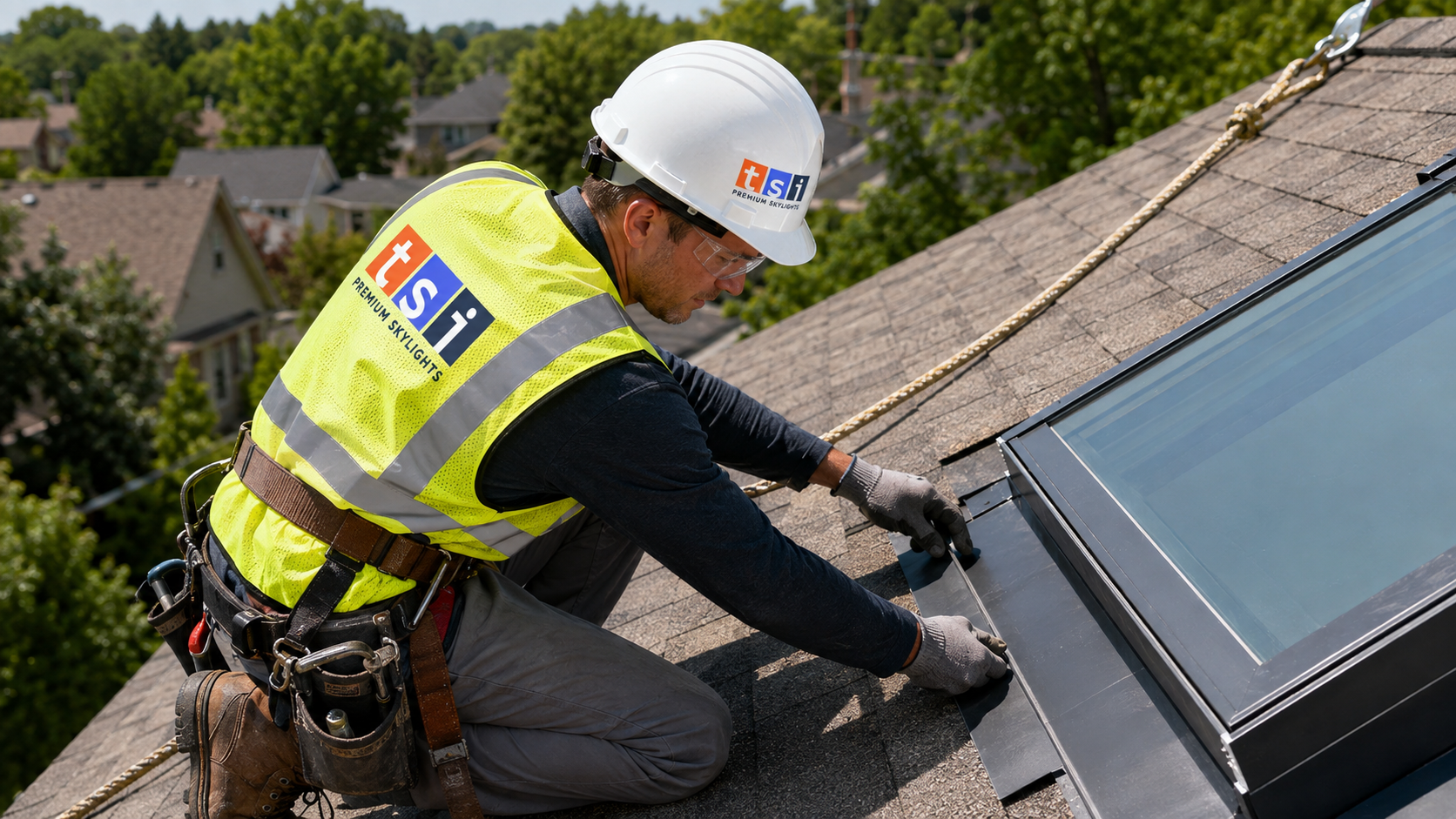
A typical fixed skylight Pickering installation on an accessible sloped roof is a one-day job for the exterior work. Interior shaft finishing, where it is required, adds one to three days across drywall, taping, sanding and paint cycles.
The sequence on site
- Interior layout. The opening is located from inside first, checking for wiring, plumbing stacks and ductwork before anything is cut.
- Roof marking and cut. Shingles are stripped over a generous margin around the planned opening so the flashing has clean deck to sit on.
- Framing. Headers go in at the top and bottom of the opening. Rafters can be cut and headed off with straightforward framing. Engineered trusses cannot be cut without an engineer’s design.
- Setting the unit. The skylight is fastened to the deck or curb, then underlayment and ice-and-water membrane are lapped so every layer sheds onto the one below it.
- Flashing. Head, sill and step flashing are installed in sequence and integrated with the shingle courses. This step is where most failures originate.
- Interior finishing. The shaft is framed, insulated, air sealed with a continuous vapour barrier, then drywalled and painted.
Permits and code
Whether a building permit is needed depends on the work, not the product. Replacing an existing unit in the same opening generally does not require one. Cutting a new opening that alters structural roof members usually does, and any modification to engineered roof trusses requires stamped drawings from a professional engineer before the City of Pickering will issue a permit. Confirm with the municipality before work begins rather than after, since a fixed skylight Pickering install that skips this step can complicate a future home sale.
Worker safety on a residential roof is governed by Ontario Regulation 213/91. Any contractor working above three metres must use fall protection, and a crew that arrives without harnesses and anchor points is a crew that will also cut corners on flashing.
Flashing, Curbs and the Details That Prevent Leaks
Nearly every skylight leak traced by a service technician comes back to one of four causes, and almost none of them involve the glass.
- Sealant used in place of flashing. Caulking is a supplement, never a system. A unit bedded in sealant instead of proper metal flashing will leak within a few seasons.
- Reversed laps. Water moves down. Any layer tucked under the layer below it becomes a funnel straight into the attic.
- Ice damming above the unit. Warm attic air melts snow that refreezes near the eaves and backs water up under the shingles. This is an insulation and ventilation problem that presents itself as a skylight problem.
- Failed or absent curb detailing on low slopes. A curb-mounted unit needs a curb of adequate height, insulated and membrane-wrapped, or meltwater will pond against it.
Condensation deserves its own note. Water on the inside face of the glass on a cold morning is not a leak. It is humid indoor air meeting a cold surface, and the fix is a combination of better glazing, a properly sealed shaft with a continuous vapour barrier, and lower indoor humidity in winter. A fixed skylight Pickering owners keep behind 30 to 40 percent relative humidity in winter will rarely show meaningful condensation.
If an existing unit is already showing stains at the shaft corners, a diagnostic visit through professional skylight repair services is worth booking before the drywall is patched, because patching without finding the source simply hides the evidence.
Maintenance and Realistic Service Life
A fixed skylight is low maintenance, not no maintenance. The realistic expectation for a quality unit installed correctly is twenty to thirty years for the frame and flashing, with the sealed glass unit itself typically the first component to reach end of life. Component by component, here is what to plan for on a fixed skylight Pickering homeowners look after reasonably well.
- Sealed insulated glass unit: 18 to 25 years of service, inspected annually from inside, roughly $600 to $1,500 to replace installed.
- Metal flashing kit: 25 to 40 years, inspected from the roof every second year, $160 to $420 for the kit plus roofing labour.
- Perimeter sealant and gaskets: 8 to 15 years, checked every second year, typically a $150 to $400 service call to refresh.
- Interior shade or blind: 10 to 15 years depending on operation type, $250 to $850 to replace.
- Complete unit replacement: 20 to 30 years, worth assessing seriously after year 18, generally $1,500 to $3,200.
A short seasonal routine
- Spring: clear pollen, seed and shingle grit from the head flashing, and check the glass for fogging between the panes.
- Summer: wash the exterior glass on an overcast day and make sure overhanging branches have been cut back.
- Autumn: clear leaves from above the unit before the first freeze so meltwater has a clear path down the roof.
- Winter: watch interior condensation patterns and note any staining at the shaft corners for follow-up in spring.
Fogging between the panes means the seal has failed. The unit will still keep water out, but its insulating value has dropped and the haze is permanent. That is the point at which replacing a fixed skylight Pickering homeowners have lived with for two decades makes more sense than repairing it.
Choosing an Installer and What to Ask
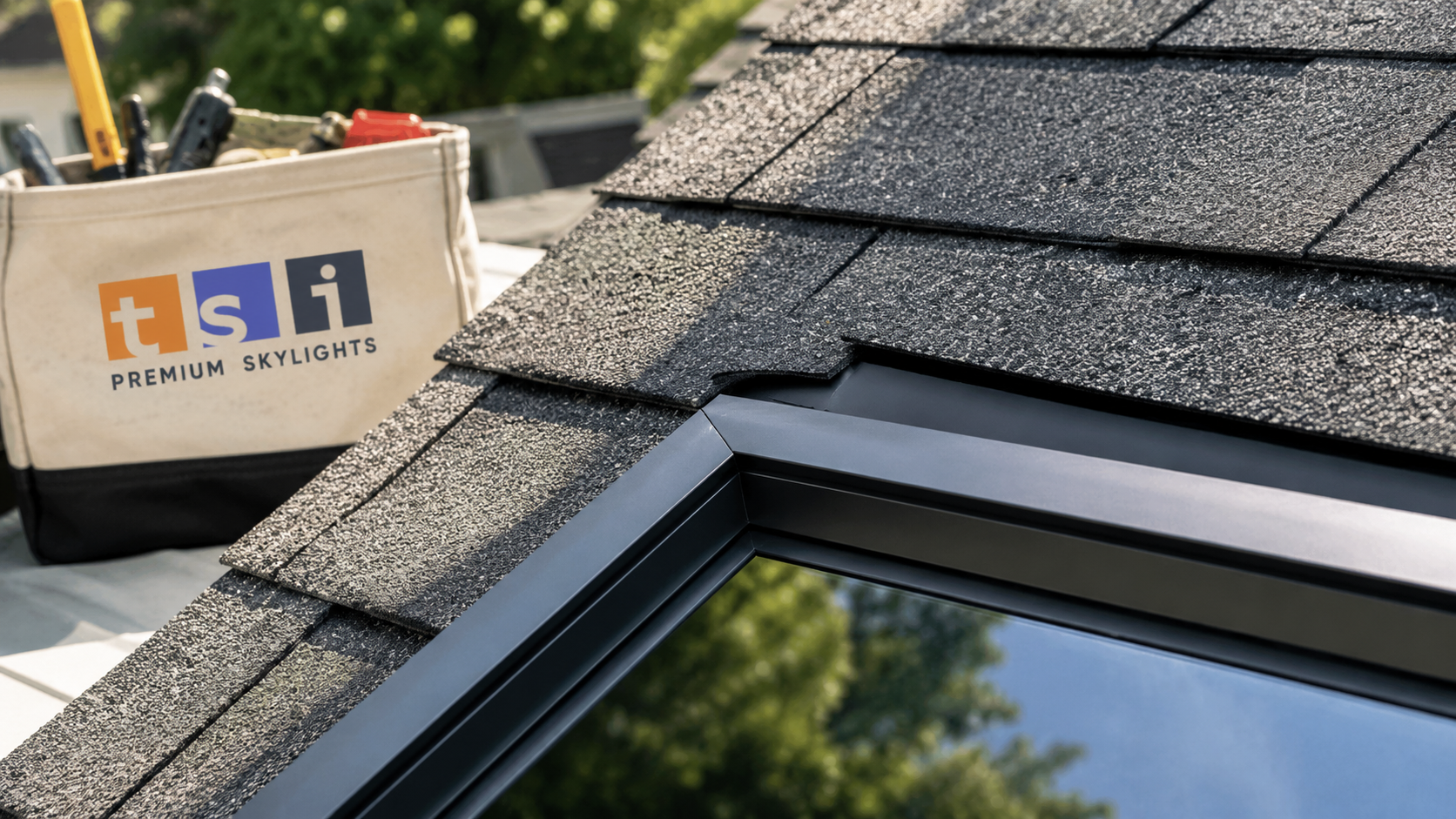
Skylight work sits at the intersection of roofing, framing and finish carpentry, and not every roofer is comfortable with all three. When comparing quotes for a fixed skylight unit, ask direct questions and expect direct answers.
- Which flashing kit is being used, and is it the manufacturer’s kit matched to this exact roof covering?
- Is the glass tempered on the outer lite and laminated on the inner lite?
- Who is responsible for the interior shaft, and is drywall finishing and paint included or excluded?
- Will ice-and-water membrane be run around the full perimeter of the opening?
- What is the warranty on the unit, and separately, what is the warranty on the installation labour?
- If trusses need modification, who arranges the engineering and pulls the permit?
Get the answers in writing. A fixed skylight Pickering quote that lists a unit model number, a flashing kit part number and an explicit scope for interior finishing is a quote you can actually compare against another. A one-line price is not.
Homeowners who want a new opening cut rather than a like-for-like swap should also review what a full skylight installation involves, since new-opening work carries the framing and permit considerations that a straight replacement does not.
How much does a fixed skylight in Pickering cost to install?
Do I need a building permit for a skylight in Pickering?
Will a fixed skylight leak in an Ontario winter?
Can a fixed skylight be installed on a truss roof?
How long does a fixed skylight last?
Should I choose a fixed or a venting skylight?
Book Your Fixed Skylight Pickering Consultation Today
Daylight changes how a room feels more than almost any other renovation of comparable cost, and the right unit on the right slope is a twenty-year improvement rather than a twenty-year maintenance problem. Toronto Skylight Installers is based in the Toronto area and works throughout Durham Region, bringing the same flashing standards, glazing specifications and code compliance to every fixed skylight Pickering project we take on.
Call us today at (416) 365-7557 or request a free consultation. We will assess your roof slope, attic depth, framing type and room orientation, then quote a unit and a scope you can actually compare against anyone else’s.
Toronto Skylight Installers proudly serves Pickering, Ajax, Whitby and communities across the Greater Toronto Area with professional skylight installation, replacement and repair.