Bathrooms are paradoxically one of the most vital yet spatially compromised rooms in a typical Toronto home. In highly dense neighbourhoods like The Annex, Riverdale, or High Park, houses are frequently built just feet away from one another. This architectural reality presents a massive challenge for bathroom design: you urgently need large windows to exhaust heavy shower humidity and introduce bright, flattering natural light, yet placing a large vertical window on the side of your house entirely destroys your expectation of privacy. The undisputed solution to this urban dilemma is the bathroom skylight. By shifting the fenestration from the wall to the roof, Toronto Skylight Installers helps homeowners flood their bathrooms with pure sunshine without sacrificing a shred of modesty. This expansive 2026 guide covers everything you need to know about integrating overhead glazing into your washroom renovation.
The Absolute Necessity of Bathroom Natural Light
Natural light in a bathroom goes far beyond mere aesthetics; it fundamentally alters the functionality and health of the space. Applying makeup, shaving, or grooming requires high-quality, high-CRI (Colour Rendering Index) illumination. Artificial LED vanity lighting often casts harsh directional shadows or distorts skin tones artificially. Natural daylight pouring evenly down from a vaulted skylight provides the most accurate, balanced lighting possible.
Furthermore, daylight possesses natural antibacterial properties. The UV radiation present in natural sunlight actively suppresses the rapid growth of mold and mildew—fungi that thrive in the dark, damp corners of traditional, windowless interior bathrooms. Adding a skylight immediately makes the bathroom feel cleaner, more sterile, and significantly more expansive.
Privacy: The Ultimate Urban Luxury
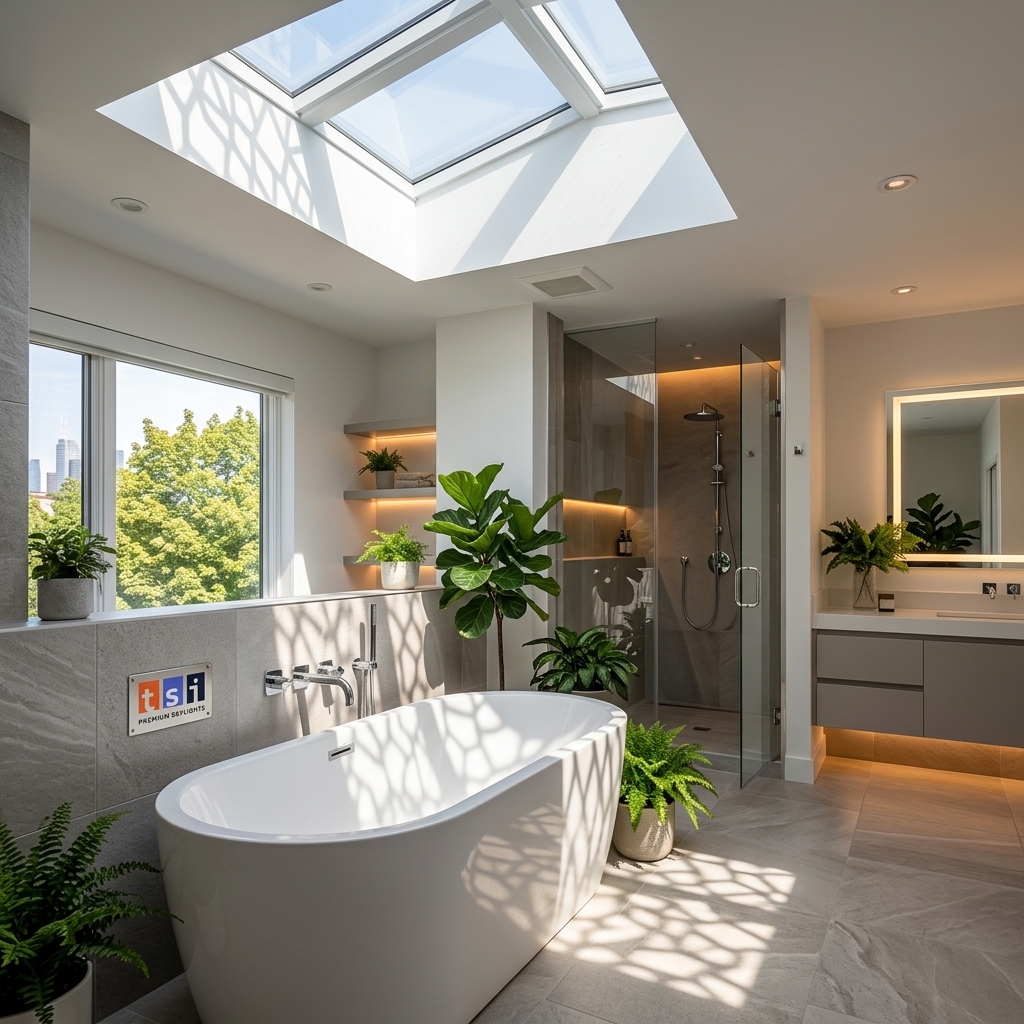
In a standard Toronto detached or semi-detached home, a bathroom window usually consists of a tiny, high horizontal slit of frosted glass, or a larger pane covered aggressively with heavy, permanently drawn blinds. Neither option is visually appealing, and both severely restrict light. A skylight points directly at the sky. Unless you live next door to a massive condominium tower looking down upon your roof, you achieve absolute, uncompromised privacy. You can bathe in a luxurious freestanding tub directly under an enormous panel of pristine, clear glass while remaining completely hidden from the street and the neighbours. The psychological liberation of bathing in natural light cannot be overstated.
Solving the Humidity Crisis: Venting Skylights
Bathrooms generate immense, localized humidity. A hot ten-minute shower releases substantial water vapor into a tiny cubic area. If this moisture is not evacuated immediately, it condenses on the cold drywall, aggressively peeling paint, rusting fixtures, and cultivating toxic black mold inside the ceiling cavity.
While mechanical exhaust fans are mandated by Ontario Building Code, they are notoriously noisy, frequently undersized for the total cubic volume of the room, and rely on inhabitants remembering to leave them running for 30 minutes post-shower. Enter the Venting Skylight.
The Chimney Effect in Action
By installing an electric or solar-powered venting skylight at the highest peak of the bathroom ceiling, you harness the powerful laws of thermodynamics. Hot, humid steam is lighter than dry air, so it naturally races upward to the ceiling. When you crack open a venting skylight, the super-heated moisture flushes forcefully out of the roof. Even a modest 4-inch opening in the glass will exhaust steam far faster and far more silently than a loud, whining mechanical wall fan. This natural passive ventilation is the ultimate weapon against bathroom mold.
Selecting the Ideal Unit for a Wet Environment
Bathrooms present uniquely hostile environmental conditions for architectural glazing. You cannot install a basic fixed acrylic dome and expect optimal results. You must specify materials engineered for extreme moisture.
- Polyurethane Frames are Mandatory: Traditional wooden skylight frames look stunning in a dry living room, but the constant bombardment of hot shower steam will eventually penetrate the clearcoat, causing the wood veneer to rot, stain, or peel. Premium bathroom skylights (such as specific models from VELUX) utilize heavy-duty wooden cores that are completely encased in a thick, seamless, moisture-proof white polyurethane layer. These frames easily wipe clean with a towel and will stubbornly resist water damage for decades.
- Advanced Triple Glazing: As discussed, bathrooms generate massive humidity. If the interior glass pane of your skylight is cold, that humidity will instantly condense into thick water droplets that rain back down on you. To prevent internal condensation, the interior pane of glass must remain incredibly warm. Upgrading to a triple-glazed, argon-filled High-Efficiency unit ensures the glass surface remains comfortably above the dew point, even when the Toronto air outside is a bitter -20°C.
- Moisture-Resistant Blinds: Do not install luxurious fabric cellular shades inside a shower enclosure. The fabric will absorb moisture and inevitably develop stubborn black mildew spores. Instead, if you absolutely require light control in a washroom, opt for aluminum Venetian blinds. They are entirely impervious to water, will not mold, and the aluminum slats can be angled to deflect intense summer heat while allowing steam to bypass the hardware and exit the venting window.
Structural Logistics: Flat vs. Cathedral Ceilings
Integrating a skylight into a bathroom renovation depends heavily on the existing architecture of your second floor.
Vaulted / Cathedral Ceilings
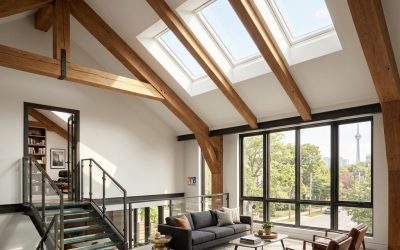
If the bathroom ceiling immediately touches the roof deck (a vaulted ceiling), installation is straightforward. The installers open the drywall, cut the roof joists, frame an immediate header, and drop the skylight into the hole. The interior finishing involves merely a shallow jamb extension, often clad in waterproof PVC or tiled to match the shower walls seamlessly.
Flat Ceilings with Unfinished Attics
If your bathroom has a standard flat ceiling, but there is empty, unused attic space separating the ceiling from the sloped roof above, the installation becomes more complex, but visually spectacular. The roofers cut the hole in the roof, and the carpenters cut a corresponding hole in the bathroom ceiling. They then construct a “Light Shaft” (a drywall tunnel) traversing the dusty attic space to connect the two holes. This light shaft can be flared outwards aggressively at the bottom, taking a standard 2×4 foot skylight and spreading the light across a 4×6 foot footprint on the bathroom floor. The exterior walls of this attic tunnel must be meticulously insulated (typically to R-30 minimum) and wrapped in strict vapour barriers to ensure the cold attic air does not freeze the drywall shaft leading to the bathroom.
The Superiority of “Sun Tunnels” for Powder Rooms
Often, a main floor powder room or a tiny basement half-bath is situated in the dead center of the house layout, trapped between interior walls with zero exterior exposure. Framing a massive traditional light shaft through the second floor to reach the roof is structurally impossible and financially ruinous.
This is where Tubular Skylights (Sun Tunnels) shine. A hyper-reflective aluminum tube (typically 10 or 14 inches in diameter) is snaked from a small dome on the roof, down through the attic, maneuvering around plumbing stacks and HVAC ducting, and terminating in a flush, frosted diffuser on the bathroom ceiling. It closely resembles a bright, modern recessed LED pot light, except it pumps 100% free, dazzling natural sunlight into the darkest closet-sized washroom. Sun Tunnels are inexpensive (typically between $1,200 and $2,000 completely installed) and require virtually no structural framing modifications.
Installation Timelines and Renovation Sequencing
If you are undertaking a “down to the studs” bathroom remodel, the skylight installation happens during the “rough-in” phase. Before the plumbers lay the heated floor cables and before the tile setters waterproof the shower pan, Toronto Skylight Installers arrives to alter the roof structure. Our carpentry and roofing teams will open the roof envelope, frame the structural headers, waterproof the exterior flashing, and frame the interior light shaft, typically within a fast 2-day sequence. We then hand the project back to your general contractor, who will apply the drywall, moisture-resistant green board, or wall tiles directly up into the newly framed shaft, ensuring a perfectly integrated final finish.
Transforming a damp, dark, claustrophobic bathroom into a soaring, brilliantly illuminated spa oasis yields one of the highest returns on investment in the Toronto real estate market. Contact our engineering team today to evaluate your roof structure and draft a custom daylighting plan for your renovation.