

Choosing a skylight company Toronto homeowners can rely on is a different exercise from hiring a general roofer. A skylight is a hole cut through a watertight roof assembly, and the quality of the work is invisible from the ground once the job is finished. You cannot see whether the flashing was woven properly into the shingle courses, whether the rough opening was framed to the manufacturer’s tolerance, or whether the light shaft was insulated and vapour sealed. You find out three or four years later, when a stain appears on the drywall. This guide explains what actually separates a competent skylight company from a crew that installs one or two units a season, what the work costs across Toronto in 2026, and which questions genuinely predict a dry, long lasting installation.
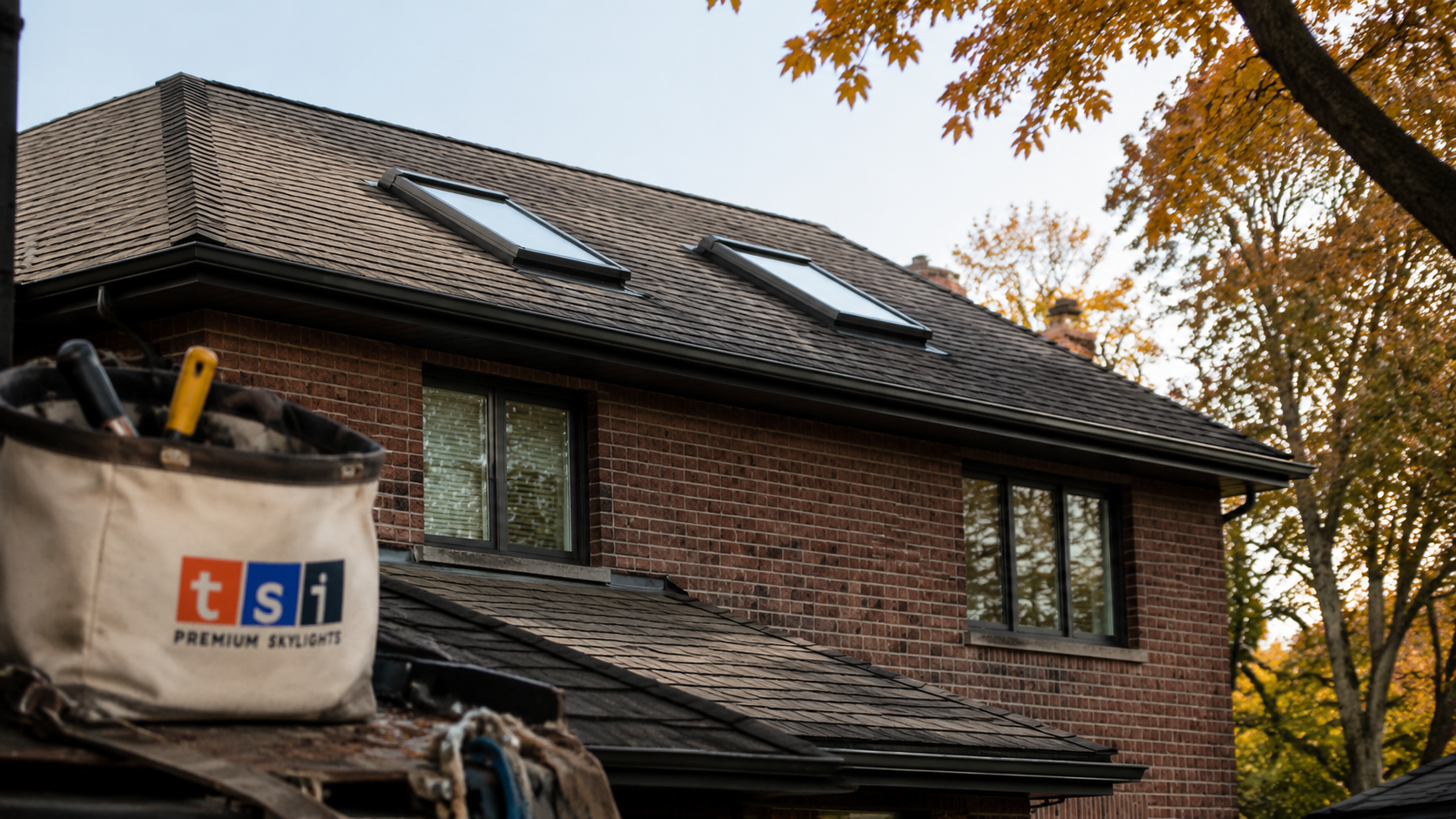
Why A Skylight Company Toronto Homeowners Hire Should Be A Specialist
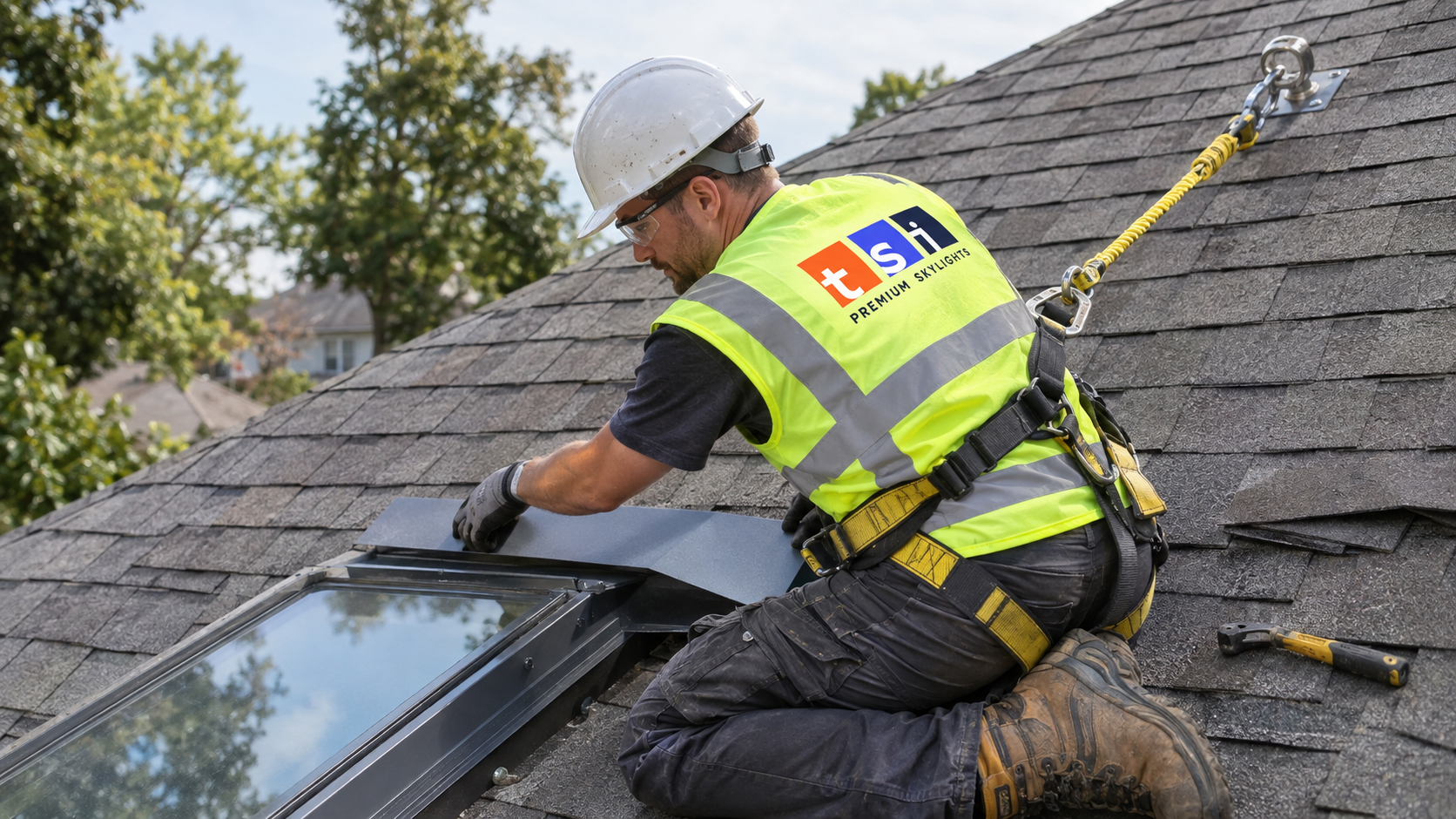
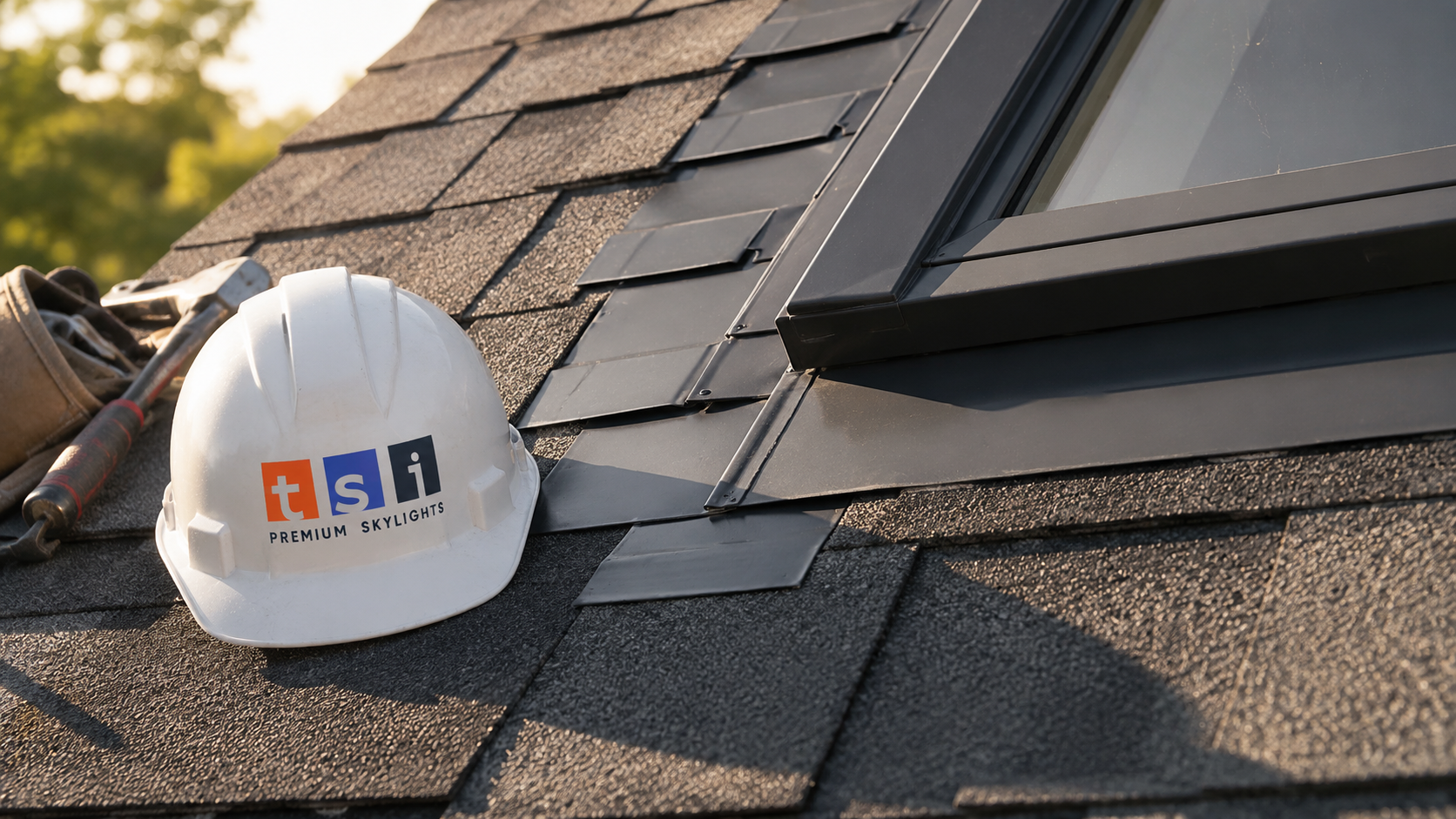
Roofing and skylight work overlap, but they are not the same trade. A roofer replaces a field of shingles, and the water management is largely a matter of gravity and overlap. A skylight interrupts that field. Water running down the slope has to be redirected around a raised obstruction and returned to the shingle plane below it, without ever getting behind the flashing. Every manufacturer publishes a flashing kit designed for a specific roof covering and a specific pitch range, and the kit only works if it is installed in the exact sequence the manufacturer specifies. A specialist skylight company Toronto wide installs these kits weekly and knows the sequence by heart. A general contractor who fits two skylights a year is working from a folded instruction sheet on a windy roof.
There is a second reason specialisation matters here. The interior side of a skylight is a carpentry and building science problem, not a roofing one. The light shaft that carries daylight from the roof deck down through the attic to the ceiling has to be framed square, insulated to current Ontario Building Code levels, and sealed with a continuous vapour barrier on the warm side. Get that wrong and the skylight will appear to leak every cold morning, when in fact warm indoor moisture is condensing on cold framing inside the shaft and dripping back out at the ceiling line. Crews that do not install skylights routinely tend to treat the shaft as drywall work and skip the air sealing entirely.
Toronto’s housing stock makes this more acute than it would be in a newer city. Across the old city, East York and much of Scarborough and North York, you are working on roofs framed with dimensional rafters at spacings that predate modern truss standards, sometimes with board sheathing rather than plywood. In Etobicoke and the postwar subdivisions, low slope additions and split level rooflines create pitch transitions that complicate flashing. A company that only knows new construction detailing will struggle on these roofs.
Credentials That Actually Mean Something
Certification claims are easy to make and worth verifying. In Ontario the meaningful signals are narrower than most homeowners expect.
- Manufacturer training. The major skylight manufacturers run installer training programs. A company that has completed one can order the correct flashing kit for your roof covering and pitch, and can register the product warranty in your name. Ask which manufacturers they are trained with, and ask them to name the flashing kit they intend to use on your roof.
- WSIB coverage. Every crew on your roof should be covered. Ask for a current clearance certificate, not a verbal assurance. This protects you from liability if someone is injured on your property.
- Liability insurance. Two million dollars is the practical standard for residential roof work in the GTA. Ask for the certificate directly from the insurer or broker.
- Working at heights training. Ontario requires it for anyone working on a sloped roof. If a crew arrives without harnesses and anchors on a pitched roof, that tells you what their standards are elsewhere.
- A permanent business address and a real service history. Skylight warranties run ten to twenty years. A company with no fixed address is unlikely to be reachable in year eight.
What does not mean much: unverifiable badges on a website, membership in associations that require only a fee, and claims of decades in business that cannot be checked against a corporate registration or a body of dated reviews.
What Skylight Work Costs In Toronto In 2026
Pricing varies with unit type, roof access, pitch, and whether a light shaft has to be built. The ranges below reflect typical supplied and installed residential work in the Toronto area in 2026, including flashing kit, labour, and disposal. Complex shaft construction, drywall finishing and painting are usually quoted separately.
| Scope of work | Typical 2026 range, supplied and installed | Notes |
|---|---|---|
| Replace an existing fixed skylight, same size | $1,600 to $2,900 | New flashing kit, no interior work if shaft is sound |
| Replace with a manual venting unit | $2,300 to $3,700 | Includes operating hardware and screen |
| Replace with a solar powered venting unit | $3,100 to $4,900 | Rain sensor and remote typically included |
| New skylight, cut in, existing open attic or vaulted ceiling | $3,200 to $5,500 | Framing, flashing, interior finishing extra if shaft needed |
| New skylight with a full light shaft through an attic | $4,800 to $8,500 | Shaft framing, insulation, vapour barrier, drywall |
| Sun tunnel, tubular daylight device | $1,400 to $2,600 | No structural framing, single day installation |
Two cost drivers surprise homeowners. The first is roof covering. Flashing kits for asphalt shingles are the least expensive; standing seam metal, slate and tile require specialised detailing and add several hundred dollars per unit. The second is the age of the surrounding roof. If the shingles around a skylight are near the end of their service life, a good company will tell you that replacing the skylight alone means disturbing brittle shingles that will need replacing shortly anyway, and will price both options honestly rather than pretending the problem does not exist.
Reading A Skylight Quote Properly
A quote that says “supply and install one skylight” tells you nothing. A quote you can compare and hold a company to specifies the following.
- The exact unit. Manufacturer, model, size designation, glass package, and whether it is fixed, manual venting, electric or solar venting.
- The flashing kit by name. Deck mounted or curb mounted, matched to the roof covering and the roof pitch.
- Underlayment detailing. Whether self adhered ice and water membrane is being applied around the opening and how far it extends up and down the slope.
- Interior scope. Whether the shaft is being framed, insulated, vapour sealed and drywalled, and whether taping, priming and painting are included or excluded.
- Warranty terms, split. Manufacturer warranty on the unit and glass seal, and the company’s own workmanship warranty on the installation. These are different things and both should be written down.
- Disposal and site protection. Removal of the old unit, tarping of the interior, and cleanup of nails from the grounds.
If two quotes differ by a thousand dollars, the difference is almost always in the interior scope, the glass package, or the flashing kit. It is rarely in the labour rate.
Borough By Borough: What Changes Across Toronto
Toronto is not one housing market, and the practical work of installing a skylight changes noticeably as you move across it. A skylight company working across the whole city should be able to describe these differences without prompting.
Etobicoke is dominated by postwar bungalows, side splits and back splits, many with shallow attics and low slope rear additions. Bungalow ceilings are often close to the roof deck, which keeps shaft construction short and costs down. The split level rooflines, however, produce awkward pitch changes where flashing has to be detailed carefully. Homeowners comparing options here can start with our overview of skylight installation and repair services across Etobicoke.
Scarborough has a large stock of 1950s to 1970s bungalows and two storey homes with generous simple roof planes, which is ideal for skylights. Many of these homes have long interior hallways and galley kitchens with no exterior wall, exactly the rooms that benefit most from overhead daylight.
North York spans everything from modest postwar homes to large rebuilt houses with steep pitches and complex rooflines. Steeper pitches change which flashing kit applies and often mean the skylight is highly visible from the street, which makes unit sizing and alignment an aesthetic decision as well as a technical one.
East York and the older parts of the former city of Toronto have the most demanding roofs: narrow lots, steep slopes, board sheathing, rafters that were never spaced to a modern module, and knob and tube era framing that occasionally has to be reworked. Openings here frequently need a header and a doubled rafter, which is structural work that must be done properly.
Across all of them, the correct installation service for a new opening is the same discipline: careful, code compliant skylight installation done to the manufacturer’s flashing sequence.
Permits, Code And When You Need Them
In Toronto, replacing an existing skylight with a unit of the same size in the same opening is generally treated as maintenance and does not require a building permit. Creating a new opening is different. Cutting a rafter or a truss member is structural work, and any alteration to the structure of a house falls under the Ontario Building Code and the City of Toronto’s permit process.
| Situation | Permit generally required | Why |
|---|---|---|
| Same size replacement in existing opening | No | No structural change |
| New opening between existing rafters, no cutting | Usually no, confirm with the city | No structural member altered |
| New opening requiring a rafter to be cut and headered | Yes | Structural alteration |
| Any opening cut through engineered roof trusses | Yes, with engineering | Trusses cannot be modified without a design |
| Enlarging an existing opening | Usually yes | Framing is altered |
Be direct with any company that tells you a permit is never needed for a new skylight. Truss roofs in particular cannot be cut without an engineer’s design, and a company willing to cut one anyway is creating a problem that will surface at your next home sale.
Warning Signs Worth Walking Away From
- A quote given without anyone looking in the attic. Nobody can price a light shaft, confirm rafter spacing or spot existing moisture damage from the driveway.
- Reluctance to name the manufacturer or model. Generic “high quality skylight” wording usually means the unit will be chosen on price at ordering time.
- Sealant as the waterproofing strategy. Caulk is a supplement to flashing, never a substitute. A company that talks about sealing rather than flashing is describing a repair that will fail.
- Pressure to decide today. Legitimate seasonal scheduling exists; artificial deadlines to secure a discount do not.
- Cash only, no written contract. Ontario consumer protection rules give you rights on a written contract that you simply do not have on a handshake.
- No workmanship warranty in writing. The manufacturer covers the unit. Only the installer can cover the installation, which is where nearly all failures originate.
Timing Your Project For The Toronto Season
Skylight work can be done in most conditions, but not all seasons are equal. Early autumn is the strongest window in Toronto. Temperatures are moderate enough for sealants and self adhered membranes to bond properly, days are still long, and the work is finished before the sustained autumn rain and the first freeze thaw cycles arrive. Late spring is the second best window for the same reasons.
Deep winter installations are possible for straightforward replacements but are slower and more expensive, because adhesives need warming, shingles are brittle in the cold and crews work shorter days. Mid summer is workable, though roof surface temperatures in July make for difficult conditions and schedules are usually at their tightest.
| Season | Suitability | Practical considerations |
|---|---|---|
| Early autumn, September to late October | Best | Ideal sealant temperatures, dry stretches, finished before winter |
| Late spring, May to June | Very good | Stable temperatures, some rain delays |
| Summer, July to August | Good | Very hot roof surfaces, tight scheduling |
| Late autumn, November | Fair | Cold adhesive performance, shorter working days |
| Winter, December to March | Limited | Emergency and simple replacements only, higher cost |
Questions To Ask Before You Sign
These six questions separate specialists from generalists quickly, and none of them require technical knowledge to ask.
- Which flashing kit will you use on my roof, and why that one for my pitch and roof covering?
- Will you go into my attic before quoting, and what will you be looking for?
- Is the interior shaft framing, insulation, vapour barrier and drywall included in this price or excluded?
- What is your workmanship warranty in years, and what does it specifically exclude?
- Will you register the manufacturer warranty in my name, and will you give me the paperwork?
- If the roof deck around the opening is rotten when you open it up, how is that priced?
A company that answers all six clearly and in writing is a company that has done the work often enough to know the answers. That, far more than the size of the discount, is what determines whether your ceiling is still dry in a decade.
How do I verify a skylight company Toronto wide is properly insured?
Is it cheaper to replace a skylight at the same time as the roof?
How long should a modern skylight last in Toronto’s climate?
Do I need a permit to add a skylight in Toronto?
What should a skylight company Toronto based include in a written quote?
Which Toronto boroughs do you serve?
Talk To A Skylight Company Toronto Homeowners Trust
Skylights are one of the few home improvements that change how a room feels every single day, and one of the few where the difference between good and poor workmanship stays hidden until it becomes expensive. Toronto Skylight Installers works on skylights exclusively, across every borough of the city, which means the flashing sequence, the shaft detailing and the attic assessment are routine rather than occasional.
Call us today at (416) 365-7557 or request a free consultation. We will look in your attic, confirm what your roof can take, and give you a written quote that names the unit, the flashing kit and the warranty terms.
Toronto Skylight Installers serves Toronto and the surrounding GTA, including Etobicoke, Scarborough, North York, East York and the communities beyond the city boundary.