

A skylight cover can do several very different jobs. Inside, it can darken a bedroom at sunrise, soften glare over a desk, or slow heat loss through the glass on a cold night. Outside, it can stop solar heat before it reaches the glass, which is something no interior blind can fully do. And sometimes a cover is a sign of something else: a patch over a skylight that really should be replaced. Knowing which job you need done is the key to choosing the right one.
This guide compares interior covers and blinds with exterior awnings and screens, explains how each handles heat, cold and glare, covers the practical details of fitting them to fixed and venting skylights, and explains when a cover is a workaround for a unit that has reached the end of its life.
What A Skylight Cover Can And Cannot Do
Before comparing products, it helps to be clear about the problem you are solving. Most people looking for skylight covers are dealing with one or more of these:
- Too much light at the wrong time. Early sunrise in a bedroom, glare on a screen, or direct sun on furniture.
- Heat gain. A room that gets warm on sunny afternoons, particularly under a large unit or one facing south or west.
- Heat loss and cold drafts. Cold glass radiating chill into the room on colder nights, especially with older units.
- Privacy. Rare with skylights, but possible where a neighbouring building overlooks the roof.
- Protection. Guarding a damaged or vulnerable skylight until it can be repaired or replaced.
A cover can address all of these to a degree. What it cannot do is fix a leak, clear fogged glass, repair a cracked dome, or stop condensation caused by an uninsulated shaft. Those need repair or replacement, and we come back to them later in this guide.
For many rooms, the simplest answer is a factory-made blind designed for the skylight model. Our range of room darkening skylight shades for bedrooms and media rooms shows the kind of fitted blinds that block most light while keeping a clean look.
Interior Covers And Blinds
Interior options are the most common skylight cover because they are easy to operate, sit out of the weather and suit most units. The main types are:
Room-darkening blinds
These use an opaque fabric, often with a reflective or coated backing, running in side channels fitted to the skylight frame. The channels stop light leaking around the edges. They are the usual choice for bedrooms, nurseries and media rooms. On most roof window models they are operated with a pole, a motor or a solar-powered motor.
Light-filtering and pleated blinds
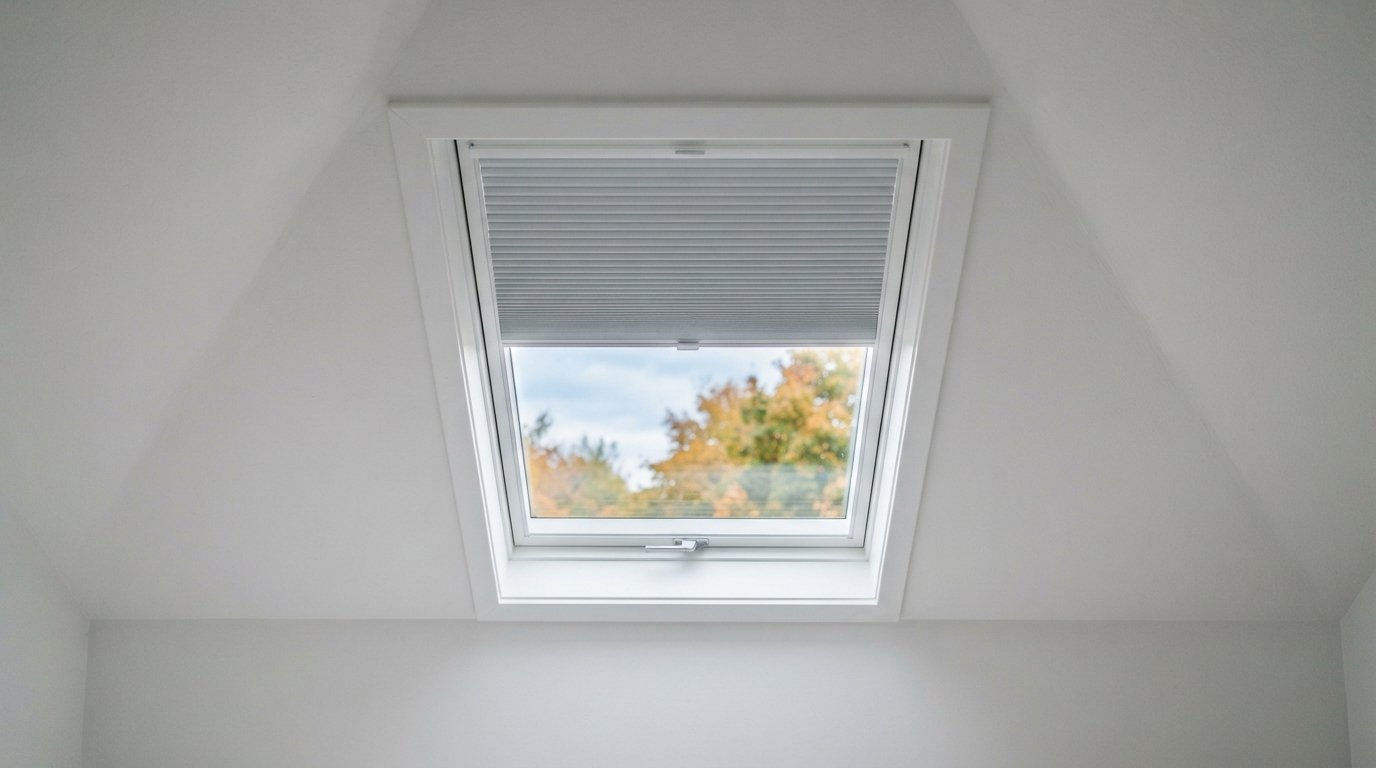
These soften and diffuse daylight rather than block it. They are useful in kitchens, offices and living spaces where you still want daylight but less glare. Light-filtering skylight shades come in various fabrics and colours to suit the room.
Cellular and insulating covers
Cellular or honeycomb blinds trap pockets of air in their fabric structure, which adds a modest insulating layer when drawn. Some owners also use custom-made insulating panels, typically a rigid insulation board faced with fabric, fitted snugly into the shaft or over the ceiling opening during the coldest weeks.
Roller and Venetian styles
Roller blinds and Venetian-style blinds are available for some roof windows. Venetian blinds allow fine control of light direction, which can be useful in bathrooms and kitchens. For a broader comparison of fabrics and operating styles, see our guide to skylight blinds and shades.
A caution about insulating covers: when a tight cover is drawn over cold glass, the air between the cover and the glass gets colder. Any moist room air that finds its way behind the cover can condense on the glass more heavily than before. Covers designed for this purpose manage it better, and opening them during the day helps. If you see water running down the glass behind a cover, the underlying moisture issue needs attention.
Exterior Awnings, Screens And Shutters
Exterior skylight covers work on a different principle. Instead of dealing with heat or light after it passes through the glass, they block it before it arrives.
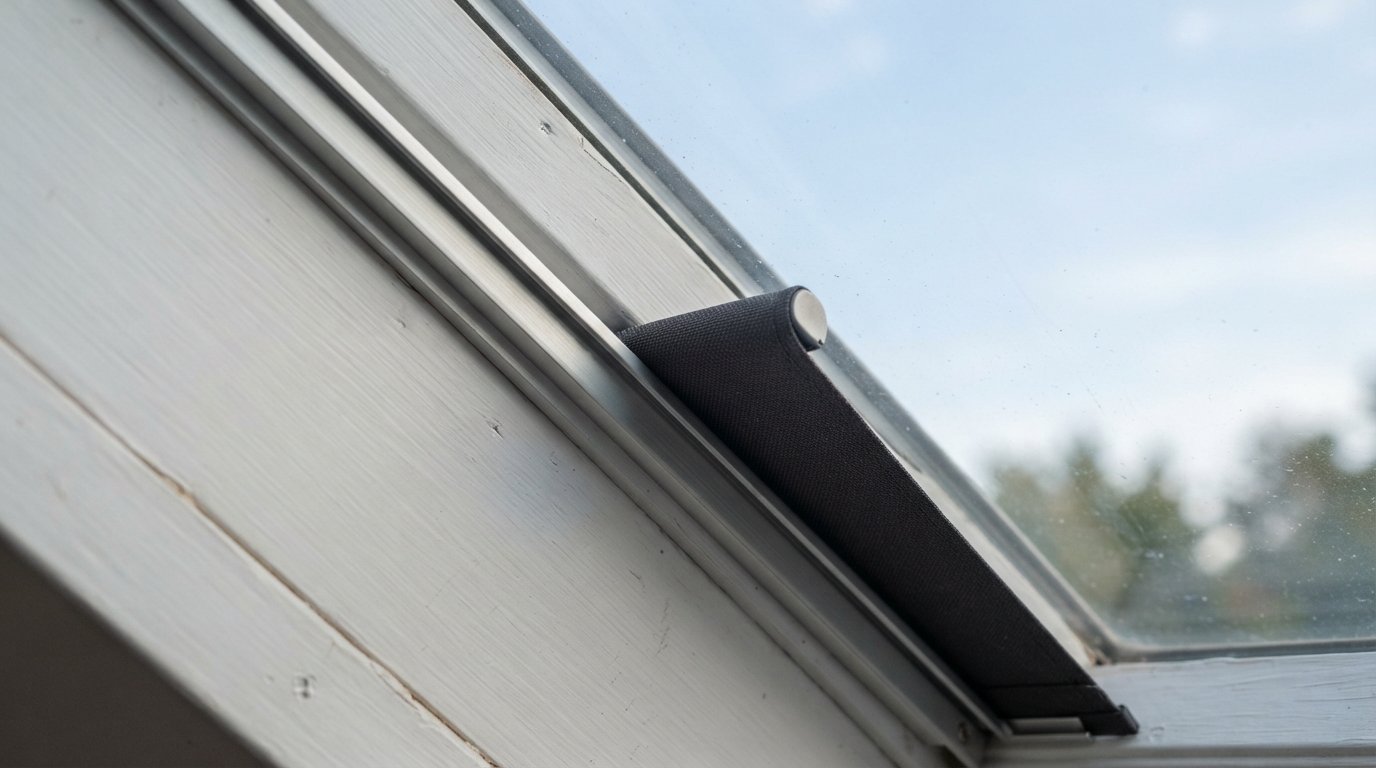
- Exterior awning blinds. A mesh fabric stretched over the outside of the glass. It cuts a large share of solar heat before it reaches the window, while still letting you see out. Many are designed to work with venting units, allowing some air flow while shading.
- Roller shutters. Available for some roof window models, these offer near-total darkening, some added insulation and protection from hail. They are usually motorized.
- Protective screens and guards. More common on commercial flat roofs, these protect domes and prevent falls through skylights. On homes, they can protect a dome from falling branches.
- Temporary covers. After storm damage or a crack, a secured temporary cover keeps weather out until repairs can be made. This should be done safely by a professional.
Exterior covers are usually the most effective way to reduce heat gain, but they need a compatible skylight, a safe way to install and service them, and some thought about how they will look from outside.
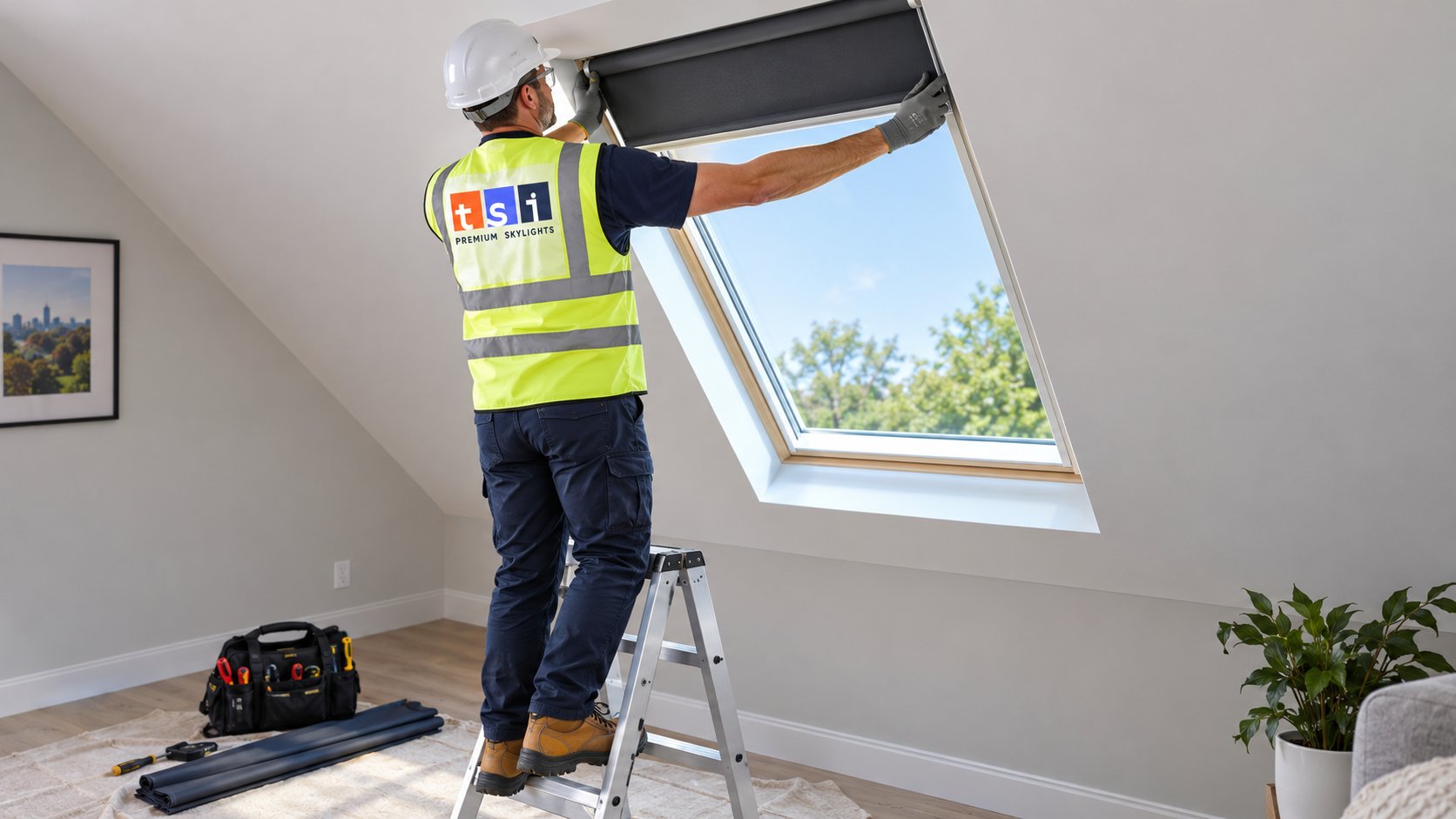
One practical point often decides the question. An exterior skylight cover is mounted on the roof side, so it has to be installed, and occasionally serviced, by someone working on the roof. On many roof windows, factory awnings are designed to be fitted from inside through the open sash, which avoids that. On fixed units, or on steep or high roofs, exterior work means proper fall protection, which is a job for a trained installer rather than a homeowner. Ask whether the product you are considering can be installed and removed from inside before you commit to it.
Interior Versus Exterior: How They Compare
| Factor | Interior blind or cover | Exterior awning or shutter |
|---|---|---|
| Solar heat on sunny days | Helps, but much of the heat has already passed through the glass | More effective, since heat is blocked before reaching the glass |
| Heat loss on cold nights | Cellular or insulating covers add a modest layer | Shutters add some insulation; mesh awnings add little |
| Glare control | Very good, with choices from light-filtering to full darkening | Good, with a view still possible through mesh awnings |
| Room darkening | Room-darkening blinds in side channels work well | Roller shutters give the most complete darkening |
| Operation | Pole, motor or solar motor from inside | Usually a motor or solar motor; some awnings are manual |
| Maintenance | Dusting and occasional cleaning | Exposed to weather; occasional cleaning and inspection |
| Compatibility | Wide range of models, especially factory-fitted | Limited to compatible roof windows and frames |
Many owners combine both: an exterior awning to manage heat on sunny afternoons and an interior blind for darkening or glare. For a hot room under a large skylight, that combination often solves the problem without replacing the unit.
Fitting Covers To Fixed And Venting Skylights
How easy it is to fit a skylight cover depends heavily on the type and age of the unit. Here is how the common situations usually work out.
| Skylight type | Typical cover options | What to watch for |
|---|---|---|
| Modern fixed skylight | Factory blinds in side channels; exterior awnings on compatible models | Blinds are ordered by model and size code from the frame label |
| Manual venting skylight | Factory blinds operated by pole; exterior awnings that allow venting | Cover must not interfere with the opening mechanism |
| Electric or solar venting skylight | Motorised or solar blinds that pair with the same controls | Check compatibility with the existing control system |
| Older or site-built curb skylight | Custom blinds, fabric covers or insulating panels at the ceiling opening | Factory products may not fit; measure the shaft or ceiling opening instead |
| Plastic dome on a flat roof | Interior shade at the ceiling; exterior screens or guards | Domes have few fitted blind options; consider replacement if heat is severe |
| Sun tunnel | Daylight dimmer accessories where the manufacturer offers them | Standard blinds do not fit tubular units |
For modern roof windows, the model and size code are usually on a label inside the frame. That code tells the installer exactly which blind or awning fits. For older units without a readable label, a site visit to measure is the safest way to avoid ordering the wrong size.
Venting units need extra care. The cover must not block the sash when it opens, and a motorized vent should be checked with the blind in place. Many manufacturers design their blinds to move with the sash or sit in channels clear of it. Aftermarket covers are more likely to interfere.
When A Cover Is Really A Workaround
We often visit houses where a skylight cover has been used to hide a problem rather than solve it. If any of these apply, the cover is buying time, not fixing anything:
| What you are covering up | What is actually happening | Does a cover help? | The better fix |
|---|---|---|---|
| Fogged glass between panes | The insulated glass seal has failed and thermal performance has dropped | Hides the view only | Replace the unit or, where the manufacturer allows, the glazing |
| Recurring drips or staining | A flashing or unit leak, or condensation from an uninsulated shaft | No; water continues behind the cover | Repair the flashing or insulate and seal the shaft |
| Cracked or crazed plastic dome | The dome has become brittle with age and UV exposure | No; water and air still get in | Replace the dome or the whole unit |
| Extreme heat from an old single-layer unit | Poor glazing lets in a lot of solar heat | Partly, especially an exterior awning | A modern unit with better glazing, plus a blind |
| Drafts around the frame | Air leakage at the frame, curb or shaft | Very little | Air sealing and, if needed, new flashing and frame |
In these cases, replacement often makes more sense. A new skylight with modern glazing will usually perform far better than an old one with a cover, and it can be ordered with factory blinds or an awning from the start. Our Halton Region skylight installation, replacement and repair team, like our crews across the GTA, can assess whether a cover or a replacement is the better investment.
Choosing A Skylight Cover Room By Room
The same skylight can need a very different cover depending on the room beneath it. Here is how we usually think it through with clients.
Bedrooms and nurseries. The priority is darkness at sunrise, which in late spring and early summer arrives very early. A room-darkening blind in side channels is the standard answer. If the skylight also faces south or west and the room overheats in the afternoon, an exterior awning adds heat control without affecting the darkening.
Kitchens and living areas. Most people want to keep the daylight here and only take the edge off glare. A light-filtering pleated or cellular blind works well, drawn part way on bright afternoons and left open the rest of the time.
Home offices. Glare on a screen is the main complaint. Consider where the sun falls at the times you work; a light-filtering blind or a Venetian blind that can be angled often solves it.
Bathrooms. Humidity is high, so choose materials suited to damp rooms and keep the skylight cover open when the room is not in use, so moisture does not sit trapped against the glass.
Hallways and stairwells. Often the skylight is the only light source, and a cover is rarely needed at all. If heat is a problem, an exterior awning keeps the light while reducing the heat.
Costs And Practical Choices
Prices vary widely with type, size, operation and whether the product is interior or exterior. As a very rough guide, a manual factory blind for a standard roof window is typically at the lower end, powered or solar blinds cost more, and exterior shutters are usually the most expensive option per window. Custom covers for older or unusual units vary with the materials and fitting. Treat any figure as an estimate until the unit has been identified or measured.
A few practical tips from installations we have done:
- Ordering blinds with a new skylight is the easiest route, since sizes are matched to the unit and fitting takes place the same day.
- For high ceilings, powered or solar blinds avoid the need for a long pole and are easier to use daily.
- For bedrooms, choose room-darkening blinds with side channels; light-filtering fabrics will still let the sunrise through.
- For hot rooms, consider an exterior awning first, then add an interior blind for glare if needed.
Skylight Cover Questions
Is an interior or exterior cover better for heat?
Can I put a blind on a venting skylight?
Will an insulating cover stop condensation?
How do I find the right blind for my skylight?
Should I cover an old leaking skylight?
Are there covers for sun tunnels?
Find The Right Skylight Cover For Your Room
Toronto Skylight Installers can identify your skylight, recommend interior blinds or exterior awnings that suit the room, and tell you honestly if a replacement would serve you better than a cover. We supply and fit factory blinds for most modern roof windows.
Call us today at (416) 365-7557 or request a free estimate.
Serving homeowners in Halton Region and across the wider GTA.