

Adding a basement skylight Toronto homeowners can actually rely on is one of the most rewarding upgrades you can make to a finished below-grade space, but it is also one of the most misunderstood. A skylight is, by definition, a roof window. So how do you bring true overhead daylight into a room that sits at or below grade, often with the main roof three storeys above? The answer depends entirely on your home’s configuration: whether you have a walk-out basement, a partial below-grade room under a single-storey extension, or a fully submerged space with no direct roof above it. In this guide we explain what is genuinely possible in 2026, what it costs across the GTA, and where the engineering limits sit.
Toronto’s housing stock is unusually varied. From century homes in Leslieville with low single-storey rear additions, to ravine-lot properties in Etobicoke and Scarborough with true walk-out basements, to side-split bungalows in North York, the path to overhead light differs house by house. The good news is that for many configurations, natural daylight below grade is absolutely achievable through skylights, sun tunnels, or light wells. As a certified VELUX dealer, Toronto Skylight Installers assesses each property on its specific structure rather than offering a one-size answer.
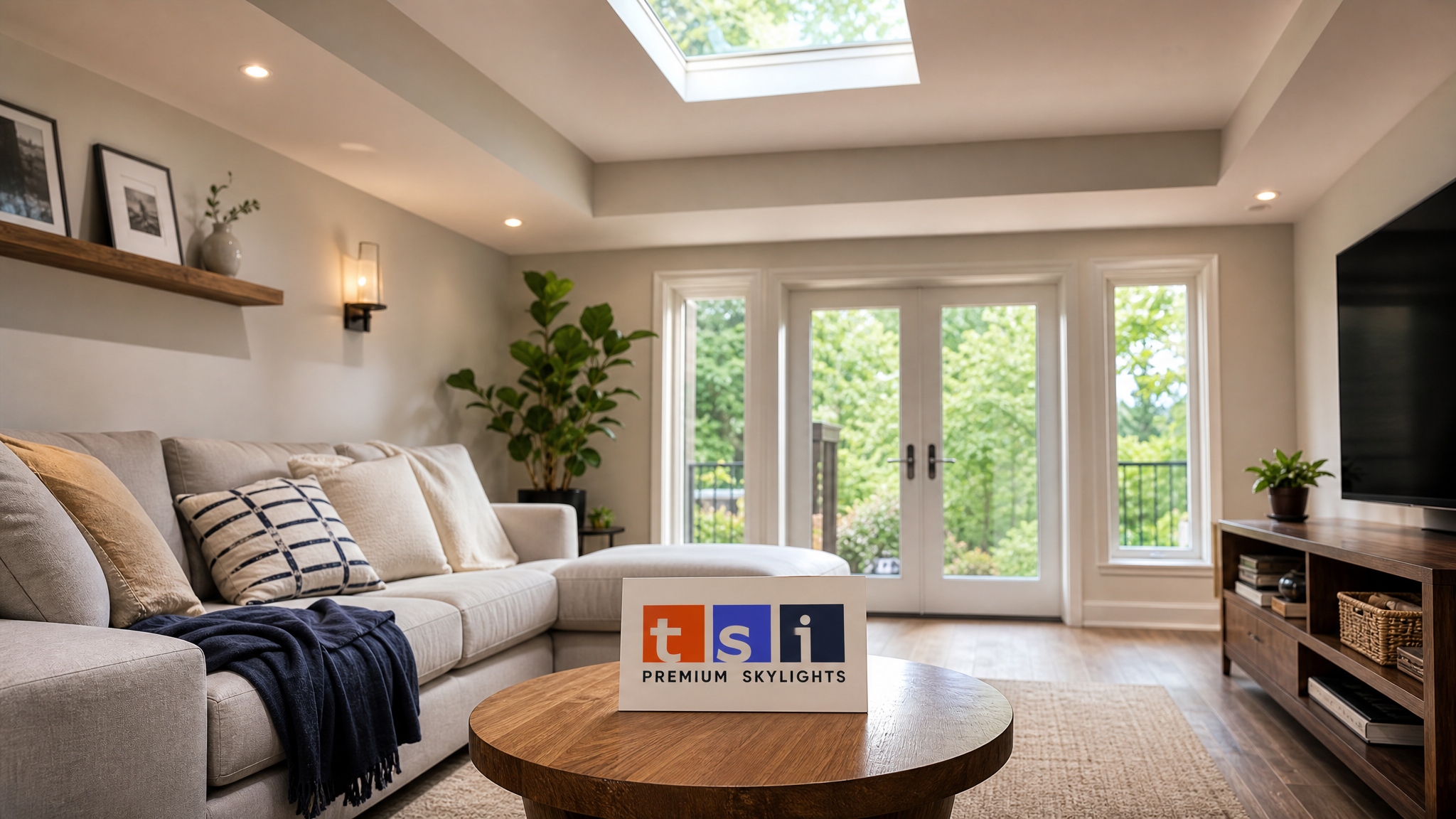
What a Basement Skylight Toronto Project Actually Looks Like
The phrase “basement skylight” covers four very different scenarios, and understanding which one applies to your home is the first step. A basement skylight Toronto installation almost never means cutting a hole through three storeys of house. Instead, it relies on one of the following structural conditions to deliver overhead daylight to a below-grade or partly below-grade room.
The first and easiest scenario is a walk-out basement on a sloped or ravine lot, where one wall is fully exposed at grade. If a single-storey section, sunroom, or covered patio sits directly above part of that lower level, a true roof skylight can be installed in that lower roof. The second scenario is a below-grade room under a one-storey extension, such as a rear addition or breakfast nook, where the roof is close enough to the room for a direct or shaft skylight. The third is the light well or sunken courtyard approach, where an exterior excavation creates a small open shaft beside a basement wall, glazed at grade. The fourth is the sun tunnel, a reflective tube that channels rooftop daylight down through upper floors into a basement room.
| Configuration | Direct roof skylight possible? | Best daylighting method | Typical complexity |
|---|---|---|---|
| Walk-out basement with low roof above | Yes | Fixed or vented roof skylight | Moderate |
| Below-grade room under 1-storey extension | Yes | Skylight with short light shaft | Moderate |
| Fully submerged room, multi-storey above | No | Sun tunnel or exterior light well | High |
| Basement beside exposed foundation wall | No | Exterior light well + wall glazing | High |
This is why a site assessment matters so much. The same homeowner request can lead to a straightforward skylight installation in one house and a far more involved structural project in the next. The roof geometry above the room is the single biggest factor in cost and feasibility.
Walk-Out and Below-Grade Rooms: The Achievable Path
If your home has a walk-out basement on a slope, or a below-grade room sitting under a single-storey rear addition, you are in the most favourable position. In these cases the roof directly above the room is low enough that a roof window can deliver daylight without a tall, awkward shaft. A fixed skylight is ideal where you only want light, while a vented unit adds passive summer ventilation, drawing warm air upward and out of the lower level on hot GTA afternoons.
For a below-grade room where the ceiling sits a metre or so beneath the roof deck, a light shaft is built between the roof opening and the room ceiling. Splaying the shaft walls outward at the bottom widens the pool of daylight and softens the light. In summer, low-E coated glazing and an integrated blind keep solar heat gain in check so the room stays comfortable without overloading the air conditioning. A solar-powered fresh air skylight is particularly well suited here because it opens automatically and closes on rain sensing, with no wiring run required to a finished ceiling.
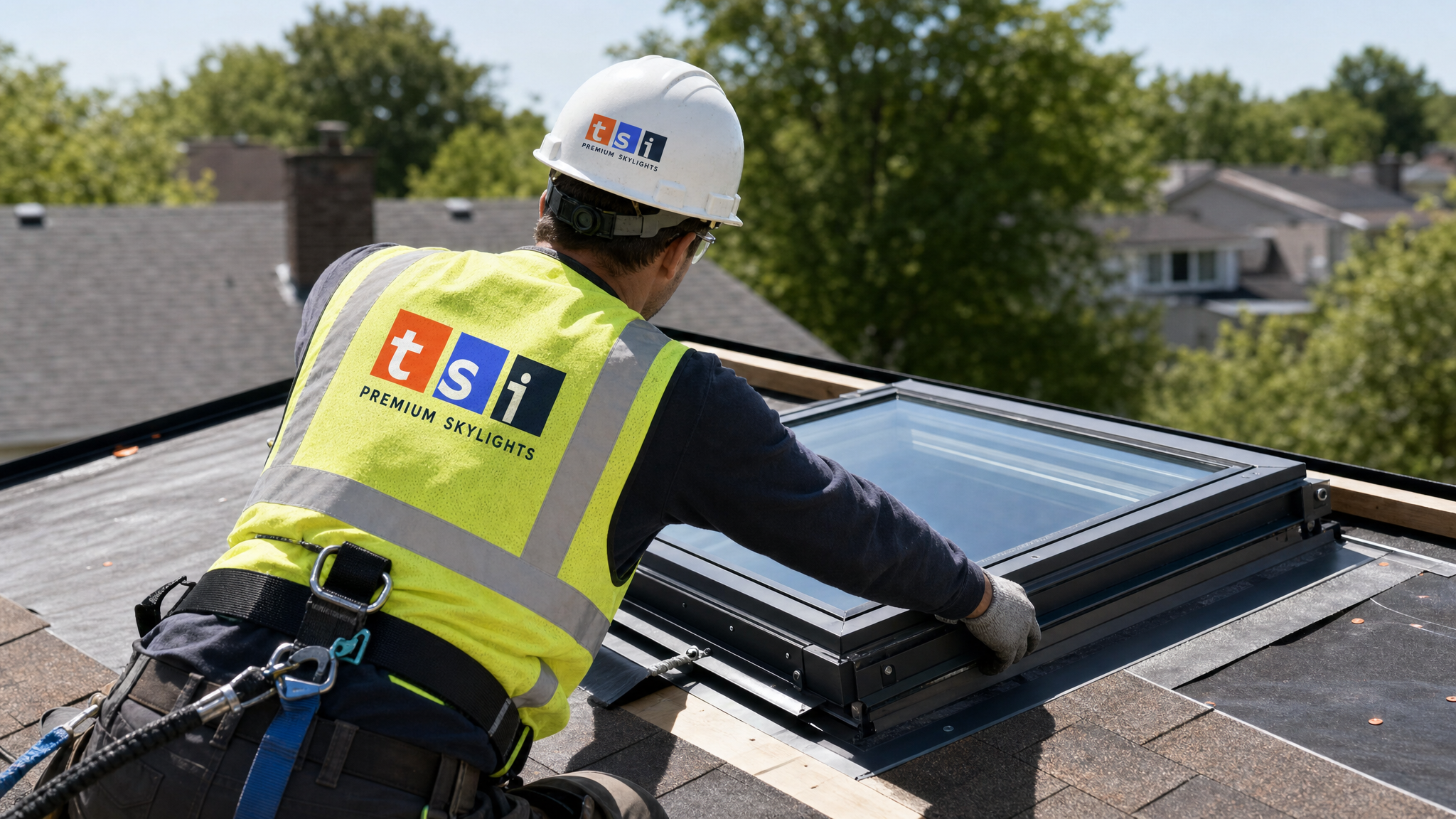
Flashing is where these projects succeed or fail. Toronto’s freeze-thaw cycles and summer downpours punish any weak detail, so a proper engineered flashing kit matched to your roofing material is non-negotiable. We always specify a manufacturer skylight flashing kit rather than improvised metal, because the layered head, sill, and step flashing is what keeps the assembly watertight for decades. On low-slope or near-flat roof sections common to rear additions, a flat roof skylight with a curb-mounted upstand is the correct specification.
| Roof above room | Recommended unit | Ventilation | Summer heat control |
|---|---|---|---|
| Low pitched shingle roof | Deck-mounted fixed or vented | Optional vented model | Low-E glass + factory blind |
| Near-flat addition roof | Flat-roof skylight on curb | Solar-vented option | Solar reflective glazing |
| Standing-seam metal | Deck-mounted, metal flashing kit | Manual or solar vent | External awning blind |
| Membrane / TPO roof | Curb-mounted with upstand | Fixed (sealed) preferred | Heat-rejecting laminate |
When There Is No Roof Above: Sun Tunnels and Light Wells
The harder case is a fully submerged basement room with two or three storeys of house above it. Here a conventional roof skylight cannot reach the room, so we turn to two specialised solutions. The first is the sun tunnel, a rigid or flexible reflective tube that captures daylight at a rooftop dome and channels it down through a chase built into closets, bulkheads, or wall cavities. A sun tunnel can run surprisingly far when the reflective tube is high quality, and it delivers a clean, neutral daylight to interior rooms with no plumbing or smoke from heat gain.
The second solution is exterior: a light well or sunken courtyard. This involves excavating a small open pit against an exposed portion of the foundation wall, waterproofing it, adding drainage, and installing glazing or an enlarged egress-style window at the basement wall. While this is not a skylight in the strict overhead sense, it is often the only way to bring real daylight into a room with no usable roof above. It also frequently doubles as a code-compliant egress, which matters for any below-grade bedroom in Ontario.
| Solution | Daylight delivered | Structural impact | Egress benefit |
|---|---|---|---|
| Sun tunnel (rigid) | Moderate, bright spot | Minimal, tube chase only | None |
| Sun tunnel (flexible, long run) | Soft, diffuse | Minimal | None |
| Exterior light well + window | High, directional | Excavation + waterproofing | Can provide egress |
| Sunken courtyard glazing | Very high | Significant excavation | Strong egress option |
Toronto Building Code, Permits, and Drainage
Any project that alters the roof structure or the foundation in the GTA triggers Ontario Building Code considerations and, in most cases, a City of Toronto building permit. Cutting a roof opening means new headers and rafters sized to carry redistributed loads, which an installer should detail before work begins. Exterior light wells add a second layer of complexity: they must be drained so they never pond against the foundation, and the waterproofing must integrate with the existing weeping tile system. In summer, a clogged or undersized light-well drain is the most common cause of basement leaks after heavy GTA thunderstorms.
Below-grade bedrooms have specific egress requirements under the Building Code, with minimum opening dimensions and sill heights. If your daylight project is in a bedroom, it is worth designing the window or light well to satisfy egress at the same time, capturing two benefits from one excavation. Condensation control also matters: any glazing assembly that bridges from a cool below-grade space to outdoor air must use thermally broken frames and insulated glass to avoid summer humidity collecting on cold surfaces. Existing units that fog or drip are candidates for skylight repairs rather than full replacement.
2026 GTA Cost Ranges for Basement Daylighting
Costs vary widely because the structural path varies. A straightforward roof skylight above a walk-out is far cheaper than an excavated light well. The figures below reflect typical 2026 Greater Toronto Area pricing for supply and professional installation, before any structural engineering or permit fees that complex projects may require.
| Project type | Typical 2026 GTA range | Permit usually required? | Timeline |
|---|---|---|---|
| Fixed skylight over low walk-out roof | $2,500 to $4,500 | Often yes | 1 to 2 days |
| Vented / solar skylight with short shaft | $3,800 to $6,500 | Yes | 2 to 3 days |
| Sun tunnel to basement room | $1,800 to $3,800 | Sometimes | 1 day |
| Exterior light well + glazing | $7,000 to $18,000+ | Yes | 1 to 3 weeks |
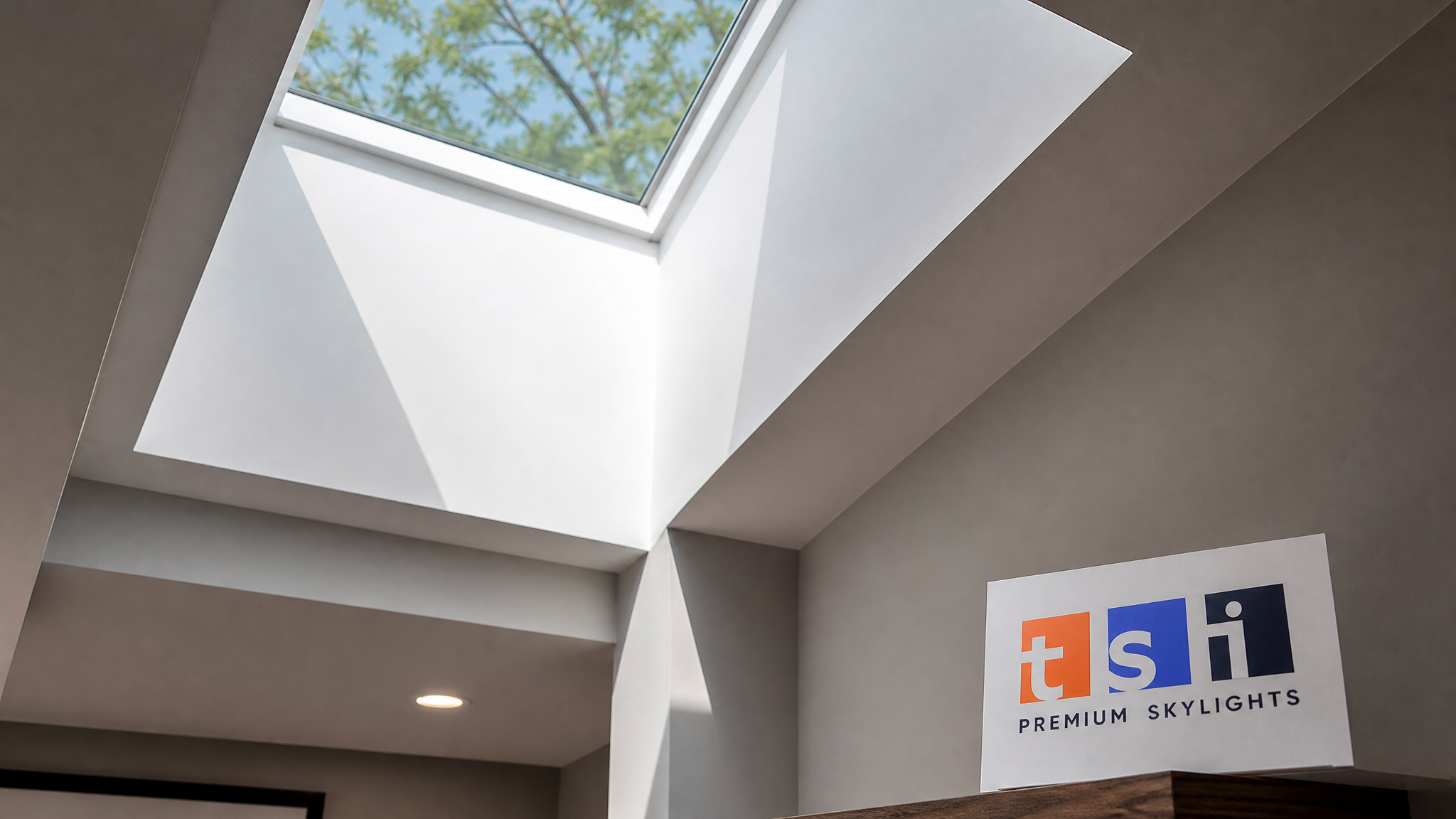
When budgeting, remember that the unit itself is often the smallest line item. Structural framing, the light shaft build-out, flashing, drywall finishing, and any waterproofing dominate the total. If your existing main-floor skylight is older and you want to coordinate work, combining it with a skylight replacement on the same visit can reduce overall labour and roofing setup costs. For new construction or major renovations, planning the daylight path during framing is dramatically cheaper than retrofitting later.
Choosing the Right Approach for Your Home
The decision tree is simpler than it first appears. If you have a low roof directly above the room, a roof skylight is your best and most economical route. If you have an exposed foundation wall, an exterior light well delivers the most light and can solve egress at once. If you have neither, a sun tunnel routed through upper-floor cavities is usually the only practical way to bring genuine daylight down. Commercial or multi-unit below-grade spaces have additional options through larger-format commercial skylights over light courts.
Whatever the route, the priorities stay constant: watertight flashing, proper drainage, thermal performance to prevent summer condensation, and code-compliant framing. These are precisely the details a generalist contractor tends to underestimate and a skylight specialist gets right the first time. A professional new skylight installation begins with measuring the roof or wall, modelling the daylight path, and confirming the structural plan before a single cut is made.
Can you really install a basement skylight in a Toronto home?
How much does a basement skylight Toronto project cost in 2026?
Do I need a permit for a below-grade daylighting project?
Will a skylight cause leaks or condensation in summer?
What is the difference between a sun tunnel and a roof skylight?
Can a basement daylight project also serve as egress?
Book Your Basement Skylight Toronto Consultation Today
Bringing daylight into a finished below-grade space is one of the highest-impact upgrades a GTA homeowner can make, and the right approach starts with an honest assessment of your home’s structure. Toronto Skylight Installers is a certified VELUX dealer that designs each basement skylight Toronto project around your specific roof, foundation, and daylight goals, from straightforward walk-out skylights to sun tunnels and engineered light wells.
Call us today at (416) 365-7557 or book a free skylight consultation to find out exactly what is possible in your space and receive a transparent 2026 quote.
Toronto Skylight Installers proudly serves Toronto and the GTA, bringing natural daylight into homes across the region with expert, code-compliant skylight solutions.