

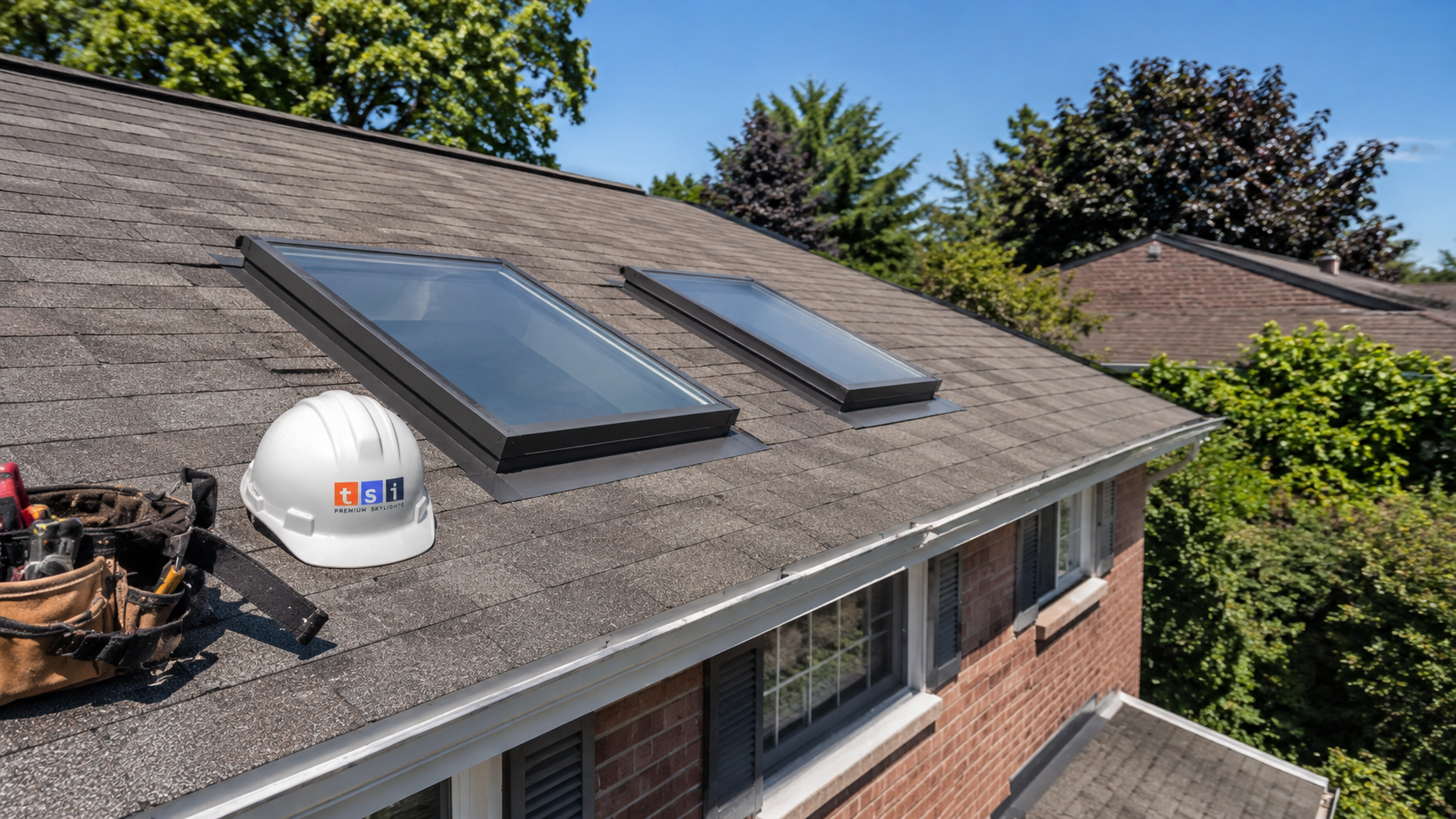
A skylight that drips onto the hallway floor during a spring downpour, or fogs over every humid August afternoon, is one of the more disruptive problems a homeowner can face, and it almost never resolves on its own. Skylight repair in Burlington comes with a specific set of variables: a housing stock that spans postwar bungalows near the lake, sprawling 1970s and 1980s side-splits, estate lots on the Escarpment side of town, and newer subdivision two-storeys built in the last twenty years. Each of those roof profiles handles water differently, and each demands a different repair approach. Getting skylight repair in Burlington right means diagnosing the actual failure point rather than smearing sealant over a symptom.
This guide walks through what actually fails on residential skylights, what repairs cost in 2026 Ontario dollars, when repair stops making financial sense, and how the Ontario Building Code and typical home insurance policies factor into the decision. The goal is to give you enough technical grounding to ask a contractor the right questions and to recognise a proper skylight repair in Burlington when you see one quoted.
Why Skylight Repair in Burlington Needs a Roof-First Approach
The single most common misunderstanding about skylight repair in Burlington is that the skylight itself is usually the problem. In the majority of leak calls, the glazing unit is intact and the failure sits in the flashing system, the curb, or the roof deck immediately around the opening. Water finds the weakest interface, travels along the underside of the sheathing, and shows up on the drywall shaft a metre away from where it actually entered. A contractor who arrives, runs a bead of caulking around the frame and leaves has not performed a repair, only a delay.
Burlington’s climate accelerates this. The city sits on the western end of Lake Ontario, which means a long shoulder season of freeze and thaw cycling, wind-driven rain off the lake, and enough snow load in a typical winter to build ice at the low edge of a skylight curb. Every one of those forces works on the same joint: the point where the metal flashing laps under the shingle course above and over the course below. Repeated expansion and contraction opens that lap, and once water gets behind it, the plywood deck begins to soften. Proper skylight repair in Burlington therefore begins with an inspection of the roof plane, not just the frame.
Roof age matters more than skylight age in most cases. A twenty-year-old asphalt roof that is losing granules will not hold a new flashing kit well, because the shingles around the opening have become brittle and will crack when lifted. If your roof is within a few years of replacement, the sequencing of the work changes and it is often smarter to combine the two projects. A contractor who handles both roofing and glazing work can tell you honestly which order makes sense.
The Most Common Skylight Failures in Burlington Homes
After hundreds of residential inspections across Halton and the wider GTA, the same handful of failures account for nearly all skylight repair calls. Knowing which category your problem falls into helps you interpret a quote.
Failed flashing and step flashing laps
This is the number one cause. Older skylights, particularly units installed before the mid-1990s, were frequently set with site-formed metal or, worse, with roofing cement rather than a manufactured flashing kit. Roofing cement is not a permanent material. It dries, shrinks, and cracks within roughly five to eight years in Ontario’s climate. Any skylight repair in Burlington that relies on re-applying cement is buying you a season or two at most.
Seal failure in the insulated glazing unit
If you see permanent fogging, haze, or mineral streaking between the panes, the hermetic seal on the insulated glass unit has failed and moisture has entered the cavity. This cannot be repaired in place. The glazing unit or the entire skylight has to be replaced. The good news is that this is a dry failure: it does not damage your roof, it just looks poor and costs you thermal performance.
Condensation mistaken for a leak
A surprising share of calls turn out to be condensation rather than water ingress. Skylights are the coldest surface in the room, so in a home with high indoor humidity, moisture condenses on the glass and the frame and runs down into the shaft. The tell is timing: condensation appears on cold, dry days and worsens with indoor activity, while a true leak tracks rainfall. The fix is ventilation and humidity control, sometimes combined with better shaft insulation, not a roof repair.
Deteriorated curb and rotted deck
Where a leak has gone undetected for a long period, the wooden curb the skylight sits on absorbs water and begins to rot, along with the sheathing around it. This is the most expensive category because the repair involves opening the roof, cutting out compromised material, rebuilding framing to code, and re-flashing. It is also the category where deferring the work is most costly.
Worn gaskets, cracked seals and failed hardware
Venting and solar-powered skylights add mechanical components: a chain or rod operator, a motor, a rain sensor, and a perimeter gasket. Gaskets harden and lose compression over roughly fifteen years. Motors and controls can fail independently of the glazing. These are usually straightforward component-level repairs.
| Repair type | Typical 2026 Ontario range | Usual timeline | Expected service life |
|---|---|---|---|
| Temporary leak containment or emergency tarp | $250 to $600 | Same or next day | Weeks, stopgap only |
| Flashing reseal and localised shingle repair | $450 to $950 | Half day | 5 to 10 years |
| Full flashing kit replacement around existing unit | $850 to $1,700 | Half to full day | 15 to 20 years |
| Glazing unit replacement, fogged or cracked pane | $700 to $1,500 | One day, plus glass lead time | 15 to 20 years |
| Complete skylight replacement in sound curb | $1,300 to $2,800 | One day per unit | 20 to 30 years |
| Curb rebuild, deck repair and re-flash | $1,600 to $3,600 | One to two days | 20 to 30 years |
| Interior shaft drywall repair and repaint | $400 to $1,200 | Two to three days including drying | Indefinite once leak is stopped |
What Skylight Repair in Burlington Costs in 2026
The table above reflects realistic ranges for detached and semi-detached homes across Halton Region in 2026. Several factors push a given job toward the top or bottom of its range, and understanding them helps you compare skylight repair Burlington quotes fairly rather than defaulting to the lowest number.
Roof pitch and height. A skylight on a walkable six-in-twelve bungalow roof is far cheaper to service than the same unit on a steep ten-in-twelve two-storey elevation that requires additional fall protection setup, roof jacks and staging. Expect a meaningful premium on steeper and higher work, because the labour hours and safety equipment genuinely increase.
Access and landscaping. Estate lots with mature trees, tight side yards, interlocking driveways or in-ground pools slow down equipment placement and material handling. Contractors price that in.
Number of units. Two skylights on the same roof plane cost far less per unit than one, because setup is the fixed cost. If you have two or three units of similar age and only one is currently leaking, ask for pricing on doing all of them at once. In most cases the marginal cost of the second and third is 40 to 60 percent of the first.
Unit type. A simple fixed unit is the least expensive to service. Manual venting units add hardware. Solar-powered and electric units add a motor, a control module and sometimes a rain sensor, all of which raise both parts cost and diagnostic time.
Hidden damage. Almost every honest quote for skylight repair in Burlington includes a contingency clause for deck rot discovered once the flashing comes off, because no one can see under intact shingles. A quote that promises a fixed all-in price for a long-standing leak without opening the roof first should be treated with some scepticism. Look instead for a contractor who states a clear unit rate for additional sheathing, for example a per-sheet price for replacing plywood.
If you are comparing options across the region, our overview of skylight installation and repair services for Burlington homeowners sets out how we scope work in Halton, and our dedicated page on professional skylight repairs explains the diagnostic sequence in more detail.
How Burlington Roof Types Change the Repair Method
Burlington’s building stock is genuinely varied, and the roof assembly under your skylight dictates which repair methods are even available. A technique that works on a steep asphalt roof over a 1960s bungalow is inappropriate on the low-slope rear addition of a newer build.
| Roof assembly | Common on | Correct repair approach | Relative cost |
|---|---|---|---|
| Asphalt shingle, medium to steep slope | Postwar bungalows, side-splits, most subdivision homes | Manufactured step and head flashing kit woven into shingle courses, ice and water membrane at the curb | Baseline |
| Low-slope modified bitumen or single-ply | Rear additions, garage-top rooms, flat-roofed contemporary builds | Raised curb of at least 150 mm with fully adhered membrane turned up and capped; deck-mounted units are not appropriate | 20 to 40 percent above baseline |
| Cedar shake or synthetic shake | Escarpment-area and estate-lot custom homes | Custom-formed metal flashing with generous headlaps; individual shakes replaced rather than cut | 30 to 60 percent above baseline |
| Standing seam or profiled metal | Newer custom builds, additions, sunrooms | Panel-specific flashing and curb detail, often requiring panel removal and refit rather than patching | 40 to 80 percent above baseline |
| Concrete or clay tile | Small number of upscale custom homes | Tiles individually lifted and reset over formed metal pan flashing; brittle tiles frequently need replacement | 50 to 100 percent above baseline |
The low-slope case deserves extra attention because it is the one most often done incorrectly. On any roof under roughly a two-in-twelve pitch, water does not drain quickly and can pond around an opening. A skylight on such a roof must sit on a raised curb, and the roofing membrane must be turned up the full height of that curb and terminated under a metal cap. Setting a deck-mounted skylight flat into a low-slope membrane is a guaranteed future leak. If you have a flat rear addition, the correct products are purpose-built flat roof skylights rather than standard pitched-roof units.
Repair or Replace: Making the Call Honestly
Not every problem is worth repairing. The economics turn on the age of the unit, the nature of the failure, and the remaining life of the surrounding roof.
Repair usually makes sense when the skylight is under roughly fifteen years old, the glazing is clear and intact, the failure is confined to flashing or a gasket, and the roof around it has at least eight to ten years of service life remaining. In that situation a proper re-flash restores the assembly at a fraction of replacement cost.
Replacement usually makes sense when the unit is over twenty years old, the glass is fogged or the frame is deformed, the curb has rot, or the surrounding roof is due for replacement within a couple of years. Replacing a twenty-five-year-old skylight while the roof is open costs dramatically less than doing it as a standalone job later, and modern units are substantially better performers. A current low-emissivity, argon-filled, laminated glazing package will noticeably reduce heat gain in July and cold-surface condensation in January compared with a 1990s acrylic dome.
There is also a middle path many homeowners overlook. If a leaking skylight sits in a room that never really needed daylight from above, or if the shaft is long and awkward, closing the opening and installing a sun tunnel skylight elsewhere in the ceiling can deliver comparable light for less money and with a smaller roof penetration. Conversely, homeowners who want ventilation as well as light often upgrade during a repair to a solar powered venting skylight, which qualifies as a solar product and carries no wiring requirement. If you decide the unit is beyond saving, our skylight replacement service covers removal, curb correction and installation as a single scope.
Diagnosing the Symptom Before You Call
Being able to describe the symptom precisely shortens the diagnostic visit and often lowers the cost. Use the table below to identify what you are most likely dealing with, then relay that description when you book.
| What you observe | Most likely cause | Typical remedy | Urgency |
|---|---|---|---|
| Water drips only during or shortly after heavy rain | Flashing or shingle lap failure | Flashing kit replacement and localised shingle work | High, book within days |
| Moisture beads on the glass on cold mornings, no rain | Indoor condensation | Humidity control, ventilation, improved shaft insulation | Low, address before winter |
| Permanent haze or white streaks between the panes | Failed insulated glass seal | Glazing unit or full skylight replacement | Moderate, no roof risk |
| Staining on the drywall shaft that keeps spreading | Ongoing ingress with deck saturation | Open roof, assess deck, rebuild curb, re-flash, repair shaft | Urgent |
| Leaks appear only during winter thaws | Ice damming above the skylight head | Ice and water membrane, attic insulation and ventilation correction | High before next winter |
| Venting unit will not open, close or seal | Motor, control or gasket failure | Component replacement, gasket renewal | Moderate |
What a Proper Skylight Repair in Burlington Actually Involves
A competent job follows a predictable sequence. If a contractor’s proposal skips steps, that is worth asking about.
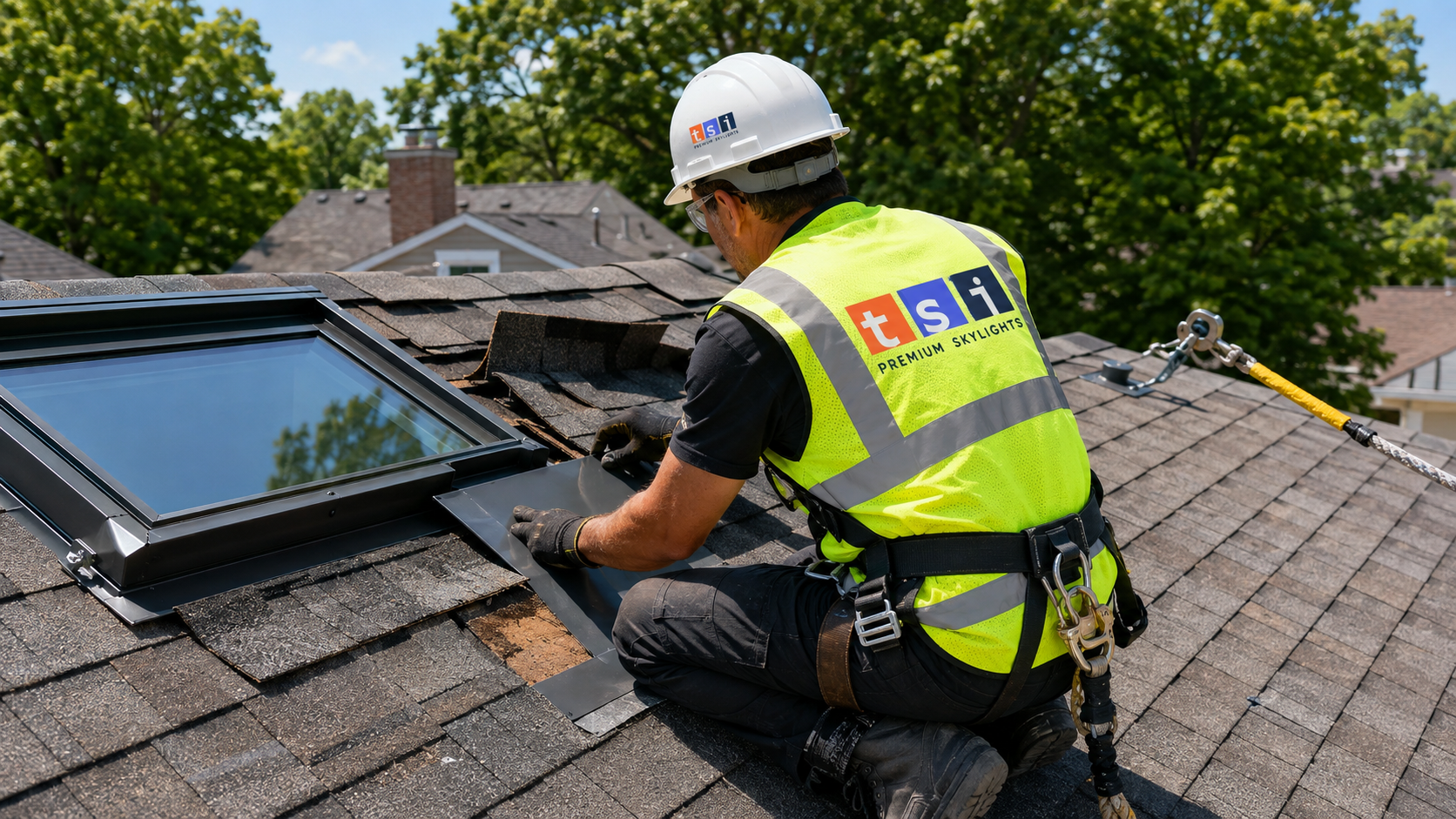
- Interior and exterior inspection. The technician examines the shaft and ceiling from inside, then the roof plane from outside, checking flashing laps, shingle condition, curb integrity and, where accessible, the attic side of the deck for staining.
- Moisture verification. Where the source is ambiguous, a controlled water test isolates the entry point rather than guessing.
- Scope and written quote. You should receive a written scope naming the specific components to be replaced, the flashing system to be used, and a stated unit rate for any deck sheathing found to be compromised.
- Safe setup. Fall protection anchors, harnesses and roof jacks are placed before any work begins, as required under Ontario occupational health and safety regulations for work at height.
- Controlled removal. Shingle courses around the opening are lifted rather than torn, existing flashing is removed, and the curb and deck are exposed and assessed.
- Substrate repair. Any softened sheathing is cut back to sound framing and replaced. Curb framing is rebuilt where rot is present.
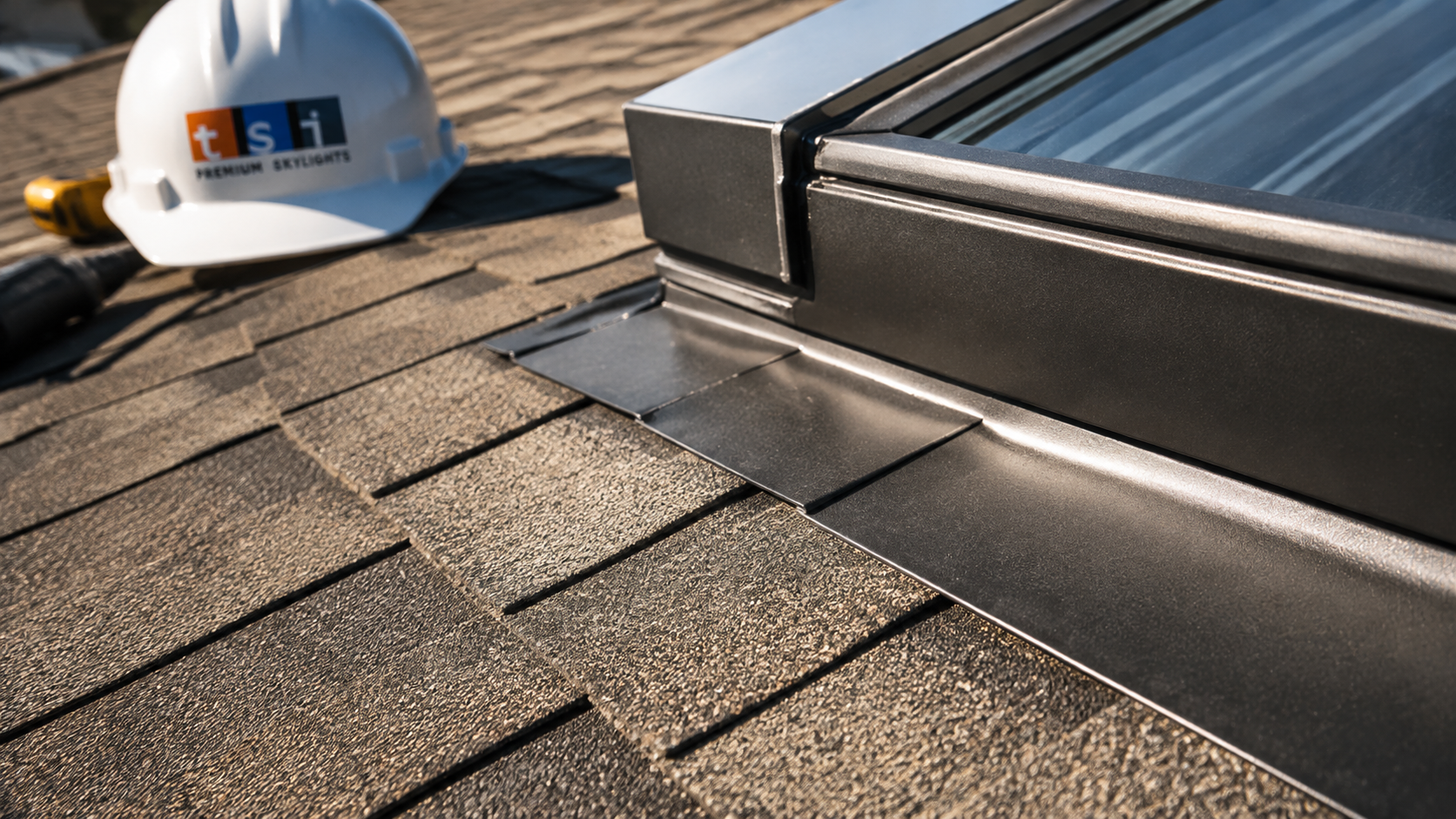
- Membrane and flashing. Self-adhered ice and water membrane is applied around the opening and turned up the curb, followed by the manufacturer’s sill, step and head flashing installed in the correct order with the roof covering woven back in.
- Interior finish. Damaged shaft drywall is replaced, taped, primed and painted once the assembly has dried fully.
- Verification. A final water test confirms the repair before the job is closed out.
Most single-unit skylight repair in Burlington is completed in one day on the roof, with interior finishing following after the structure has dried. Curb rebuilds and multi-unit work extend to two days.
Permits, Ontario Building Code and Insurance
Straightforward skylight repair in Burlington, meaning like-for-like flashing renewal, glazing replacement or gasket work, does not normally require a building permit. The situation changes when the work alters the structure. Enlarging an opening, cutting a new opening, or altering roof framing such as rafters or trusses is structural work and generally requires a permit from the City of Burlington building department. Your contractor should tell you plainly which category your job falls into rather than leaving you to find out later.
Several Ontario Building Code provisions bear on skylight work. Glazing in overhead applications must be safety glass, typically laminated on the inner lite so that a failure does not shed glass into the room below. Skylights within a certain distance of a property line face restrictions related to spatial separation and limiting distance, which matters most on narrow older lots. Any alteration that cuts a truss requires engineered documentation, because roof trusses are designed as a system and cannot be modified informally. Energy efficiency requirements under the Code also set minimum performance for replacement glazing.
On the insurance side, Ontario policies generally distinguish between sudden, accidental damage and gradual deterioration. A tree limb or hail that cracks a skylight during a storm is usually a covered peril, and the resulting interior water damage is typically covered as well. A skylight that has been slowly seeping for three years is considered maintenance and is normally excluded. This is the practical argument for acting quickly: a leak addressed within weeks is a small repair bill, while the same leak left for years becomes a large uninsured one. Document the date you first noticed the problem, photograph the damage, and keep your contractor’s written assessment.
Seasonal Timing and Preventive Maintenance
The best window for non-emergency skylight repair in Burlington runs from late spring through early autumn, when sealants and membranes cure properly and the roof surface is dry and safe to work on. Self-adhered membranes in particular need reasonable ambient temperature to bond fully, which is why quality work in deep winter is difficult and sometimes limited to temporary containment until conditions improve.
Autumn is the practical deadline. Booking in September or early October means the assembly is sound before freeze and thaw cycling begins, and before any ice damming season. Homeowners who wait until the first January thaw reveals a leak generally end up paying for emergency containment first and a permanent repair later.
Preventive maintenance is genuinely effective on skylights and takes very little effort:
- Clear leaves, needles and debris from the head and sides of the curb twice a year. Debris dams hold water against the flashing and are a leading contributor to premature failure, especially on treed lots.
- Inspect the visible sealant line and flashing from a safe vantage point each spring and autumn, looking for lifted metal, cracked sealant or missing granules on adjacent shingles.
- Watch for early interior signs: a faint ring on the shaft drywall, a musty smell, or paint that begins to blister at a corner.
- Keep indoor relative humidity in a sensible range through winter, roughly 30 to 40 percent, to limit condensation on cold glazing.
- Verify that attic insulation and ventilation around the shaft are adequate, since a warm, poorly ventilated attic drives ice damming above the skylight head.
- Exercise venting and motorised units a few times a year so gaskets do not take a permanent set and mechanisms do not seize.
Choosing a Skylight Contractor in Burlington
Skylight work sits at the intersection of roofing and glazing, and many general roofers treat it as an afterthought. When you are evaluating a company for skylight repair in Burlington, a few questions separate specialists from generalists quickly. The same questions apply whether you are shortlisting skylight repair Burlington contractors for a single leak or for a whole roof plane with several ageing units on it.
Ask whether they install manufactured flashing kits matched to the specific skylight brand and model, or fabricate their own. Both can be acceptable, but a specialist will have a clear, confident answer and will name the system. Ask how they handle deck rot found mid-job, and whether they can give you a per-sheet rate in advance. Ask whether they carry WSIB coverage and liability insurance, and request the certificate rather than taking it on faith. Ask what warranty applies to the labour separately from the manufacturer warranty on parts, since those are different things and a labour warranty of two to ten years is the meaningful one for flashing work.
Finally, ask whether they will show you photographs of the opened assembly before it is closed up. Reputable crews document the deck condition, the membrane application and the flashing sequence as a matter of routine. That photographic record is your only evidence of what is under the shingles once the job is finished, and it is the single best protection against paying for work that was not actually done. Homeowners who want the same standard applied to a new opening rather than an existing one can review our skylight installation service, and those comparing a straightforward daylight solution may prefer a fixed skylight for its simplicity and lower long-term failure rate.
How much does skylight repair in Burlington cost?
Do I need a permit for skylight repair in Burlington?
Is my leaking skylight covered by home insurance?
Can a fogged skylight be repaired without replacing it?
How long does a skylight repair take?
When is the best time of year to book skylight work?
Book Your Skylight Repair in Burlington Today
A skylight leak gets more expensive every season it is left alone, because water moves from flashing to sheathing to framing to finished ceiling. Booking skylight repair in Burlington early is the difference between a half-day flashing job and a multi-day structural rebuild. Toronto Skylight Installers is based in the Toronto area and serves homeowners throughout Burlington and the rest of Halton Region, with technicians who diagnose the actual failure point, quote in writing, and document the assembly before closing it up.
Call us today at (416) 365-7557 or request a free consultation to have your skylight assessed by a specialist rather than a generalist.
Toronto Skylight Installers serves Burlington, Oakville, Milton, Mississauga, Toronto and communities across the Greater Toronto Area with skylight installation, replacement and repair.