

A brown ring on the drywall around a light well, fog trapped between two panes of glass, or a slow drip that only appears during a February thaw: these are the symptoms that send most homeowners searching for skylight repair Vaughan contractors. Skylights are one of the few parts of a house that combine roofing, glazing, framing and interior finishing in a single assembly, which is exactly why problems with them are so often misdiagnosed. A stain near a skylight does not automatically mean the skylight failed. It might be flashing, it might be shingles above the unit, it might be attic humidity, and it might be a seal that gave out after twenty winters. Getting skylight repair Vaughan work right starts with correctly identifying which of those it is.
This guide walks through how leaks and condensation actually occur in Vaughan homes, how to tell the two apart before you spend money, what a skylight repair Vaughan project typically costs in Ontario in 2026, and when repair stops making financial sense. It is written for homeowners across Vaughan’s mix of older brick homes, postwar bungalows, large subdivision builds from the 1990s and 2000s, and newer estate lots, all of which present slightly different skylight repair conditions.

Why Skylight Repair in Vaughan Comes Up So Often
Vaughan sits in a climate that is genuinely hard on roof penetrations. The area swings from humid summer days above 30 degrees to deep winter cold, and the shoulder seasons bring repeated freeze and thaw cycles. Every one of those cycles moves materials. Aluminum cladding expands and contracts at a different rate than the wood curb underneath it, sealants harden, fasteners loosen slightly, and the small gaps that result eventually let water in. That cycle is the single largest driver of demand for skylight repair Vaughan homeowners request each spring.
The second driver is age. A large share of Vaughan’s housing stock was built during the growth waves of the late 1980s through the 2000s, and skylights installed in those homes are now between twenty and forty years old. Sealed glazing units typically hold their seal for fifteen to twenty five years. Once that seal fails, moisture enters the cavity between panes and no amount of exterior work will clear it. Older brick homes and postwar bungalows in the more established parts of the city often have skylights that were retrofitted later, sometimes with site built curbs and improvised flashing, and those retrofits are a frequent source of skylight repair Vaughan calls.
The third driver is snow. Vaughan gets meaningful snow accumulation, and a skylight sitting mid slope collects drifting snow on its upslope side. When attic heat melts the underside of that drift, water runs down, hits colder shingles near the eave, and refreezes. The resulting ice dam pushes water backwards under the shingles and around the skylight head flashing. This is why so many leaks appear in January and February rather than during summer downpours, and it is why competent skylight repair looks at attic insulation and ventilation, not just the unit itself.
How Vaughan’s Housing Character Shapes Skylight Problems
Housing type matters more than most homeowners expect. The same skylight model behaves differently depending on the roof it is installed in, and a contractor who has handled skylight repair Vaughan work across the city’s range of housing will recognise the pattern quickly.
Postwar bungalows and older brick homes. These typically have shallow attics, modest roof pitches and, in many cases, insulation and venting that were upgraded piecemeal over the decades. Skylights here are usually retrofits rather than original equipment. The shafts are often long relative to the ceiling height, and the drywall light well can hide a slow leak for months before a stain appears at the ceiling line. Repair work on these homes frequently uncovers a curb that was framed without proper cricket detailing on the upslope side, which means water has been pooling against the head flashing since day one.
Subdivision homes from the 1990s and 2000s. These make up a very large share of Vaughan’s housing. Skylights were often builder specified, installed in volume, and are now reaching the end of their sealed unit life all at once. Roof pitches tend to be steeper, which helps drainage, but complex rooflines with multiple valleys can direct large volumes of water toward a single skylight during a heavy storm. Repair on these homes is usually flashing and seal work rather than structural carpentry.
Newer builds and estate lots. Larger homes bring larger and more numerous skylights, including units set into flat roof sections over rear additions and sunrooms. Motorized and solar powered venting units are more common here, which adds electrical components, rain sensors and controllers to the repair picture. Sun tunnels also appear regularly in interior hallways, stairwells and walk in closets where a conventional shaft would not fit.
Whatever the house type, the diagnostic sequence for skylight repair Vaughan jobs is the same: confirm the water path, confirm whether the glazing seal is intact, confirm the condition of the flashing and the surrounding roof field, and only then decide what to fix. Homeowners looking for a fuller overview of skylight installation and repair services throughout Vaughan can start there and then narrow down to their specific issue.
Skylight Leaks: Finding the Real Source Before Paying for Anything
A large majority of skylight leaks are not caused by the skylight. They originate somewhere in the assembly around it. Understanding the usual suspects saves money, because replacing a functioning skylight to solve a flashing problem is an expensive mistake that homeowners make regularly. Nearly every skylight repair Vaughan call begins with sorting out which of the following is actually responsible.
Head and Step Flashing Failure
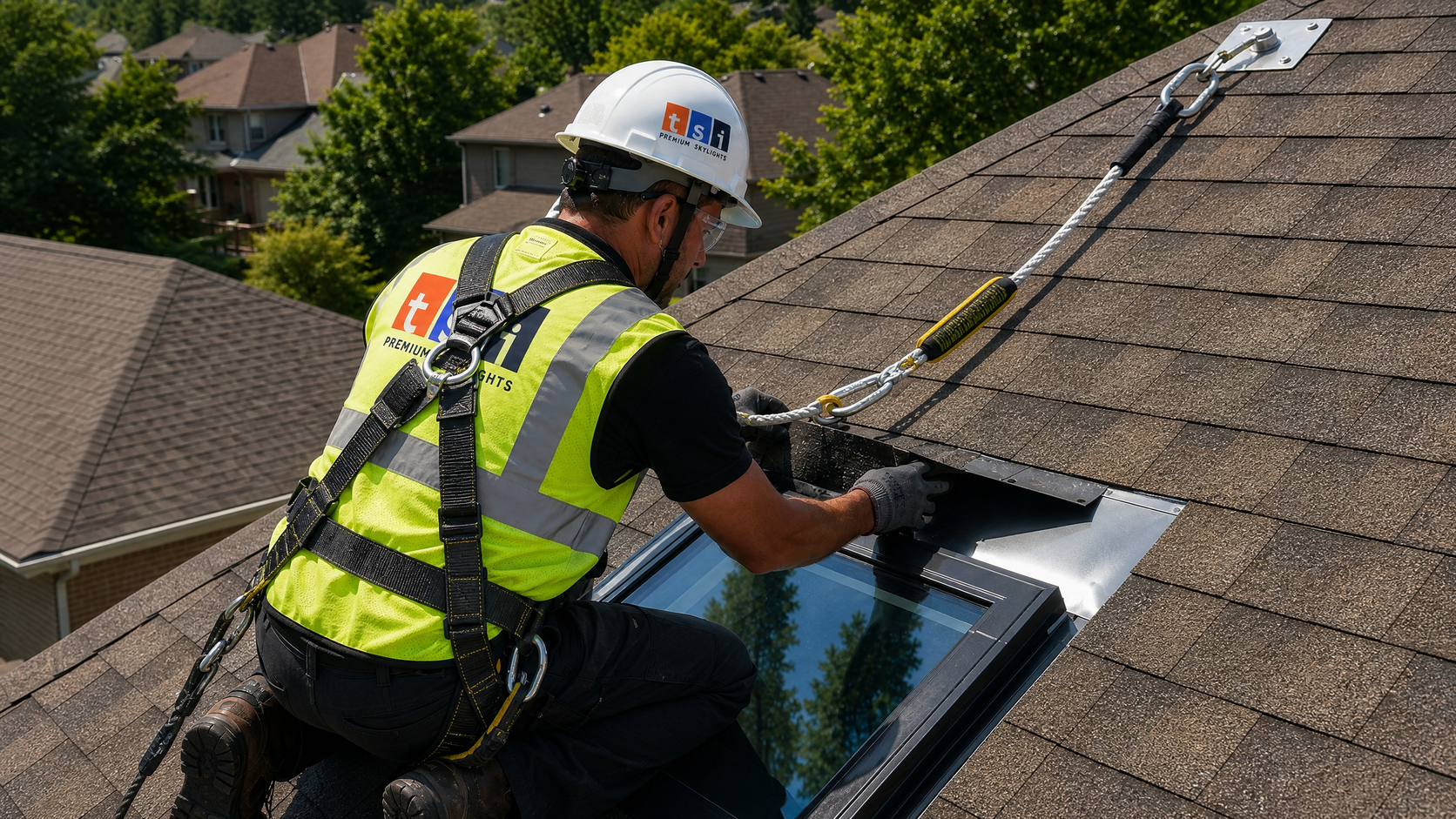
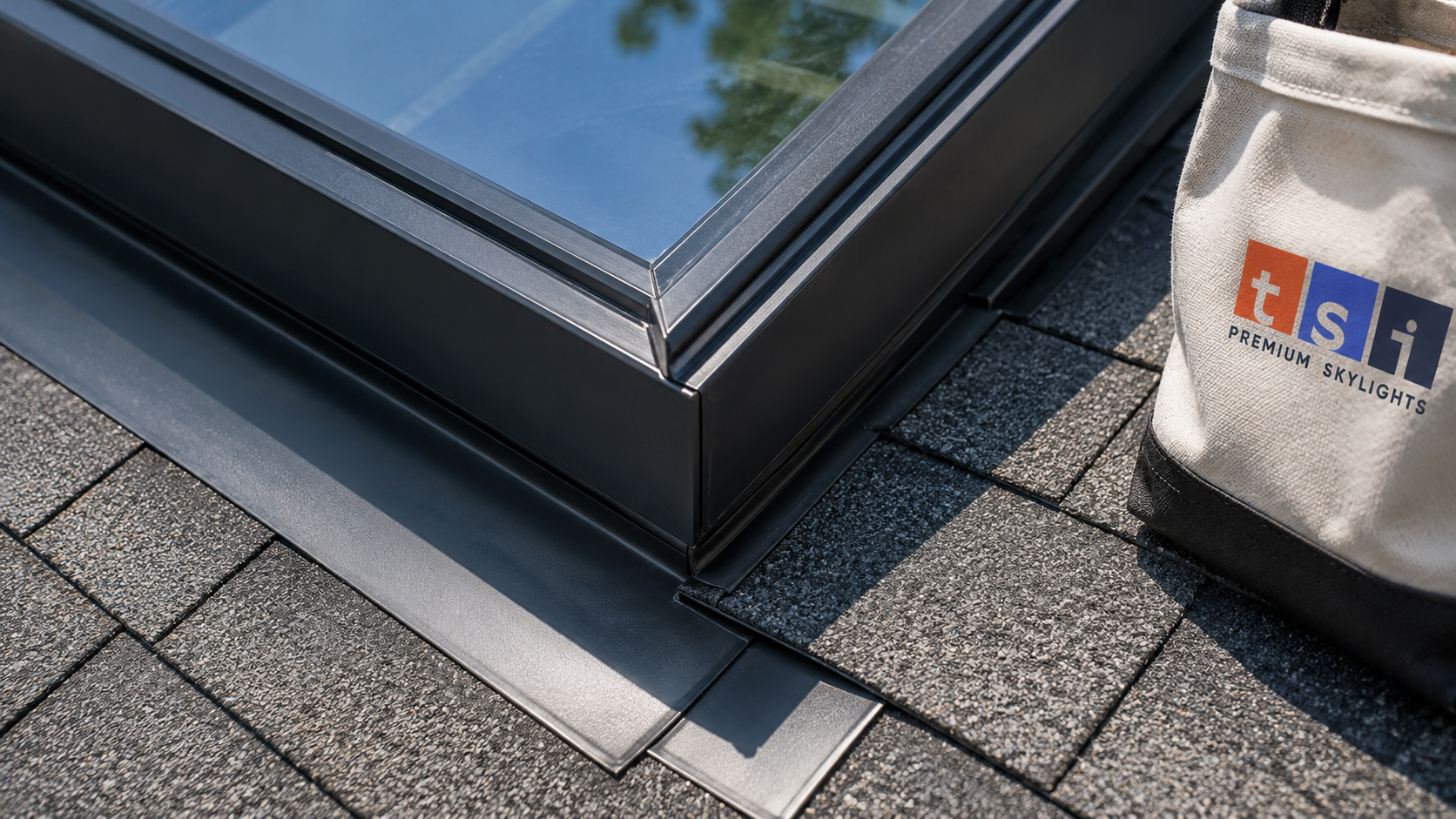
Flashing is the metal that ties the skylight into the roof covering. The head flashing at the top of the unit and the step flashing along the sides do the heavy lifting. Corrosion, lifted fasteners, or shingles that were cut too tight against the flange all break the water path. On older Vaughan roofs it is common to find that a previous roofer reused the original flashing during a re shingle rather than installing a new kit, which is a reliable way to guarantee a leak within a few years of an otherwise good roof job.
Sealant Used as a Substitute for Flashing
Roofing cement smeared around a skylight perimeter is a temporary patch that many homeowners inherit from a previous owner. It looks like a repair and behaves like one for a season or two, then cracks as it ages and the substrate moves. Proper skylight repair removes it and restores mechanical flashing. Any contractor whose first proposal is a tube of caulking around the perimeter is treating the symptom rather than the cause.
Deteriorated Underlayment and Rotted Curb
Water that has been entering for a while soaks the plywood deck and the wood curb the skylight sits on. If the curb is soft, the skylight cannot be reset properly and the repair scope grows to include carpentry. This is the single most common reason a quoted skylight repair price changes after the unit is opened up, which is why a good written scope states in advance how hidden rot will be priced.
Ice Damming and Backed Up Water
As described above, ice at the eave forces water uphill under the shingles. No skylight is designed to resist water travelling in that direction. The correct fix combines attic air sealing, insulation top up and ventilation improvements with proper ice and water membrane extending well past the skylight perimeter on all four sides.
Cracked Glazing and Failed Gaskets
Hail, falling branches and thermal stress can crack the outer pane. The rubber gaskets between the glass and the frame also harden with age and stop compressing properly. Both are genuine skylight failures, and on many models the glazing unit or gasket set can be replaced without removing the whole assembly, which is the least expensive genuine repair available.
Condensation Versus a True Leak: How to Tell the Difference
This distinction saves Vaughan homeowners real money, because condensation is often solved without touching the roof at all. Condensation forms when warm, moist interior air contacts the cold interior surface of the glass or frame. In a tightly built home with a family of four, cooking, showering and laundry can push indoor relative humidity well above the 30 to 40 percent range that suits an Ontario winter. The skylight, being the coldest surface in the room, becomes the collection point for all of that moisture.
A few practical observations separate the two conditions. Condensation appears in cold weather, worsens overnight, shows up as beads or a film on the interior glass surface, and is often accompanied by moisture on window glass elsewhere in the house. A leak appears during or shortly after rain or a thaw, stains the drywall in a defined pattern that spreads from one edge, and usually produces a discoloured ring rather than uniform dampness. Water sitting between two panes of glass is neither of those: it means the sealed unit has failed and the glazing needs replacement.
| Symptom | Most likely cause | When it appears | Typical remedy |
|---|---|---|---|
| Beads of water on interior glass | Indoor humidity too high for glass temperature | Cold nights, worst by morning | Humidity control, bath and kitchen exhaust, attic venting |
| Fog or haze trapped between panes | Failed sealed glazing unit | Year round, worsens over time | Glazing unit or full skylight replacement |
| Stain spreading down one side of the light well | Head or step flashing failure | During or after rainfall | Flashing kit replacement and shingle repair |
| Dripping during winter thaw only | Ice damming above the unit | January through March | Attic insulation, air sealing, ice and water membrane |
| Damp, musty drywall with no visible water | Long term slow leak inside the shaft | Ongoing, worse in wet months | Open shaft, dry out, repair source, refinish |
If moisture beads on the interior surface every cold morning but the drywall never stains, the answer is humidity management, not roof work. If the drywall stains but the glass stays clear, the answer is on the roof. A proper diagnostic visit for skylight repair Vaughan homeowners should include both an interior inspection and a roof level inspection before any price is quoted, because guessing from the ground is how the wrong repair gets sold.
What Skylight Repair in Vaughan Costs in 2026
Pricing for skylight repair Vaughan projects varies with roof pitch, access, storey height, skylight size and whether the curb has to be rebuilt. The ranges below reflect what Ontario homeowners can reasonably expect in 2026 for standard residential work. Every serious contractor will confirm scope after inspection, and any quote given over the phone without seeing the roof should be treated as a rough placeholder rather than a commitment.
| Repair type | Typical 2026 cost range | Time on site | Notes |
|---|---|---|---|
| Diagnostic inspection with roof access | $150 to $325 | 1 to 2 hours | Often credited toward the repair |
| Sealant and gasket refresh | $300 to $650 | 2 to 3 hours | Short term measure on otherwise sound units |
| Flashing kit replacement, single unit | $700 to $1,600 | Half day | Includes surrounding shingle work |
| Sealed glazing unit replacement | $850 to $2,000 | Half day | Model dependent, some units are not serviceable |
| Curb repair or rebuild with deck patch | $1,200 to $3,000 | 1 to 2 days | Scope grows if rot extends into rafters |
| Interior light well drywall repair and paint | $450 to $1,400 | 2 to 3 visits | Depends on shaft size and existing finish |
| Motorized or solar unit control repair | $400 to $1,100 | 2 to 4 hours | Motor, rain sensor or controller replacement |
Two cost factors are worth flagging. First, second storey and steep pitch access adds labour and sometimes staging, which can raise a repair by several hundred dollars compared with the same work on a low, walkable roof. Second, if a repair is done in isolation on a roof that is near the end of its service life, that money is at risk when the roof is replaced. Coordinating skylight repair Vaughan work with planned re roofing almost always produces a better outcome per dollar spent.
Repair or Replace: How to Make the Call
Every skylight repair Vaughan estimate eventually raises the same question: is this unit worth keeping? The decision comes down to the age of the unit, the nature of the failure, and the remaining life of the roof around it. A sound eight year old skylight with a compromised flashing kit is an obvious repair. A twenty six year old unit with a fogged sealed pane, a corroded frame and a shingle roof due for replacement in three years is an obvious replacement. Most real situations sit somewhere between those two, and the comparison below helps frame the choice honestly.
| Factor | Points toward repair | Points toward replacement |
|---|---|---|
| Age of skylight | Under 15 years | Over 20 years |
| Glazing condition | Clear glass, seal intact | Fogged, moisture between the panes |
| Frame and curb | Sound wood, no soft spots | Rot, corrosion or improvised past repairs |
| Roof age | Recently re shingled | Roof due within 5 years |
| Repair history | First issue on this unit | Third or fourth repair attempt |
| Energy performance | Double glazed with coating, comfortable | Single glazed or acrylic dome, noticeable heat loss |
| Estimated repair cost | Under about 40 percent of replacement cost | Approaching or exceeding replacement cost |
When replacement is the right call, it is worth considering the unit type rather than defaulting to a like for like swap. A fixed skylight is the simplest and most leak resistant option where ventilation is not needed. A solar powered venting skylight adds usable exhaust for bathrooms and kitchens without running new wiring through finished ceilings. Where a full skylight will not fit between rafters, a sun tunnel delivers daylight to interior spaces at a lower cost. Homes with flat roofed rear additions, common on renovated Vaughan properties, need units designed for low slope conditions rather than standard pitched roof models. Full skylight replacement and new skylight installation follow different procedures than a straightforward repair, and pricing reflects that difference.
What a Professional Skylight Repair Visit Involves
Homeowners are often unsure what they are paying for during a repair call. A thorough skylight repair Vaughan visit follows a predictable sequence, and knowing that sequence makes it easier to compare quotes fairly.
- Interior assessment. Moisture meter readings on the drywall shaft, inspection of the ceiling opening, and questions about when the moisture appears and under what weather conditions.
- Attic inspection where accessible. Checking the underside of the deck around the skylight shaft, insulation depth, vapour barrier condition and whether soffit vents are blocked by insulation.
- Roof level inspection. Examining flashing laps, fastener condition, shingle condition upslope of the unit, the state of any cricket, and the glazing seal and gaskets.
- Water testing when the source is unclear. Controlled hose testing from the bottom of the assembly upward isolates the actual entry point instead of guessing at it.
- Written scope and price. A clear description of what will be removed, what will be installed, what is excluded, and what happens if hidden rot is discovered once the unit is opened.
- Repair and cleanup. Magnetic sweep for fasteners, removal of all debris from the grounds, and photo documentation of the completed work.
That last point matters more than it sounds. Because a skylight sits out of sight, photo documentation before and after is the only practical way for a homeowner to verify what was actually done up there. Any company performing skylight repair Vaughan work should provide it without being asked. Detailed information on scope and process is available on the skylight repairs service page.
Code, Permits and Insurance Considerations
Straightforward skylight repair Vaughan work, meaning flashing replacement, gasket work or glazing unit swaps, generally does not require a building permit. Permits enter the picture when the work changes the structure: enlarging a rough opening, cutting a new opening, altering rafters, or adding a skylight where none existed before. Those changes fall under the Ontario Building Code and require a permit through the City of Vaughan’s building department. Confirm requirements before work begins rather than after, since retroactive approvals are slower and more expensive.
Several code points affect repairs even when no permit is needed. Skylights in locations subject to human impact require safety glazing, which in practice means a tempered outer pane and a laminated inner pane on most residential units. Roof assemblies require continuous air and vapour control, so a repair that opens the ceiling shaft must restore the vapour barrier properly or condensation will simply reappear inside the shaft. Attic ventilation ratios also have to be maintained, since starving a roof of ventilation to solve one problem tends to create several others.
On insurance, the general pattern in Ontario is that sudden and accidental damage tends to be covered, while gradual deterioration and maintenance failures are not. A branch punching through the glazing during a storm is usually claimable. Fifteen years of dried out sealant leading to rotted framing is usually not. If the damage looks sudden, photograph everything before repairs start, keep the failed components, and ask the contractor for a written cause of loss statement to support the claim.
Maintenance That Prevents the Next Repair
Skylights reward a small amount of routine attention. The schedule below prevents most of the failures that turn into emergency calls, and it costs almost nothing beyond a bit of time twice a year. Homeowners who follow it rarely need urgent skylight repair Vaughan service in the middle of a storm.
- Twice yearly visual check. In spring and autumn, look at the exterior glass and perimeter from a safe vantage point, and check the interior shaft for any staining or discolouration.
- Keep the upslope side clear. Leaves, needles and shingle granules collect above the head flashing and hold moisture against it. Clearing that debris is the single highest value maintenance task available.
- Manage indoor humidity in winter. Run bathroom exhaust fans for at least twenty minutes after showers, use the range hood while cooking, and keep winter relative humidity in the 30 to 40 percent range.
- Verify attic insulation and venting. Insufficient insulation over the shaft creates cold interior surfaces and warm roof decks, which drives both condensation and ice damming.
- Inspect after severe weather. High winds, hail and ice storms all warrant a look, and damage found early is far cheaper to address than damage found through a ceiling stain.
- Service moving parts. Venting units have hinges, seals, motors and rain sensors that benefit from periodic checking and lubrication.
Homeowners elsewhere in the region face broadly similar conditions, and the same principles apply across York Region, including Markham and Richmond Hill. What changes between municipalities is mostly permit administration and the age profile of the housing, not the physics of water, heat and air movement.
Timing and Seasonal Planning for Skylight Work
Scheduling affects both the price and the quality of skylight repair Vaughan work. Late spring through early autumn gives the warm, dry conditions that sealants and membranes need to bond properly, and it is the easiest time to complete curb carpentry and interior refinishing without heating and drying complications. Emergency work in winter is possible and sometimes unavoidable, but cold weather limits which materials can be installed and often means a temporary repair followed by a permanent one in spring.
The practical advice is simple. If a leak has already appeared, get the source identified immediately regardless of season, because water travelling into a roof assembly does structural damage quickly and quietly. If the diagnosis points to a non urgent issue such as a fogged pane or an aging flashing kit, book the work for the warm months. Scheduling a skylight repair Vaughan appointment in April or May typically means better availability than waiting until the autumn rush, when every contractor in the GTA is booked solid with pre winter work.
One more planning note: if the roof is within a few years of replacement, get both quoted together. Doing skylight repair and re roofing as one coordinated project eliminates duplicate flashing work, duplicate access costs and the risk of a warranty gap between two trades working on the same assembly at different times. It also means the new flashing is integrated into new shingles rather than woven into a roof that will be torn off shortly afterward.
How much does skylight repair in Vaughan usually cost?
Is water on my skylight glass a leak or condensation?
Do I need a permit for skylight repair in Vaughan?
How long does a skylight repair take?
Can an old skylight be repaired, or does it have to be replaced?
Why does my skylight only leak in winter?
Book Your Skylight Repair Vaughan Assessment Today
Skylight problems get more expensive the longer they are left, because water inside a roof assembly moves into framing, insulation and ceiling finishes well before it becomes visible from the room below. Toronto Skylight Installers is based in the Toronto area and handles skylight repair Vaughan homeowners can rely on, including diagnostic inspections, flashing and glazing repairs, curb rebuilds and full unit replacement. Every assessment includes an interior check, a roof level inspection and a written scope, so you know exactly what is being fixed and why.
Call us today at (416) 365-7557 or request a free consultation to have your skylight assessed before the next storm.
Toronto Skylight Installers proudly serves Vaughan, Woodbridge, Maple, Concord, Thornhill and communities across York Region and the wider GTA.