

If you are looking for ways to bring more natural light into your home, you have likely come across two popular options: traditional skylights and sun tunnels (also called tubular skylights or light tubes). Both are excellent solutions, but they serve different purposes, suit different spaces, and come at very different price points. Understanding the differences is key to making the right decision for your Toronto home.
Budget is usually the deciding factor between the two options, and our skylight replacement cost guide for Toronto lays out what each configuration really costs.
As a certified VELUX dealer and skylight installation specialist, Toronto Skylight Installers has helped hundreds of GTA homeowners choose between skylights and sun tunnels. In this guide, we compare both options in detail so you can make an informed decision.
Skylight vs Sun Tunnel: Quick Comparison
Before we dive into the details, here is a high-level comparison of skylights vs sun tunnels across the factors that matter most to Toronto homeowners.
| Feature | Skylight | Sun Tunnel |
|---|---|---|
| Natural Light Output | High — large glass area, direct sunlight and sky views | Moderate — focused beam of light, no sky views |
| Ventilation | Yes (venting models open to release hot air) | No — sealed unit, light only |
| Installation Cost | $2,000 – $6,000+ installed | $800 – $2,500 installed |
| Installation Time | 1 – 2 days | 2 – 4 hours |
| Best For | Living rooms, kitchens, bedrooms, bathrooms with attic access | Hallways, closets, bathrooms, interior rooms without attic access |
| Sky Views | Yes — see clouds, stars, rain, blue sky | No — diffused light only |
| Structural Impact | Moderate — requires cutting roof rafters, framing a well | Minimal — small roof opening, flexible tunnel fits between joists |
| Energy Efficiency | Good (triple-pane, Low-E glass, ENERGY STAR rated) | Excellent (small opening minimises heat loss) |
| Maintenance | Occasional cleaning, flashing inspection | Virtually zero maintenance |
| Lifespan | 20 – 30 years | 20 – 25 years |
What Is a Skylight?
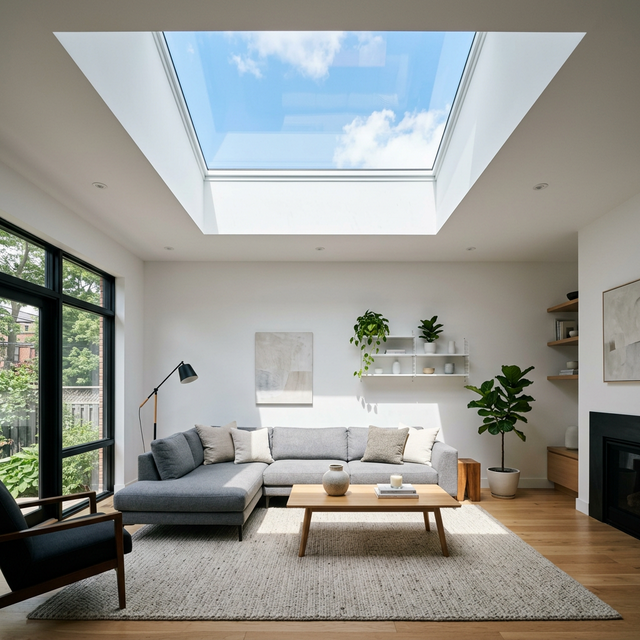
A skylight is a window installed in your roof that allows direct natural light — and in some cases fresh air — into the room below. Modern skylights are engineered for energy efficiency, moisture control, and ease of operation. They come in fixed (non-opening) and venting (operable) models, and range in size from small accent windows to large architectural features.
Types of Skylights
VELUX, the world’s leading skylight manufacturer, offers several skylight types for Toronto homes:
- Fixed Skylights — sealed, non-opening windows designed purely for light. Ideal for rooms where ventilation is not needed, such as hallways or stairwells
- Solar-Powered Fresh Air Skylights — open and close using a solar-powered motor with a built-in rain sensor that automatically closes the skylight when it detects moisture. No wiring required
- Electric Fresh Air Skylights — hardwired for reliable power, these skylights also feature automatic rain sensors and can be integrated into smart home systems
- Manual Fresh Air Skylights — operated by hand using a control bar or crank, ideal for skylights within reach
- Flat Roof Skylights — designed specifically for flat or low-slope roofs, common on Toronto row houses, additions, and commercial buildings
Advantages of Skylights
- Maximum natural light: A standard 21×27-inch VELUX skylight admits up to 30 percent more light than a vertical window of the same size, because the light comes from directly overhead
- Ventilation: Venting skylights release hot, stale air from the highest point in the room — the most effective location for passive ventilation
- Sky views: Unlike any other window type, skylights give you a view of the sky, creating a dramatic architectural feature and a connection to the outdoors
- Home value: Skylights are a visible upgrade that increases perceived home value and curb appeal
- Mental health: Exposure to natural overhead light has been shown to improve mood, sleep quality, and productivity
Limitations of Skylights
- Higher cost: Skylights cost significantly more than sun tunnels, including the unit, framing, flashing, drywall work, and finishing
- Structural modification: Installing a skylight requires cutting through roof rafters and building a framed light well through the attic space to the ceiling below
- Heat gain: In summer, south- and west-facing skylights can add significant heat to a room. Blinds and shades mitigate this, but it is an important consideration
- Not suitable for all roof types: Homes without attic access, with complex truss systems, or with very low-pitch roofs may require special engineering
What Is a Sun Tunnel?
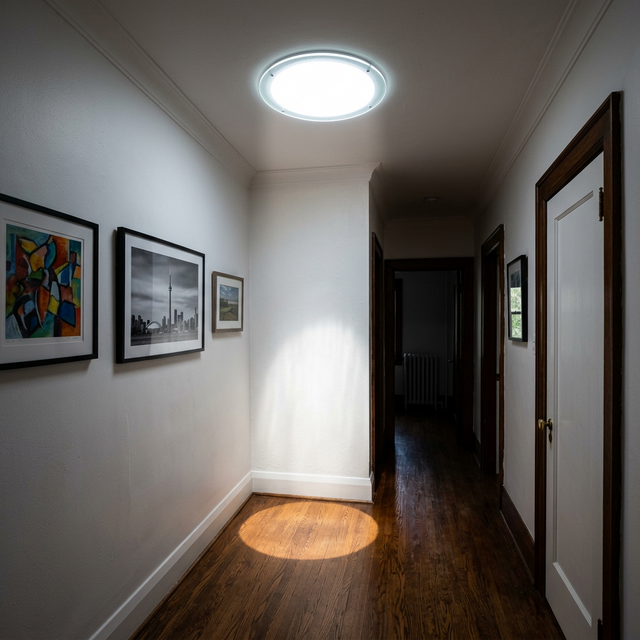
A sun tunnel (also called a tubular skylight or light tube) is a compact light-delivery system. A small dome on the roof captures sunlight, which is then reflected down a highly reflective tube through the attic space and dispersed through a diffuser lens in the ceiling below. The result is soft, even, natural light in rooms that would otherwise require electric lighting during the day.
How Sun Tunnels Work
- Roof dome: A small acrylic or glass dome (typically 10 or 14 inches in diameter) is installed on the roof and captures sunlight from all angles throughout the day
- Reflective tube: A highly reflective aluminium tube (either rigid or flexible) channels the captured light from the roof through the attic space
- Ceiling diffuser: A frosted lens mounted flush with the ceiling disperses the light evenly into the room below, mimicking the effect of a ceiling light fixture
Advantages of Sun Tunnels
- Affordability: Sun tunnels cost 50 to 70 percent less than traditional skylights, making them accessible for budget-conscious homeowners
- Quick installation: A sun tunnel can be installed in 2 to 4 hours by a qualified installer, with minimal disruption to your home
- Minimal structural impact: The small roof opening does not require cutting through rafters, and the flexible tube fits around obstructions in the attic
- Energy efficiency: The small opening minimises heat transfer, making sun tunnels excellent for energy conservation
- Versatility: Sun tunnels can deliver light to interior rooms that have no exterior walls or direct roof access, by routing the tube up to 20 feet through the attic
- Zero maintenance: With no moving parts and a sealed design, sun tunnels require virtually no maintenance over their 20+ year lifespan
Limitations of Sun Tunnels
- No ventilation: Sun tunnels are sealed units — they bring in light only, not fresh air
- No sky views: The diffuser produces soft, ambient light but you cannot see the sky, clouds, or stars
- Light output varies: The amount of light depends on the time of day, weather, tube length, and number of bends in the reflective tube
- Smaller light footprint: A single sun tunnel illuminates a circle of about 150 to 250 square feet, which is less than a standard skylight
Cost Comparison: Skylight vs Sun Tunnel in Toronto
Budget is often the deciding factor for Toronto homeowners. Here is a detailed cost breakdown for both options, including installation.
| Cost Element | Skylight (Installed) | Sun Tunnel (Installed) |
|---|---|---|
| Unit (product only) | $800 – $2,500 | $300 – $600 |
| Flashing Kit | $150 – $350 | $80 – $150 |
| Installation Labour | $800 – $2,000 | $400 – $800 |
| Framing / Light Well | $500 – $1,500 | Not required |
| Drywall / Finishing | $300 – $800 | $50 – $150 |
| Blinds / Shades (optional) | $200 – $600 | Not applicable |
| Total Installed Cost | $2,000 – $6,000+ | $800 – $2,500 |
For homeowners on a tight budget who simply want to eliminate dark spots, a sun tunnel offers outstanding value. For those who want a more dramatic design statement with ventilation and sky views, a skylight is worth the additional investment.
Which One Is Right for Your Toronto Home?
The best choice depends on your goals, your space, and your budget. Here is a room-by-room recommendation guide.
| Room | Best Option | Why |
|---|---|---|
| Kitchen | Skylight (venting) | Maximum light for the busiest room, ventilation removes cooking heat and odours |
| Living Room | Skylight (fixed or venting) | Dramatic architectural feature, sky views, floods room with natural light |
| Primary Bedroom | Skylight (venting) | Stargazing, fresh air, wake up to natural light; pair with room-darkening shades |
| Bathroom (large) | Skylight (venting) | Natural light plus moisture ventilation — reduces mould risk |
| Bathroom (small/powder) | Sun Tunnel | Affordable, compact, perfect for small spaces without ventilation needs |
| Hallway / Corridor | Sun Tunnel | Eliminates dark spots at low cost, fits narrow spaces perfectly |
| Walk-in Closet | Sun Tunnel | No electric light needed during the day, compact installation |
| Stairwell | Skylight (fixed) | Dramatic vertical light shaft, eliminates perpetually dark stairways |
| Home Office | Skylight (fixed or venting) | Overhead natural light reduces eye strain and improves productivity |
| Laundry Room | Sun Tunnel | Affordable way to add natural light to an interior utility space |
Here are more detailed recommendations based on common scenarios.
Choose a Skylight When:
- You want maximum natural light and sky views — skylights transform rooms into bright, airy living spaces
- You need ventilation — venting skylights are especially valuable in kitchens, bathrooms, and upper-floor rooms that trap heat
- You are doing a major renovation — if drywall work is already happening, adding a skylight light well is more cost-effective
- The room has direct attic access above it — a straight light well is the most efficient configuration
- You want a design feature — skylights add architectural drama that increases home value and visual appeal
Choose a Sun Tunnel When:
- You want to light up a dark hallway, bathroom, or closet — sun tunnels excel in small, interior spaces
- Your budget is limited — at less than half the cost of a skylight, sun tunnels are an accessible natural-light solution
- You want minimal disruption — a 2 to 4 hour installation means no mess, no construction chaos
- The room does not have direct roof access — sun tunnel tubes can navigate around attic obstacles for up to 20 feet
- You want energy efficiency above all — the small opening minimises heat loss in winter and heat gain in summer
Consider Both When:
Many Toronto homeowners install a combination of both. A large skylight in the kitchen or living room provides the dramatic light and ventilation you want in your main living spaces, while sun tunnels illuminate the hallways, bathrooms, and secondary rooms at a fraction of the cost. This combined approach maximises natural light throughout your home while keeping the overall budget manageable.
Toronto Climate Considerations for Skylights and Sun Tunnels
Toronto’s climate presents unique challenges for any roof-mounted product. Here is how both options perform in our local conditions.
Winter Performance
Toronto winters bring heavy snow, ice, and temperatures as low as -25°C. Modern VELUX skylights use triple-pane, Low-E, argon-filled glass that provides excellent insulation — current models achieve U-values as low as 1.1 W/m²K. Sun tunnels perform well in winter because their small dome sheds snow quickly and the reflective tube captures and amplifies even low-angle winter sunlight.
Summer Heat Management
South- and west-facing skylights can admit significant solar heat during Toronto’s humid summers. Light-filtering shades or venetian blinds are strongly recommended for these orientations. Sun tunnels inherently admit less heat due to their smaller opening and the fact that the tube reflects rather than transmits infrared radiation.
Condensation
Condensation can occur on any glazed surface when warm, humid interior air meets cold glass. Proper installation with vapour barriers, adequate attic ventilation, and quality glazing minimises this risk. VELUX skylights feature a condensation gutter that channels any moisture safely to the outside. Sun tunnels rarely experience condensation issues due to their small glass area.
Installation Requirements and Process
Understanding what installation involves helps you plan for both options.
Skylight Installation
A full skylight installation typically involves:
- Roof opening — cutting through shingles, plywood, and (often) one or two rafters
- Reframing — installing headers and trimmers to support the new opening
- Skylight mounting — setting the unit into the prepared curb or deck-mount frame
- Flashing — installing a multi-piece flashing kit to seal the skylight to the roof
- Light well construction — building a framed tunnel from the skylight down through the attic to the ceiling
- Insulation — insulating the light well walls to prevent thermal bridging
- Drywall, taping, and finishing — completing the interior to match your existing ceiling and walls
- Trim and paint — optional wooden or aluminium trim to frame the opening
Total installation time is typically 1 to 2 days depending on complexity.
Sun Tunnel Installation
A sun tunnel installation is far simpler:
- Cut a small hole in the roof (10 or 14 inches diameter)
- Mount the dome assembly on the roof with integrated flashing
- Route the reflective tube through the attic from roof to ceiling
- Cut a matching hole in the ceiling drywall
- Install the ceiling diffuser ring and lens
Total installation time is typically 2 to 4 hours. No framing, no drywall finishing, and no painting required.
Energy Efficiency and Rebates
Both skylights and sun tunnels can contribute to energy savings by reducing your reliance on electric lighting during the day. ENERGY STAR-rated VELUX skylights may also qualify for rebate programs through local utilities or NRCan incentives when combined with other energy upgrades.
A single 21×46-inch VELUX skylight can provide enough natural light to eliminate the need for electric lighting in a room for 8 to 10 hours per day during spring and summer months. Over the course of a year, this can reduce lighting energy consumption in that space by 50 to 75 percent.
Sun tunnels are even more efficient from a net-energy perspective because their small opening minimises thermal transfer while still delivering significant daylight.
What is the difference between a skylight and a sun tunnel?
How much does a skylight cost compared to a sun tunnel in Toronto?
Can a sun tunnel provide as much light as a skylight?
Do skylights or sun tunnels leak?
Can I install a sun tunnel in a room without direct attic access?
Which is better for a bathroom — a skylight or sun tunnel?
Get Expert Advice on Skylights and Sun Tunnels
Whether you are leaning toward a skylight, a sun tunnel, or a combination of both, Toronto Skylight Installers can help you make the right choice for your home. We offer free in-home consultations where we assess your space, discuss your goals, and recommend the best solution.
Call us today at (416) 365-7557 or request your free consultation online. As a certified VELUX dealer, we carry the full range of skylights, sun tunnels, and accessories, and every installation is backed by both manufacturer and workmanship warranties.
Toronto Skylight Installers serves Toronto and the Greater Toronto Area. As certified VELUX skylight specialists, we bring expert installation, transparent pricing, and a commitment to bringing natural light into every corner of your home.