

Installing a skylight on a cedar shake or metal roof is a different job than installing one on standard asphalt shingles, and homeowners researching a skylight on metal roof Toronto project quickly discover that flashing compatibility is the make-or-break factor. Both cedar shake and standing-seam or ribbed metal roofs are premium roofing systems common across Toronto, the Beaches, Forest Hill, and the more rural pockets of the GTA like Caledon and King City. Because these roofs shed water differently and move differently than asphalt, the flashing kit, curb height, and fastening method all have to change. Getting any of those wrong is the single most common cause of leaks around a skylight, regardless of how good the unit itself is.
As a certified VELUX dealer, we install on every common Toronto roof type, and the questions we hear most about cedar and metal roofs centre on whether a skylight can even be fitted without compromising the roof’s warranty or watertightness. The short answer is yes, but only with the correct profile-specific flashing and a curb-mounted approach in most metal applications. This guide walks through the real differences, the 2026 GTA cost ranges, and the code details that matter for your home.
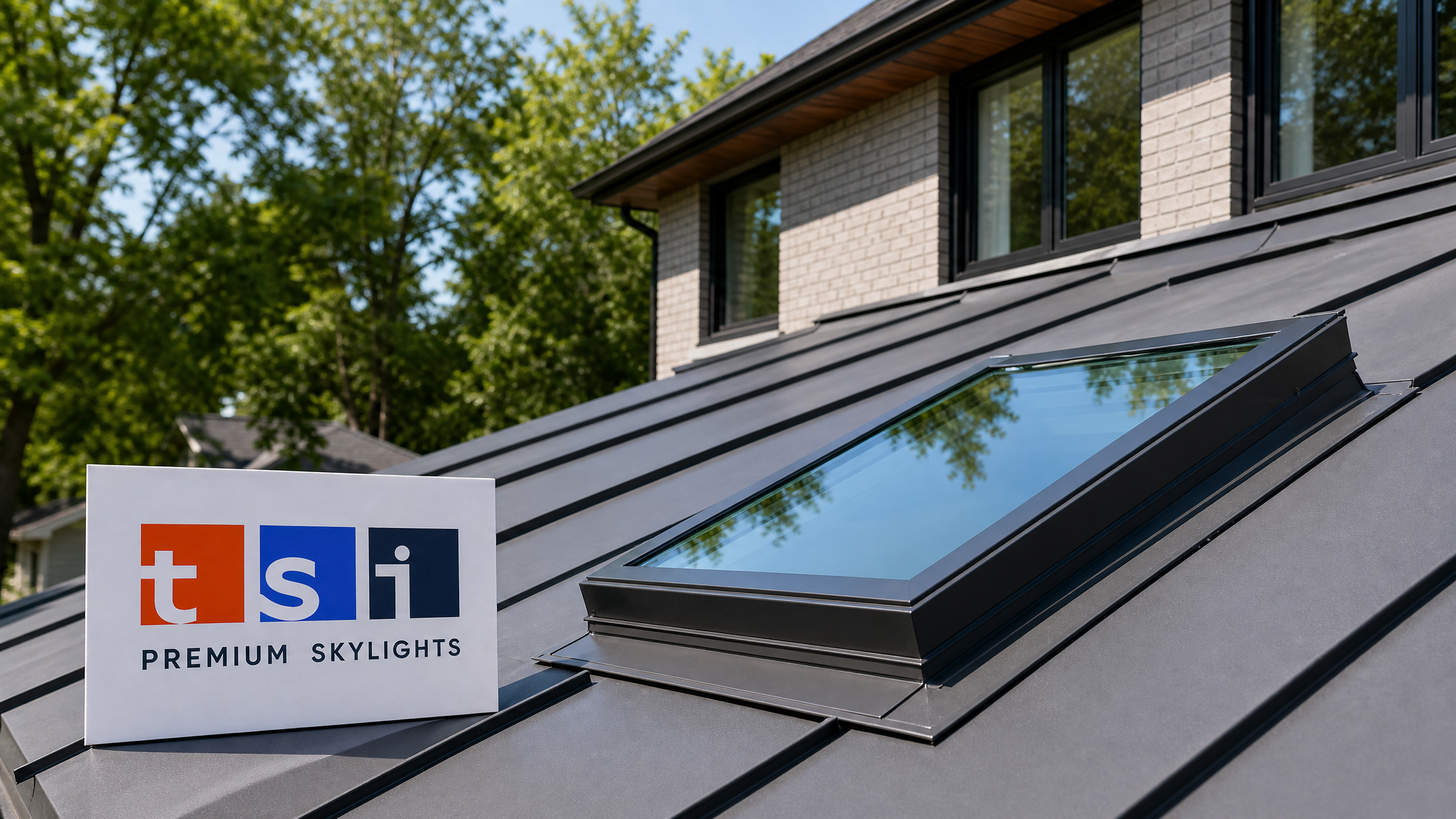
Why a Skylight on Metal Roof Toronto Projects Need Special Flashing
A skylight on metal roof Toronto installation cannot use the same step-and-saddle flashing kit designed for asphalt shingles. Metal roofs in the GTA fall into two broad families: standing-seam panels with raised vertical seams, and exposed-fastener corrugated or ribbed panels. Each has a distinct profile, and water travels along the raised ribs and flat pans in a way that a generic flat-roof flashing cannot accommodate. The flashing has to be formed to bridge the rib height, divert water around the upslope side of the curb, and terminate cleanly into the pans below.
Cedar shake presents the opposite challenge. Shakes are thick, irregular, and overlap in heavy courses, so the flashing must accommodate a roof surface that can be 25 to 40 millimetres thick at the butt of each shake. A low-profile flashing kit meant for thin shingles will not seal against that depth. This is why both roof types almost always call for a curb-mounted skylight rather than a deck-mounted (low-profile) unit. The raised curb lifts the glass above the plane of the roof, giving the flashing a vertical surface to seal against and keeping water moving downslope.
The fastening method matters too. Metal roofs expand and contract significantly in summer heat, with panel temperatures on a Toronto roof in July easily reaching 70 degrees Celsius. The flashing system has to allow that movement without tearing sealant joints or backing out fasteners. Our team uses butyl-based and clip-and-cleat details that move with the panel rather than fighting it.
Cedar Shake vs Metal Roof: Skylight Compatibility at a Glance
Before comparing costs, it helps to understand how each roof type interacts with a skylight curb, flashing, and the surrounding waterproofing. The table below summarises the practical differences our installers manage on GTA homes.
| Factor | Cedar Shake Roof | Metal Roof (Standing Seam) |
|---|---|---|
| Recommended mount | Curb-mounted | Curb-mounted |
| Flashing type | Deep saddle + counter-flashing | Profile-specific pan + clip flashing |
| Surface thickness | 25-40 mm (thick butts) | 1-3 mm panel + rib height |
| Thermal movement | Low | High (expansion/contraction) |
| Sealant strategy | Layered underlayment + ice/water shield | Butyl tape, movement-tolerant |
| Typical install time | 1 day | 1-1.5 days |
The common thread is that both roofs reward a curb-mounted approach. If you are weighing a new opening against an existing one, our new skylight installation service handles the framing, while a like-for-like swap on a cedar or metal roof falls under skylight replacement.
Flashing Compatibility: Matching the Kit to Your Roof
VELUX and other quality manufacturers produce flashing kits coded to roof profile. The wrong code is the leading cause of premature leaks, so this is where careful selection pays off. The correct kit depends on whether you have shakes, standing seam, or an exposed-fastener metal panel, and on the depth of the roofing material.
| Roof Profile | Flashing Approach | Key Detail |
|---|---|---|
| Cedar shake | High-profile saddle kit | Counter-flashing tucked under upslope shakes |
| Standing seam metal | Custom-formed pan flashing | Seams diverted around curb sides |
| Corrugated/ribbed metal | Profiled foam closures + apron | Closures fill rib voids at head and sill |
| Metal shingle/tile | Tile-profile flashing kit | Stepped to follow panel courses |
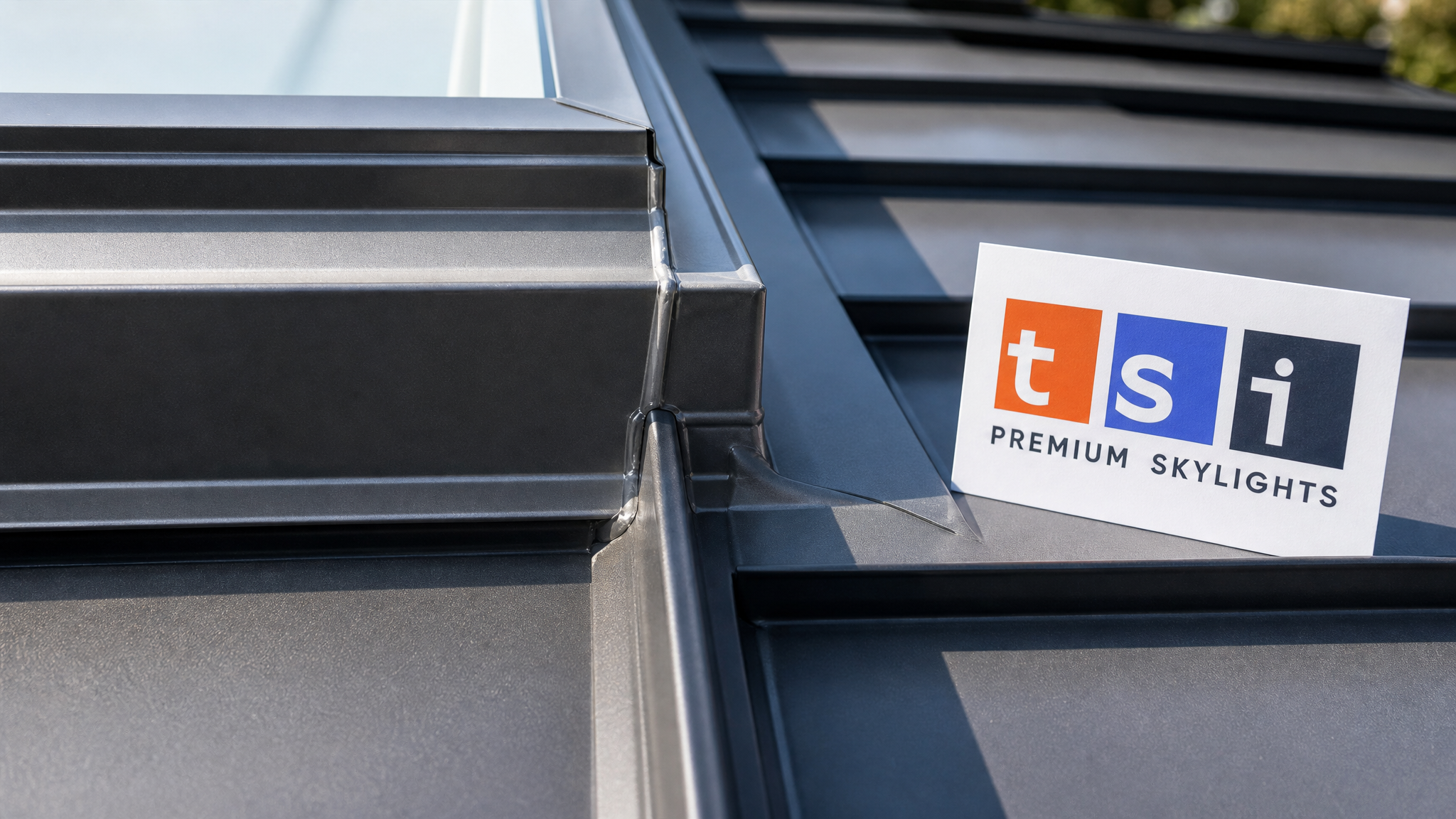
On standing-seam roofs we frequently fabricate the head (upslope) flashing on site so the seams are intercepted and water is shed to either side of the curb. On cedar, the priority is a generous ice-and-water membrane wrap up the curb and a counter-flashing detail that hides under the next course of shakes so nothing relies on exposed sealant alone. For homeowners who want to understand the components, our skylight flashing kits page outlines the options we stock.
2026 GTA Cost Ranges for Cedar and Metal Roof Skylights
Because cedar and metal installations require more labour and often custom-formed flashing, they cost more than a standard asphalt install. The figures below reflect typical Toronto and GTA pricing in 2026 for a single residential skylight, supplied and installed, including the correct flashing and interior finishing.
| Roof Type | Fixed Skylight Installed | Fresh-Air (Vented) Installed | Notes |
|---|---|---|---|
| Asphalt shingle (baseline) | $2,000-$3,200 | $2,900-$4,400 | Standard flashing kit |
| Cedar shake | $2,600-$4,000 | $3,500-$5,300 | Deep saddle + membrane wrap |
| Standing-seam metal | $2,900-$4,600 | $3,800-$5,800 | Custom-formed pan flashing |
| Corrugated/ribbed metal | $2,700-$4,300 | $3,600-$5,500 | Foam closures + apron |
Several factors push a quote toward the higher end: a new opening that requires cutting and reframing rafters, a vaulted versus a flat-ceiling light shaft, and switching to a solar or electric vented unit. A fixed skylight is the most economical choice when you only want daylight, while a solar-powered fresh-air skylight adds ventilation and qualifies for energy rebates without running new wiring.
Installation Differences: Step by Step on Each Roof
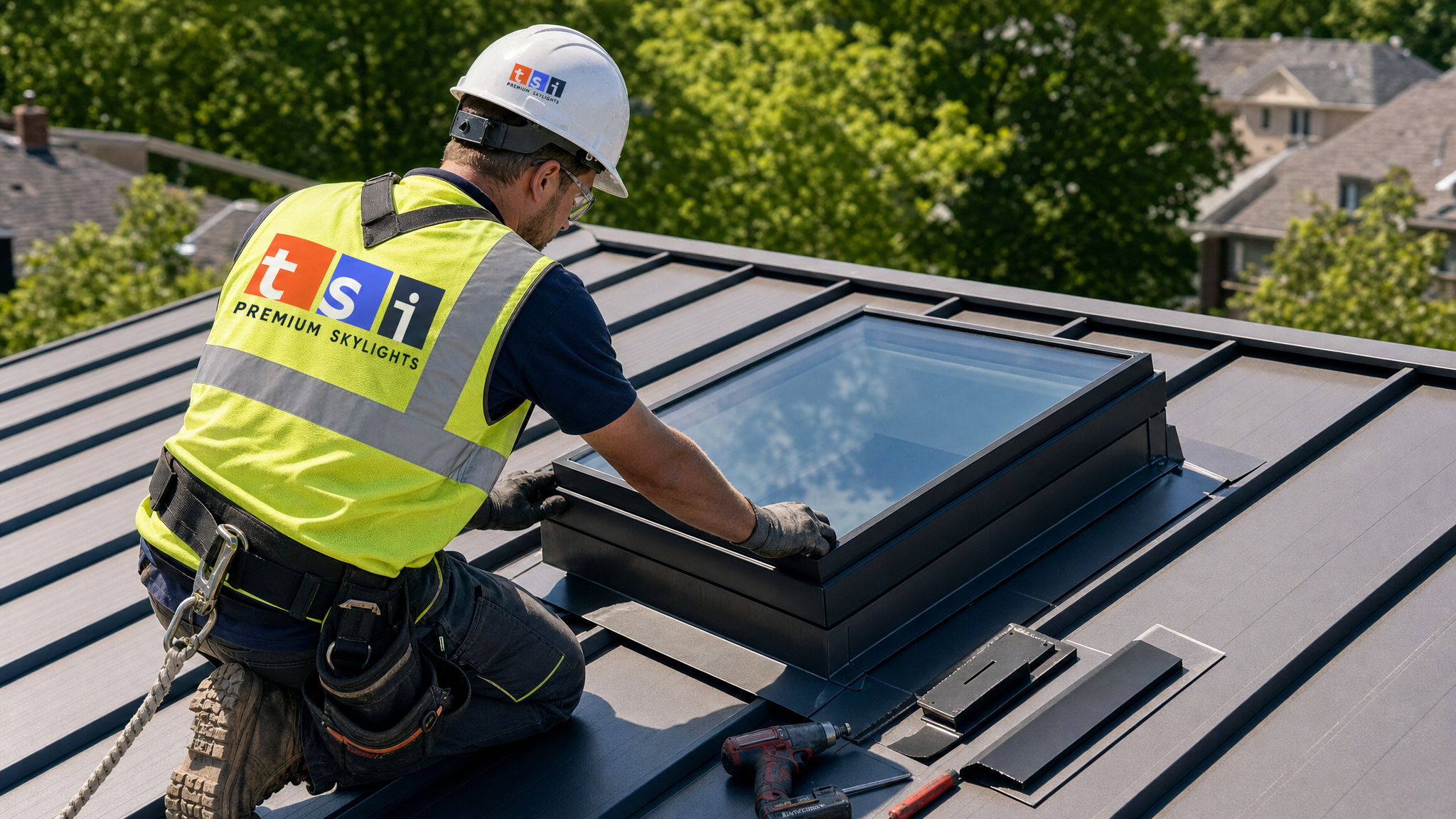
The installation sequence diverges most at the flashing and weatherproofing stages. On a cedar shake roof, the crew carefully removes shakes around the opening, frames and sets a curb-mounted unit, then wraps the curb in self-adhered membrane before reinstalling shakes in overlapping courses around the saddle flashing. Because cedar is brittle in dry summer conditions, replacement shakes are often needed, and we keep matching stock on hand to blend the repair invisibly.
On a metal roof, the panels are not simply lifted and replaced. Standing-seam panels are interlocked, so the installer may need to unseam adjacent panels, form the head and sill flashing to the panel profile, set the curb, and then reseam. Exposed-fastener panels are more forgiving but require precise foam closures at the head and sill to block wind-driven rain from entering the rib voids. In both cases the curb is set well above the panel surface, typically 100 to 150 millimetres, so summer downpours never pond against the glass.
Interior finishing is the same regardless of roof type: a drywalled or wood-lined light shaft, insulated to current standards, with a clean reveal. The visible difference is entirely on the roof, which is why choosing an installer experienced with your specific roof material matters more than for a conventional asphalt job. If your existing unit is leaking rather than being newly installed, our skylight repairs team can often re-flash a metal or cedar curb without a full replacement.
Building Code, Ventilation, and Summer Performance in the GTA
Ontario Building Code treats skylights as part of the building envelope, so the unit’s energy rating, the light-shaft insulation, and the flashing all fall under inspection on permitted work. For a new opening, framing must maintain the structural integrity of the roof, which usually means doubling the rafters on either side of the curb. Glazing should carry a low U-factor and a solar heat gain coefficient suited to summer comfort, because a poorly specified skylight on a south-facing Toronto roof can add unwanted heat in July and August.
| Specification | Recommended Target | Why It Matters in Summer |
|---|---|---|
| Glazing U-factor | 1.4 W/m²K or lower | Limits heat transfer |
| Solar heat gain (SHGC) | 0.30-0.40 | Reduces July/August heat gain |
| Curb height (metal) | 100-150 mm | Keeps water off the glass |
| Light-shaft insulation | R-24 minimum | Prevents heat bleed at shaft |
| Venting option | Solar or electric openable | Releases hot attic-level air |
A vented skylight is especially valuable in summer because hot air rises and escapes through the open unit, drawing cooler air up through the house. Pairing a fresh-air skylight with a rain sensor means it closes automatically during a sudden GTA thunderstorm. For rooms without direct roof access, a sun tunnel skylight delivers daylight through a reflective shaft and works on both metal and cedar roofs with the correct top flashing.
Common Mistakes That Cause Leaks on Cedar and Metal Roofs
The leaks we are called to fix on these roofs almost always trace back to a handful of avoidable errors. The most frequent is using an asphalt-shingle flashing kit on a metal or cedar roof because it was cheaper or already on the truck. It will not seal against the profile, and the failure shows up within a season or two. The second is relying on surface sealant instead of mechanical counter-flashing; sealant alone degrades under Toronto’s UV and freeze-thaw cycling and is never a substitute for properly lapped metal.
On metal roofs specifically, failing to allow for thermal movement causes fasteners to back out and butyl joints to split. On cedar, setting the curb too low lets water pond behind the upslope shakes. A reputable installer also verifies the unit is the correct size for the rafter spacing so the opening does not weaken the roof structure. Commercial and multi-unit buildings face the same principles at larger scale, which is why our commercial skylights are spec’d with the same profile-matched discipline.
Book Your Skylight on Metal Roof Toronto Consultation Today
Whether you have a heritage cedar shake roof in the Beaches or a modern standing-seam metal roof in Vaughan, a skylight on metal roof Toronto project done right comes down to profile-matched flashing, a properly set curb, and an installer who works on these roofs regularly. Toronto Skylight Installers is a certified VELUX dealer with the flashing kits and on-site fabrication experience to integrate a skylight cleanly into either roof type without compromising its watertightness.
Call us today at (416) 365-7557 or book a free skylight consultation to get an accurate quote for your cedar or metal roof.
Toronto Skylight Installers proudly serves homeowners across Toronto and the GTA with expert skylight installation, replacement, and repair.