

A sloped ceiling loft skylight Toronto project transforms a dim, underused attic conversion into the most coveted room in the house. When Toronto summers arrive — long days, warm breezes, and the golden light that defines June through August — a properly installed roof window in a loft space makes every morning feel like waking up in an architect’s showroom. Whether you are finishing a new loft above a Markham detached home or renovating a century-old semi-detached in the Annex, understanding the costs, product options, and structural requirements of a sloped ceiling skylight is the essential first step.
Toronto’s housing stock presents unique challenges for loft skylights. The city blends Victorian rooflines with modern infill builds, and each slope angle, rafter spacing, and insulation depth demands a tailored approach. From the tight laneway houses of Leslieville to the expansive loft conversions above Vaughan new builds, the installation principles remain consistent: match the roof pitch, select the right glazing for summer solar gain control, and choose a product whose flashing kit is rated for Ontario’s climate swings. This guide covers everything you need to know about planning your sloped ceiling loft skylight Toronto installation in 2026.
At Toronto Skylight Installers, we have completed hundreds of loft skylight projects across the Greater Toronto Area. Our team works exclusively with skylights — meaning every measurement, every flashing kit, and every glazing recommendation comes from deep, specialised experience rather than a general contracting background.

Why a Sloped Ceiling Loft Skylight Toronto Project Makes Sense in 2026
The Greater Toronto Area housing market has pushed homeowners to maximise every square metre of their existing footprint. Loft conversions — transforming attic space above the top floor into a habitable bedroom, studio, or home office — have surged in popularity across Toronto, Mississauga, Brampton, and Oakville. The single biggest barrier to loft livability is natural light. A loft with a flat plasterboard ceiling and only a gable-end window feels like a storage room. Add a well-placed sloped ceiling loft skylight Toronto installation and the same room becomes a bright, airy sanctuary.
Beyond aesthetics, the practical case for a loft skylight in summer 2026 is compelling. Ontario’s Net Zero Energy Ready building code now rewards passive solar design, and a properly specified skylight — with low-emissivity glazing and solar heat gain coefficients tuned for Toronto’s latitude — contributes to that energy performance. Fresh-air models allow cross-ventilation that can reduce mechanical cooling loads on warm June and July nights. And from a resale perspective, a finished loft with a compliant skylight adds measurable value: appraisers consistently treat loft conversions with roof fenestration as additional habitable floor area.
There is also a seasonal installation argument. Summer is the optimal window for skylight work in Ontario. Dry weather, longer days, and temperatures above 10°C allow roofing membranes and flashing compounds to cure properly. Scheduling your sloped ceiling loft skylight Toronto installation between June and September minimises weather-related delays and ensures your new glazed opening is fully sealed before autumn rains arrive.
Understanding Roof Pitch and Structural Requirements for Loft Skylights
The first technical question any loft skylight project must answer is pitch compatibility. VELUX — the dominant brand in Canadian residential skylights — rates its standard roof window products for pitches between 15° and 85°. Most Toronto residential roofs fall between 30° and 45°, which places them squarely in the ideal operating range. However, loft conversions sometimes involve mansard sections, dormer cheeks, or shallow-pitch extensions that require different flashing systems or product selections.
Structural assessment matters just as much as pitch. Installing a sloped ceiling loft skylight Toronto requires cutting through the existing roof deck and, in many cases, the ceiling membrane below. If the loft has already been framed with knee walls and a sloped ceiling that follows the rafters, the skylight installer works within the rafter bays. If two or more rafters must be cut to achieve the desired opening size, a structural header must be installed — an intervention that requires either an engineer’s sign-off or a building permit depending on the span.
Toronto Building requires a permit for any new opening in the building envelope that alters the roof structure. This includes most loft skylight installations where rafter modification is involved. The permit process typically adds two to three weeks to the project timeline but protects the homeowner during resale. Our new skylight installation service includes permit coordination as a standard step.
| Roof Pitch (degrees) | VELUX Compatibility | Flashing Type Required | Typical Toronto Application |
|---|---|---|---|
| 15° – 20° | Low-pitch only (FS flashing) | Low-pitch flashing kit | Rear shed dormers, shallow extensions |
| 21° – 44° | Standard roof windows | Standard EDW or EDL flashing | Most Toronto detached and semi-detached homes |
| 45° – 60° | Roof windows (steep-pitch flashing) | Steep-pitch flashing kit | Victorian rooflines, older Annex and Cabbagetown homes |
| 61° – 75° | Top-hinged roof windows preferred | BDX or custom flashing | Steep mansard sections, some heritage facades |
| 76° – 85° | Vertical-adjacent windows only | Specialist vertical flashing | Rare — steep dormer faces |
VELUX Product Options for Sloped Ceiling Loft Skylights in Toronto
VELUX dominates the Canadian market for sloped-ceiling roof windows, and for good reason: the product line covers every pitch, every glazing specification, and every automation preference. Understanding the major product families helps Toronto homeowners make informed choices before they request quotes.
FCM Fixed Skylights — The fixed skylight is the most cost-effective way to introduce natural light into a loft. Fixed units cannot open, so they are best suited to spaces where light — not ventilation — is the primary goal. They are fully compatible with sloped ceilings and available in sizes from 38 cm × 61 cm up to 114 cm × 140 cm. For a loft bedroom in a Mississauga townhouse where the HVAC system handles air circulation, a fixed unit at the ridge end of the ceiling delivers dramatic light without added mechanical complexity.
VS/VSS Electric Fresh-Air Skylights — The electric fresh-air skylight adds motorised operation via a wall switch or the VELUX Active smart home system. For a loft that reaches 28°C on a Toronto July afternoon, this is the upgrade that matters most. The electric model opens at the touch of a button to vent rising hot air, and the integrated rain sensor closes the unit automatically if a summer shower rolls through while the homeowner is out. This feature is especially valued in loft bedrooms where manual reach to a roof window would require a ladder or extended pole.
VSS Solar-Powered Fresh-Air Skylights — The solar-powered skylight harvests energy from a small panel integrated into the sash. No electrical wiring is needed — a significant advantage in loft spaces where running a conduit through finished sloped ceiling panelling is disruptive and expensive. The solar model includes the same rain sensor as the electric version. For Toronto homeowners who want ventilation capability without a licensed electrician visit, this is the most popular choice in our current loft skylight installations.
Manual Fresh-Air Skylights — The manual fresh-air skylight uses a pole or a gear operator to open and close. These are the most affordable ventilating option and are well-suited to low-ceiling lofts where the skylight sits within arm’s reach. The manual model is also the right choice when a homeowner prefers simplicity over automation.
2026 Cost Breakdown for Sloped Ceiling Loft Skylight Toronto Installations
Cost transparency is a consistent request from Toronto homeowners exploring a sloped ceiling loft skylight Toronto project. The following ranges reflect 2026 market pricing in the GTA and include supply, labour, flashing, and permit costs where applicable. They do not include interior finishing (drywall, paint, trim) which varies widely depending on the loft’s existing finish level.
| Project Scope | Product Type | Estimated Cost (CAD, incl. HST) | Typical Timeline |
|---|---|---|---|
| Single fixed skylight, no structural work | VELUX FCM Fixed | $1,800 – $2,800 | 1 day |
| Single manual fresh-air skylight, no structural work | VELUX VS Manual | $2,200 – $3,400 | 1 day |
| Single solar fresh-air skylight, no structural work | VELUX VSS Solar | $2,800 – $4,200 | 1 day |
| Single electric fresh-air skylight with wiring | VELUX VSE Electric | $3,500 – $5,500 | 1–2 days |
| Double skylight installation, one rafter header required | Any VELUX model (×2) | $6,500 – $10,000 | 2–3 days |
| Full loft skylight package: 3 units + permits + interior light shafts | Mixed configuration | $12,000 – $18,000 | 4–6 days |
Factors that move cost toward the higher end of each range include: steep or complex roof pitches requiring specialist flashing, heritage neighbourhoods with additional permit review, insulation depths above 300 mm that complicate the light shaft framing, and premium glazing upgrades such as laminated inner panes for added security in a loft bedroom.
Available government incentives can offset costs. The Canada Greener Homes Grant programme (where applicable) and certain municipal top-up programmes recognise solar-powered skylight installations as energy efficiency improvements. Ask about current eligibility when you request a free consultation.
The Installation Process: Step by Step
Understanding the installation sequence helps homeowners prepare their loft space and set realistic expectations for the project day. A standard single-unit sloped ceiling loft skylight Toronto installation follows these stages:
Pre-installation inspection — Our technician surveys the loft ceiling slope, measures rafter spacing, checks for existing insulation depth, and confirms the chosen skylight size fits between rafters without structural modification. If headers are needed, this is confirmed and engineered before product is ordered.
Rough opening — The interior ceiling opening is cut first from inside the loft, followed by the roof deck opening from above. Temporary weatherproofing is in place within minutes. On a GTA summer day, the exposed opening window is typically less than two hours.
Light shaft framing — In most loft installations, the skylight sits within the ceiling plane — meaning no separate light shaft is needed. The rafter bay itself serves as the shaft. However, if the loft has a dropped ceiling below the roof deck (common in older Toronto semi-detached conversions), a splayed light shaft is framed to maximise light spread.
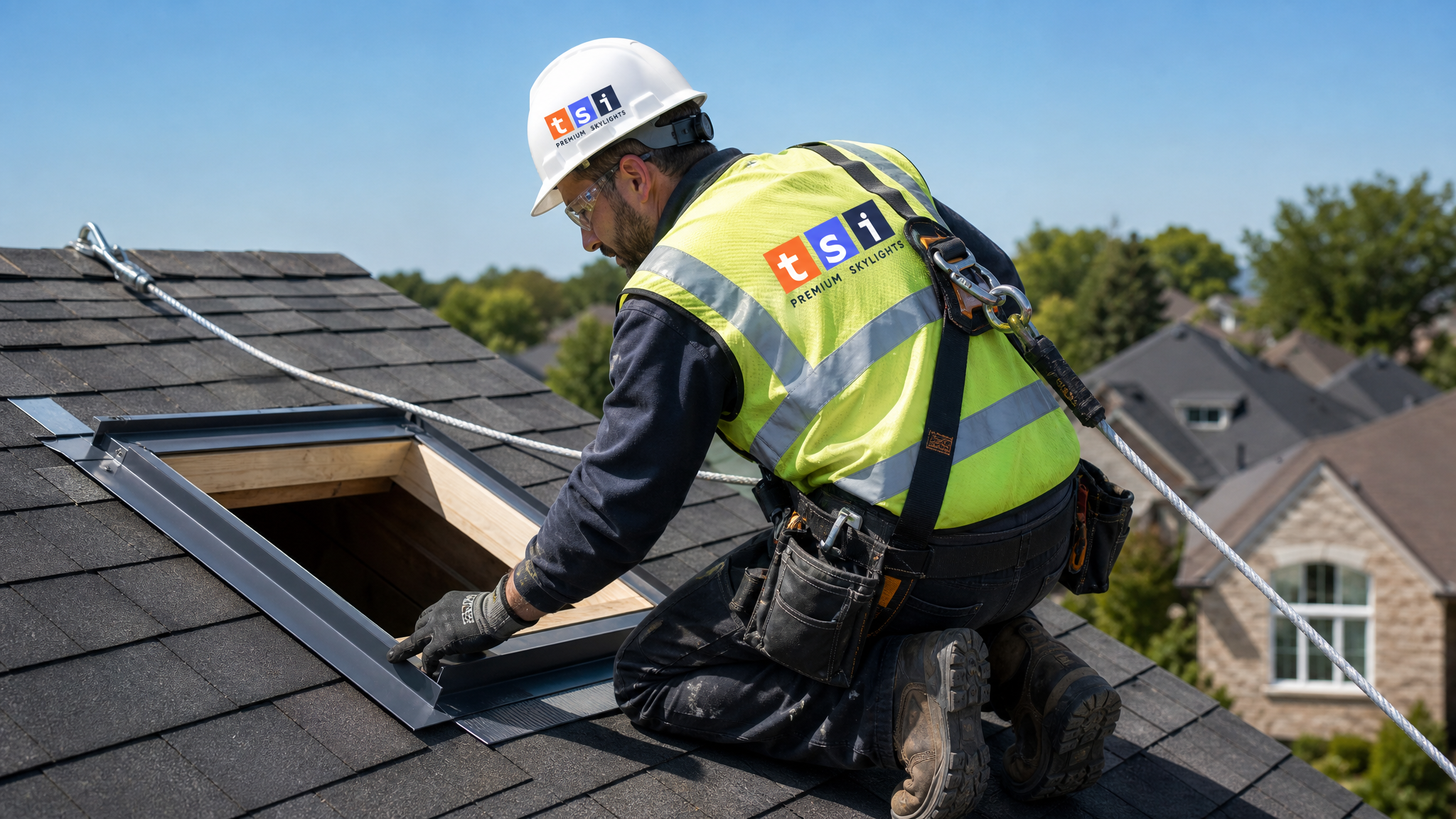
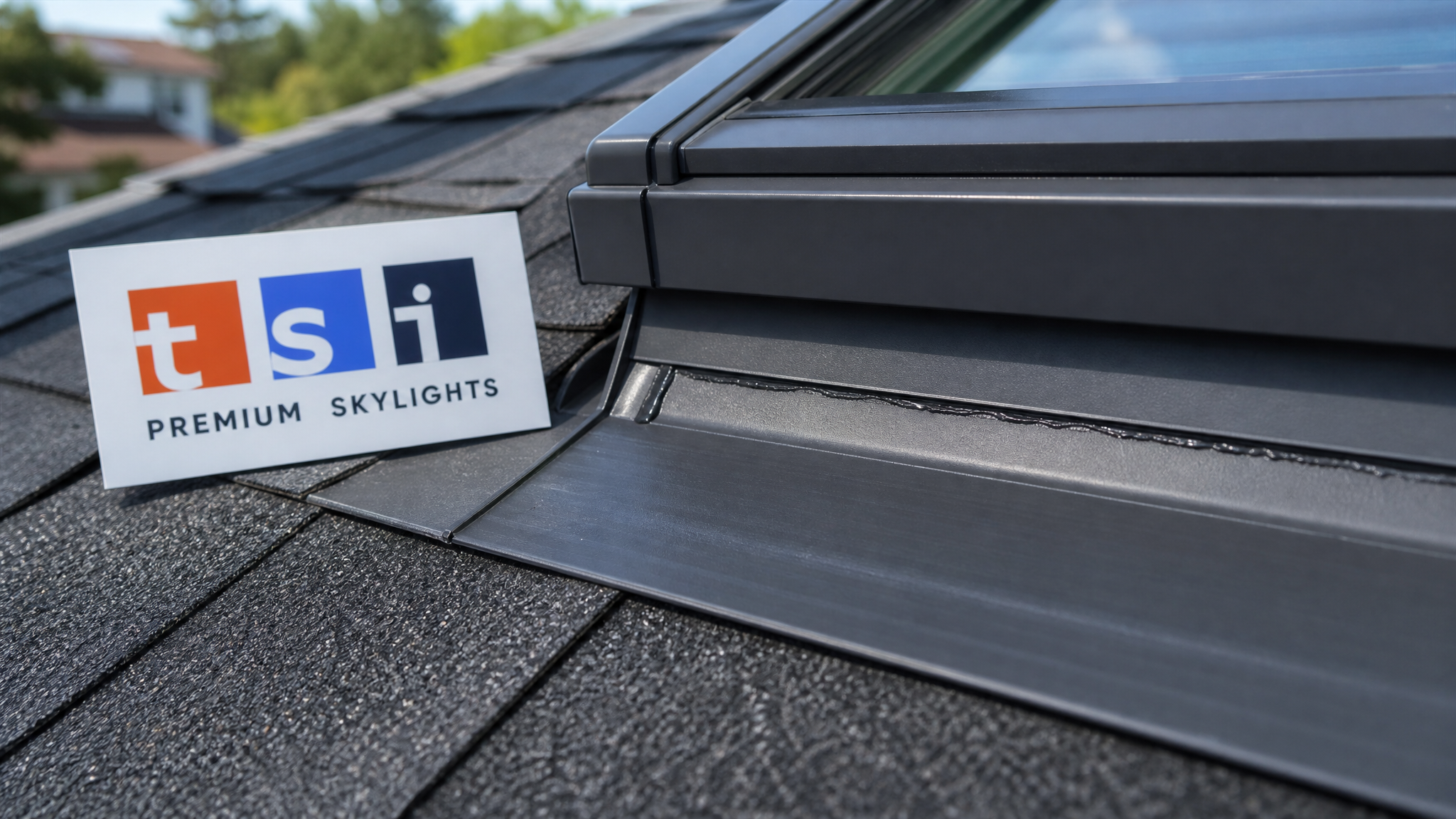
Flashing installation — The correct flashing kit for the roof type (asphalt shingle, low-slope membrane, or metal standing seam) is installed around the curb or sash frame. This is the most technically critical step: improper flashing is the root cause of virtually every skylight leak we encounter during our skylight repairs work. We use the manufacturer-matched flashing kit — never generic sheet metal.
Unit installation and glazing seating — The skylight frame and sash are set into the opening, fastened to the structural surround, and sealed at all transitions. For electric and solar models, the wiring or solar panel connections are completed at this stage.
Interior finishing — The ceiling-to-frame junction is insulated (closed-cell spray foam around the perimeter is our standard), and the interior frame is trimmed. If the homeowner has arranged drywall finishing, we leave the opening ready for the drywaller’s follow-up visit.
Quality inspection and operation test — Every ventilating unit is cycled open and closed multiple times before the crew leaves. Fixed units receive a water test at the exterior seal line. The homeowner receives the VELUX warranty card and our installation report.
Glazing Options and Summer Heat Management for Toronto Lofts
Heat management is the defining concern for a sloped ceiling loft skylight Toronto project in summer. A south-facing skylight on a 35° pitch in a Brampton loft can admit intense afternoon sun from June through August, turning a comfortable bedroom into an uncomfortable hot room if the glazing and shading are not correctly specified.
VELUX’s standard double-glazed unit for Canadian climates carries a solar heat gain coefficient (SHGC) of approximately 0.44 — meaning it admits 44% of incident solar energy as heat. For north-facing or east-facing loft skylights, this is typically acceptable. For south- or west-facing installations, we recommend specifying the “FS” laminated or “EF” energy-efficient glazing options with SHGC values in the 0.27–0.35 range. The reduction in solar heat gain pays back quickly in reduced air conditioning costs across a Toronto summer.
Shading is the complementary tool. VELUX offers a full range of skylight blinds designed for sloped installations. The room darkening skylight shade is the most popular choice for loft bedrooms — it blocks nearly all incoming light for daytime sleeping and reduces solar heat gain when fully deployed. For spaces where some filtered light is preferred, the light filtering skylight shade reduces glare without full blackout. In loft studies or studios where occupants want directional light control, the venetian skylight shade allows precise angle adjustment.
| Glazing / Shading Option | SHGC | Light Transmittance | Best Use in GTA Loft |
|---|---|---|---|
| VELUX Standard Double Glaze | 0.44 | 60% | North/east lofts, shaded rooflines |
| VELUX Energy-Efficient (EF) Glaze | 0.32 | 52% | South/west lofts, unshaded exposures |
| Laminated Inner Pane Upgrade | 0.44 | 58% | Loft bedrooms, added safety & noise reduction |
| Room Darkening Blind (deployed) | ~0.04 | <2% | Loft bedrooms, daytime sleeping, media rooms |
| Light Filtering Blind (deployed) | ~0.18 | ~20% | Loft offices, studios, reading nooks |
| Venetian Blind (half angle) | ~0.22 | ~30% | Loft studios, adjustable directional control |
Permits, Inspections, and Toronto Building Code Compliance
Permit requirements for a sloped ceiling loft skylight Toronto project depend on the scope of structural work involved. Toronto Building’s position is clear: any modification to the roof structure (cutting rafters, installing headers, altering roof sheathing beyond the skylight rough opening) requires a building permit. Cosmetic or like-for-like skylight replacement — where the opening size does not change — typically does not require a permit, though a zoning check is always advisable in heritage overlay areas.
The permit process for a new loft skylight in Toronto typically involves:
Submission of a site plan and roof framing drawing to Toronto Building, review by a plans examiner (typically 10–15 business days for residential projects in 2026), issuance of the permit, a framing inspection once the structural work is complete, and a final inspection after the skylight is installed and interior finishing is complete.
Our team coordinates the permit application on your behalf as part of the skylight installation service. We maintain working relationships with Toronto Building inspectors and understand the documentation requirements for loft skylight projects in every Toronto district — from the older wood-frame houses of East York to the engineered-lumber lofts in newer Vaughan subdivisions.
One compliance point that surprises homeowners: Ontario Building Code requires a minimum U-value of 1.40 W/m²K (or better) for skylight glazing in new installations. All current VELUX products supplied through our programme meet or exceed this threshold. Older, single-glazed skylights — occasionally found in lofts converted in the 1980s or 1990s — do not comply and must be replaced rather than reused when a loft renovation is underway.
Frequently Asked Questions
What is the best skylight for a sloped ceiling loft skylight Toronto project in summer?
Do I need a permit for a sloped ceiling loft skylight in Toronto?
How much does a sloped ceiling loft skylight Toronto installation cost in 2026?
Can I install a skylight on any pitch of sloped ceiling loft?
How do I prevent my loft skylight from overheating in a Toronto summer?
How long does a sloped ceiling loft skylight Toronto installation take?
Schedule Your sloped ceiling loft Consultation Today
If you are ready to transform your Toronto loft into a light-filled, well-ventilated living space, Toronto Skylight Installers is the GTA’s dedicated skylight specialist. We bring deep product knowledge, permit expertise, and proven installation technique to every sloped ceiling loft skylight Toronto project — from a single VELUX solar unit in a Brampton townhouse loft to a multi-skylight transformation above a custom Oakville home. Our summer installation calendar is open now, and dry, warm conditions make this the ideal time to begin.
Call us today at (416) 365-7557 or request a free consultation to get started.
Toronto Skylight Installers proudly serves Toronto, Mississauga, Markham, Vaughan, Brampton, and Oakville.