

Every house has at least one room that electric light never quite fixes: a central hallway with no exterior wall, a windowless powder room, a laundry area, a walk in closet, a landing at the top of the stairs. As the days shorten through September and October those spaces get noticeably gloomier, and that is exactly when sun tunnel skylights Vaughan homeowners have read about start to look like the obvious answer. A sun tunnel brings real daylight down from the roof through a reflective tube, needs no framing changes, and is usually installed in a single morning.
This guide explains how the product works, where it performs well in typical Vaughan homes, what it costs installed in 2026, how it compares with a conventional skylight, and what a correct installation includes so that you get daylight without a condensation problem.
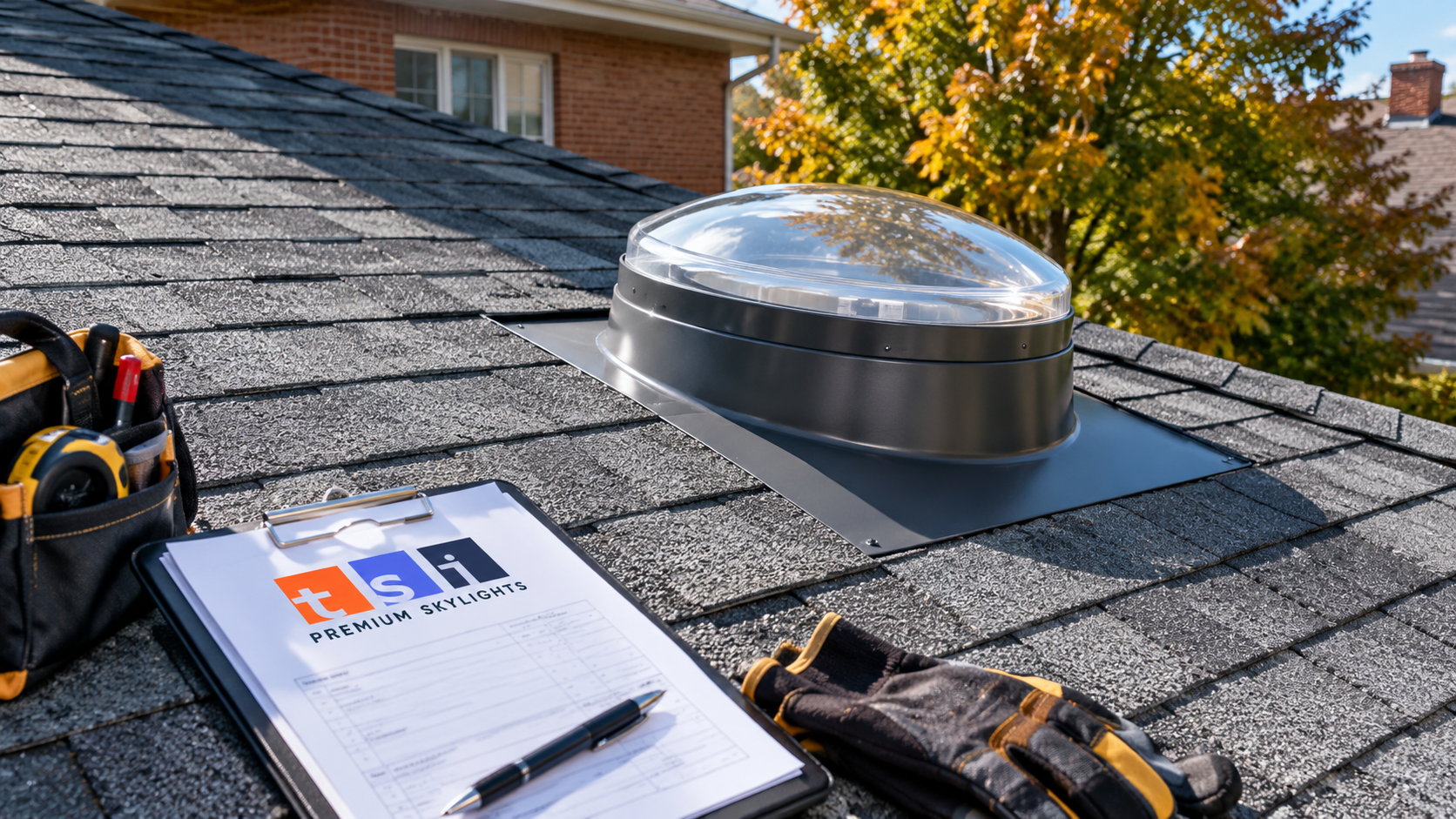
Why Sun Tunnel Skylights Vaughan Homeowners Install Them In Autumn
Interest climbs every September for a simple reason. The sun sits lower, daylight hours shrink, and rooms that felt acceptable in July feel like caves by mid October. Sun tunnels fitted in that window deliver daylight into the darkest part of the house right when the contrast is most obvious, and because the work happens almost entirely on the roof and in the attic, the disruption inside is minimal.
The timing also suits the roof work. Asphalt shingles are still warm and pliable in early autumn, so they can be lifted and reseated around the roof flashing without cracking, and flashing cements cure properly at daytime temperatures in the low teens and above. Getting the installation done before the long, steady autumn rains means the penetration is weathered in and tested well ahead of time.
One more practical point: because a sun tunnel is a small, self contained product, lead times are short. Most sun tunnel skylights Vaughan projects move from site visit to finished installation within a couple of weeks, which is rarely true of larger glazing work.
How A Sun Tunnel Actually Works
The product that installers call a sun tunnel, or a tubular daylight device, has three parts, and sun tunnel skylights Vaughan homes receive are all built on the same principle. On the roof there is a small acrylic or glass dome with its own flashing, sized to fit between rafters or trusses without cutting anything structural. Between the roof and the ceiling runs a highly reflective tube, either rigid aluminium or flexible, that carries the light down through the attic. At the ceiling there is a diffuser, a flat or slightly domed lens that spreads the light evenly into the room below.
The reflective tube is what makes the product work. The interior surface reflects a very high proportion of the light striking it, so the beam can travel a surprising distance with modest loss. That is why a roof opening of a few hundred millimetres can light a whole hallway, and why the sun tunnels Vaughan homes benefit from most are typically installed in the places a conventional skylight cannot reach.
Just as importantly, a sun tunnel does not require a light shaft. A conventional skylight over a second floor room needs a framed, drywalled, insulated shaft through the attic, which is most of the interior cost and all of the mess. A sun tunnel replaces that with a sealed tube, which is why the installation is so much quicker and cleaner.
Where Sun Tunnels Work Best In Vaughan Homes
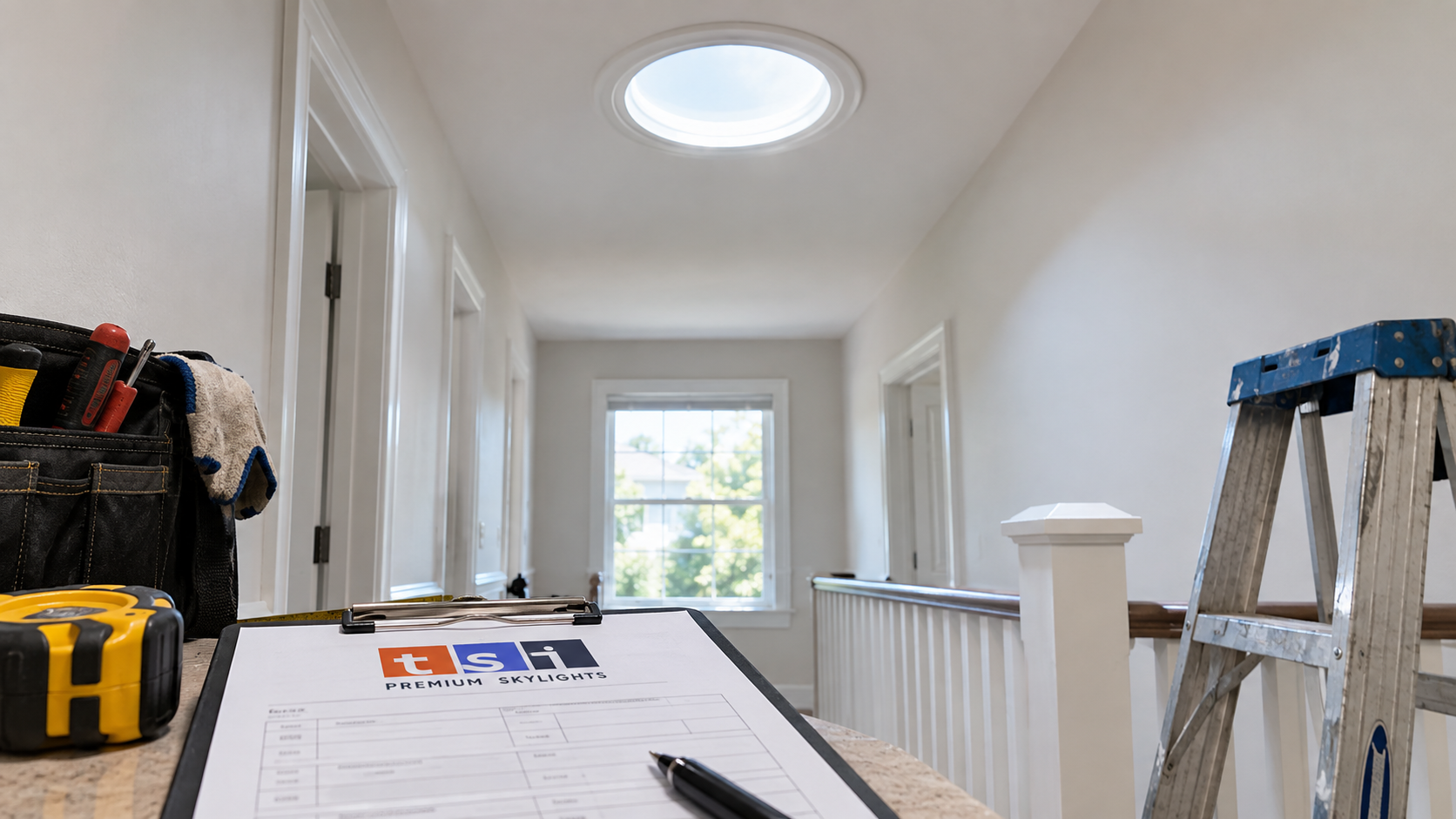
Vaughan’s housing stock is well suited to the sun tunnel skylights Vaughan installers are asked about most often. A large share of the city was built from the late 1980s through the 2000s, with two storey detached homes that have generous attic space above the upper floor and interior rooms that get no natural light at all. Those attics give the tube a straight, short run, which is the ideal condition.
- Upstairs hallways and landings. The classic application. A single tunnel in the middle of a hallway transforms a space that otherwise runs on light borrowed from bedrooms.
- Windowless ensuites and powder rooms. Daylight in a bathroom changes how the room feels more than almost any other upgrade at this price.
- Walk in closets and laundry rooms. Places where colour rendering genuinely matters and where people otherwise leave a light burning all day.
- Kitchens with a deep plan. Two tunnels over an island work well where the window wall is far away and a full skylight would mean a long, expensive shaft.
- Stair cores in homes from the 1990s. Often the darkest square metre in the house and usually straightforward to reach from the attic.
Where they work less well is any position with a very long or heavily obstructed attic run, or a room directly under a low slope addition where the tube has almost no vertical distance to work with. In those cases a conventional skylight or a flat roof skylight is the better recommendation, and an installer who says so is doing their job.
Sun Tunnel Skylights Vaughan Pricing In 2026
Installed pricing for sun tunnel skylights Vaughan homeowners request depends on the tube diameter, the length and complexity of the attic run, the roof pitch and height, and whether you add options such as a dimmer or an integrated light kit. The ranges below are typical 2026 installed prices for residential work on an asphalt shingle roof in the Greater Toronto Area, including the roof flashing, the tube, the ceiling diffuser, finishing at the ceiling and clean up.
| Configuration | Typical installed range | Notes |
|---|---|---|
| Single unit, rigid tube, short straight run | $1,100 to $1,700 | Best light output per dollar |
| Single unit, flexible tube around obstructions | $1,300 to $1,900 | Used where the run must bend |
| Larger diameter unit for an open plan area | $1,600 to $2,400 | Wider dome and tube assembly |
| Second unit installed on the same visit | Add $750 to $1,400 | Shared setup lowers the per unit cost |
| Optional integrated electric light kit | Add $200 to $450 | Requires a circuit in the attic |
| Long run through a deep or obstructed attic | Add $250 to $600 | Extra tube sections and labour |
Compared with a conventional skylight, which typically runs from $1,600 to $4,800 installed once the shaft is finished, sun tunnel skylights Vaughan homeowners choose for interior rooms are usually the lower cost route by a clear margin, and the gap widens when the alternative would need a deep drywalled shaft.
Rigid Versus Flexible Tubing And Why It Matters
For sun tunnel skylights Vaughan attics can accommodate, this is the specification decision that most affects the result, and it is often glossed over in quotes. Rigid tubing has a higher reflectance and carries light further with less loss. Flexible tubing is easier to route around bracing, ducts and wiring, but every bend costs light.
| Factor | Rigid tube | Flexible tube |
|---|---|---|
| Light delivered over a straight run | Highest | Moderate |
| Ability to route around attic obstructions | Limited, needs elbows | Excellent |
| Installation time | Slightly longer | Shorter |
| Best suited to | Straight runs under about 4 metres | Offset or obstructed runs |
| Typical cost difference | Slightly higher | Slightly lower |
The right answer is decided in your attic, not on the phone. A good installer goes up, measures the clear path from the chosen ceiling position to a suitable roof plane, and specifies accordingly. Where a straight rigid run is achievable, take it. Where it is not, a flexible run with the fewest possible bends is still a very good result and far better than leaving the room dark.
What The Installation Day Looks Like
Most sun tunnel skylights Vaughan crews install take between three and five hours to complete. The sequence is consistent and worth knowing so you can judge the work.
- Position confirmation. The installer marks the diffuser location on the ceiling from below, then verifies from the attic that the path is clear of trusses, ducts, plumbing stacks and wiring, and that a suitable roof plane sits above it.
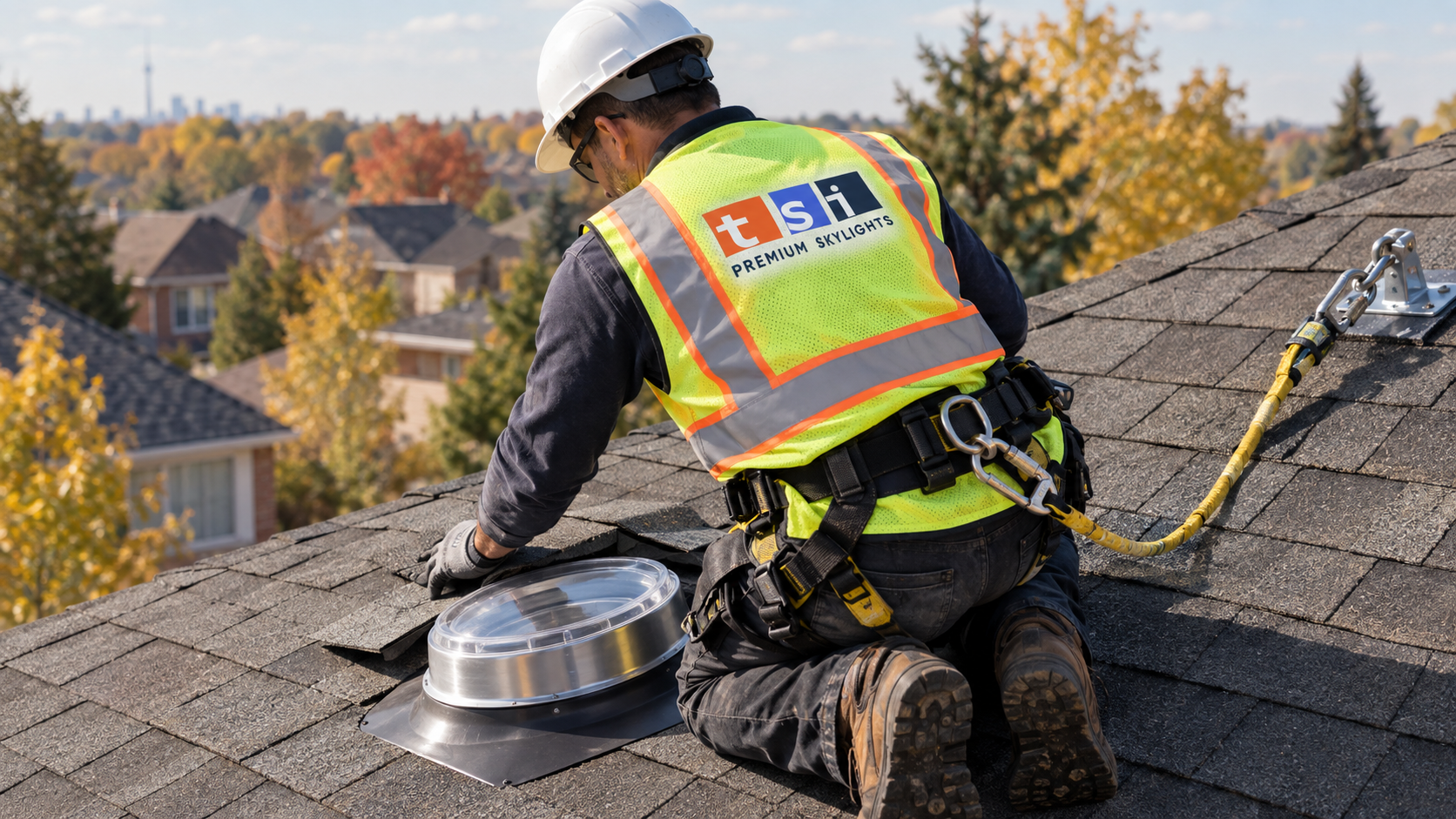
- Roof opening and flashing. Shingles are lifted back, the roof opening is cut between the framing members, and the flashed dome assembly is set and woven into the shingle courses from the bottom up, so every piece laps the one below.
- Tube assembly. Sections are joined and sealed between the roof and the ceiling, kept as straight and as short as the structure allows.
- Ceiling opening and diffuser. The ceiling is cut, the tube is connected, and the trim ring and diffuser are fitted. The room below is covered and the opening is controlled for dust throughout.
- Air sealing and insulation. The tube is sealed to the ceiling plane and insulation is restored around it in the attic. This step is not optional, and it is covered in detail below.
- Water test and clean up. The roof detail is tested, debris is cleared, and the ground is passed over with a magnet for stray fasteners.
Because there is no shaft to frame, tape and paint, sun tunnel skylights Vaughan installations normally leave no follow up work behind. The room is usable the same day.
How Much Daylight To Expect, And What Changes In Autumn
Output from sun tunnel skylights Vaughan homes receive depends on tube diameter, run length, roof orientation and the time of year. The guidance below reflects the ranges manufacturers publish and what we see in practice, expressed as the floor area a single unit will meaningfully brighten.
| Tube diameter | Area it will meaningfully light | Typical application |
|---|---|---|
| Approximately 250 mm (10 in) | Up to roughly 18 square metres | Hallway, powder room, closet |
| Approximately 350 mm (14 in) | Up to roughly 28 square metres | Ensuite, laundry, stair core |
| Two units of 250 mm | Deep or long rooms | Galley kitchen, long hallway |
| Two units of 350 mm | Open plan areas | Kitchen and breakfast area |
Expect the character of the light to change through the season. In summer the output peaks around midday and the light is bright and neutral. From late September the sun tracks lower, so a tunnel on a south facing roof plane gathers light for a longer portion of the day while one on a north plane delivers softer, more even light. Neither is wrong. If you have a choice of roof plane and the room is used mostly in the morning, favour an east facing slope; for afternoon rooms, favour west.
What a sun tunnel will not do is replace electric lighting after dark, which is why the optional integrated light kit exists. It puts a small fixture inside the tube so the same diffuser serves the room in the evening, and it is worth considering in a windowless bathroom.
Sun Tunnel Or A Conventional Skylight?
The honest comparison between sun tunnel skylights Vaughan homes can take and a full glazed unit comes down to what you want from the room. A conventional skylight gives a view of the sky, more total daylight, and in venting form, ventilation. It also costs more, needs a finished shaft on any upper floor, and takes longer to install. A sun tunnel gives excellent diffuse daylight, no view, no ventilation, a much lower price and a single visit.
Choose a conventional unit when the room is a living space where the sky view and the sense of height matter, when you need ventilation in a bathroom or kitchen, or when the ceiling is already vaulted. Choose a tunnel when the room is interior, when the run through the attic is straightforward, when budget matters, or when you simply want the problem fixed this month. Homeowners considering both should look at the full sun tunnel skylights range alongside conventional units before deciding, and our team is happy to price both options in one visit for skylight installation and repair in Vaughan.
Condensation, Insulation And Attic Detailing
This is where cheap installations go wrong, and it deserves your attention. The tube passes through a cold attic. If warm, humid air from the house is allowed to travel up around the outside of the tube, it will condense on the cold metal and run back down to the ceiling, producing a damp ring around the diffuser that looks exactly like a roof leak but is not.
Three details prevent it. First, the tube must be properly sealed to the ceiling plane so house air cannot bypass it. Second, attic insulation must be restored fully around the tube without being crushed against it. Third, in a bathroom, the exhaust fan must actually discharge outdoors rather than into the attic, because a fan dumping moist air into the attic will fog the dome and wet the insulation regardless of how well the tunnel itself was installed.
A well specified product also uses a sealed dome assembly and, on longer runs, an insulated tube section at the top. If a quote does not mention air sealing or insulation at all, ask about it before you sign. Doing this correctly is the difference between a sun tunnel that performs for twenty years and one that generates a service call in the second autumn.
Maintenance, Permits And Warranty
Maintenance on sun tunnel skylights Vaughan homeowners install is close to nothing. The dome should be checked when the roof is inspected and cleared of leaf litter in autumn, which matters more in Vaughan neighbourhoods with mature trees than in newer subdivisions. The diffuser can be taken down and wiped every few years. There are no moving parts, no motors and no seals to fail in the way an insulated glass unit fails.
Permits are rarely an issue. Because a sun tunnel is sized to fit between existing framing members and cuts nothing structural, a standard installation does not normally require a building permit in Ontario. That said, truss webs and chords must never be cut, and any installation that would require altering framing is a different conversation and should involve the City of Vaughan building department and, where trusses are involved, a qualified designer.
On warranty, expect a manufacturer product warranty covering the dome, tube and diffuser, and ask separately for a written workmanship warranty covering the roof penetration and flashing. As with any roof work, the flashing is the part that determines whether you ever think about the installation again. Toronto Skylight Installers provides both, and quotes only after seeing the attic and the roof plane.
How long does a sun tunnel installation take?
How much do sun tunnel skylights Vaughan homeowners typically pay?
Will a sun tunnel leak?
Can a sun tunnel be installed in any room?
Do I need a permit for a sun tunnel in Ontario?
Is a sun tunnel as good as a real skylight?
Get A Quote For Sun Tunnel Skylights Vaughan Homes Actually Need
If there is a hallway, bathroom or closet in your home that runs on electric light all day, a site visit will tell you quickly whether a tunnel will work and what it will cost. Toronto Skylight Installers assesses the attic path and the roof plane before quoting, installs sun tunnel skylights Vaughan homes are well suited to in a single visit, and backs the roof penetration with a written workmanship warranty.
Call us today at (416) 365-7557 or request a free consultation while the autumn weather still favours clean flashing work.
Proudly serving Vaughan and communities across the Greater Toronto Area.