

When a Toronto homeowner has a windowless bathroom, a dim hallway, or a walk-in closet that swallows every ray of daylight, a full skylight is not always the answer. A tubular skylight often is. A tubular skylight, also called a sun tunnel, captures daylight on the roof through a small clear dome, channels it down a highly reflective tube, and releases soft, even natural light into the room below. For the tight rooflines, complex attic spaces, and mixed housing stock across the Greater Toronto Area, a tubular skylight is frequently the most practical, affordable, and energy-smart way to bring real daylight into a space that has never had a window. This guide explains how a tubular skylight works, where it makes sense in a Toronto home, what installation involves, and how to decide between a sun tunnel and a traditional skylight.
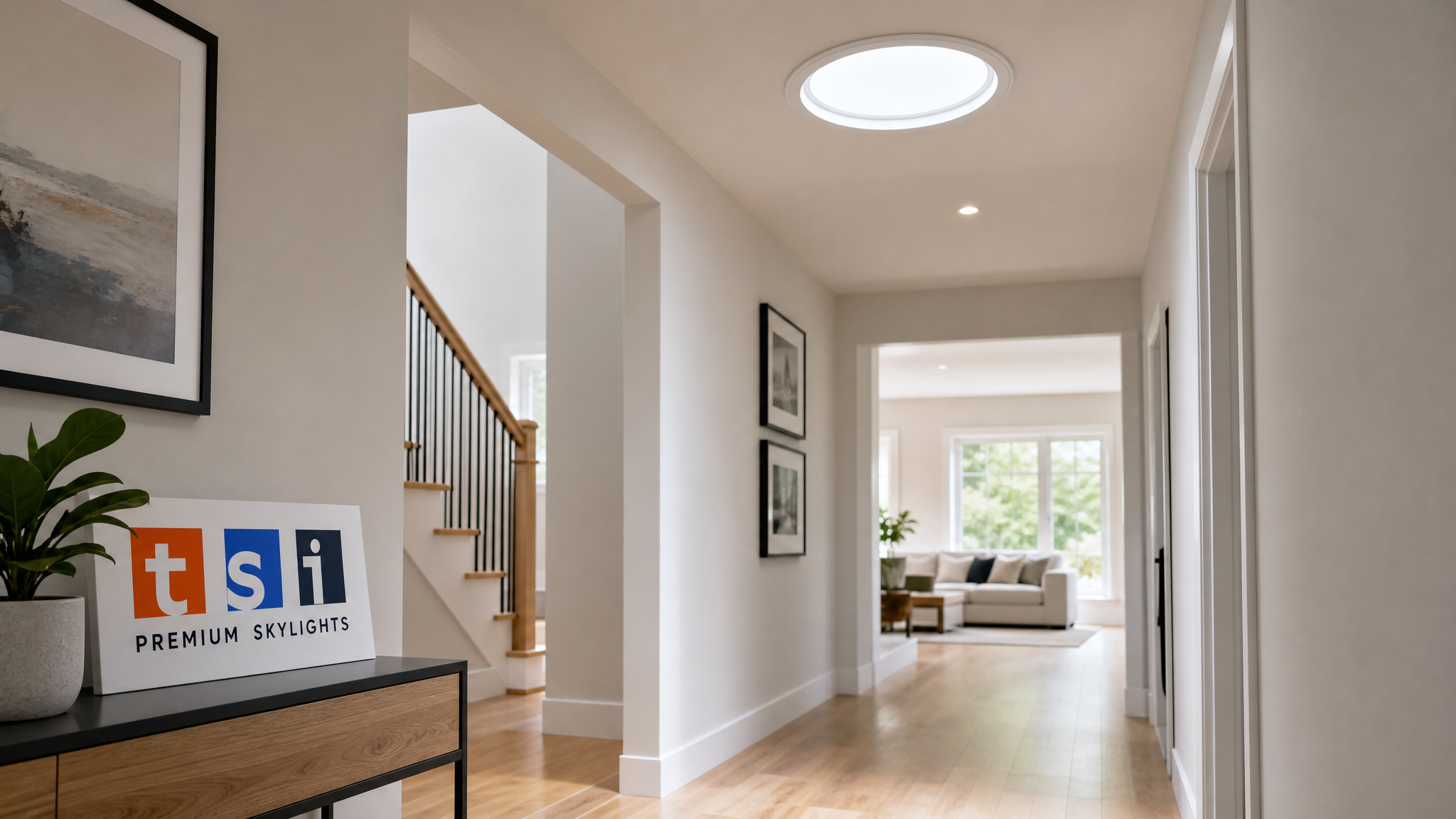
What Is a Tubular Skylight and How Does It Work?
A tubular skylight is a compact daylighting device made up of three core parts: a weather-sealed roof dome, a rigid or flexible reflective tube, and a ceiling-level diffuser. Sunlight strikes the acrylic dome on the roof, enters the tube, and bounces down its mirror-finish interior with almost no loss of intensity. By the time the light reaches the diffuser in your ceiling, it has spread into a warm, glare-free glow that looks remarkably like a recessed electric fixture, except it costs nothing to run during daylight hours. The reflective tubing used in a quality tubular skylight can carry light around minor obstructions and down runs of several metres, which is why it works in spaces a conventional skylight simply cannot reach.
The magic is in the tube. Premium sun tunnels use a coating that reflects up to 98 percent of visible light, so even on an overcast Toronto afternoon the room stays bright. Because the roof opening is small, usually 25 to 36 centimetres in diameter, a tubular skylight lets in daylight without the heat gain and heat loss that come with a large glass unit. The dome is UV-filtered, so your flooring, artwork, and furnishings are protected from fading. The result is genuine daylight, delivered efficiently, in a footprint small enough to slip between roof rafters without structural changes.
Why Tubular Skylights Suit Toronto Homes
Toronto’s residential architecture is a patchwork of century homes, post-war bungalows, semi-detached infills, and modern builds, and many of them share one problem: dark interior rooms with no path to an exterior wall. Powder rooms tucked under staircases, central hallways, laundry rooms, and pantries rarely have a way to add a window. A tubular skylight solves this without major renovation because it needs only a small roof penetration and a straight or gently angled run down to the ceiling. That makes it ideal for the compact rooflines and shared walls common across the GTA.
Energy performance is another reason sun tunnels have become popular with Toronto homeowners. Every hour a room is lit by daylight instead of electric bulbs is an hour of savings, and because the roof opening is small, the thermal penalty is minimal compared with a large glazed skylight. During a hot Toronto summer, a well-installed tubular skylight brightens a space without turning it into a greenhouse. Homeowners who want abundant light in a larger room may still prefer a traditional unit, and our team also handles full skylight installation for those cases, but for small and interior rooms the sun tunnel is often the smarter choice.
Tubular Skylight vs Traditional Skylight: Which Is Right?
Choosing between a tubular skylight and a traditional glass skylight comes down to the room, the roof, and the amount of light you want. A sun tunnel excels at delivering steady, ambient daylight to small or interior spaces with minimal disruption and cost. A traditional skylight delivers a dramatic view of the sky, ventilation options, and far more total light, but requires a larger opening, a light shaft, drywall finishing, and a bigger budget. Many Toronto homeowners install both types in the same house, using tunnels for utility rooms and full units for kitchens and living areas.
| Factor | Tubular Skylight | Traditional Skylight |
|---|---|---|
| Roof opening size | 25 to 36 cm diameter | 60 to 120 cm or larger |
| Best for | Bathrooms, closets, hallways | Kitchens, living rooms, primary suites |
| Installation time | Half a day, typically | One to two days |
| Sky view | None (light only) | Full sky view |
| Relative cost | Lower | Higher |
If your goal is simply to erase a dark spot, a tubular skylight almost always wins on value. If you want an architectural feature and a view of the clouds, the traditional route is worth the investment. When you are unsure, an in-home assessment settles it quickly, and if you already have an aging glass unit that has failed, we also provide skylight replacement to bring it back to peak performance.
Where to Install a Tubular Skylight in Your Home
The best candidates for a tubular skylight are rooms that are chronically dark and difficult to window. In a Toronto home, that shortlist usually includes windowless bathrooms and powder rooms, interior hallways and stairwells, walk-in closets, laundry and utility rooms, pantries, and home offices carved out of a converted space. Each of these benefits from bright, natural daylight that makes the room feel larger and more welcoming while cutting daytime lighting costs.
Placement depends on the roof structure above the room and the distance the light must travel. Rigid-tube systems perform best with short, straight runs directly above the target ceiling, delivering the brightest output. Flexible-tube systems handle offsets and obstructions such as HVAC ducts or roof framing, at a small cost in brightness. During a site visit our installers map the attic, identify the cleanest tube path, and confirm that a tubular skylight will land the diffuser exactly where you want the light.
| Room Type | Recommended Tube | Typical Result |
|---|---|---|
| Windowless bathroom | Rigid, short run | Bright, spa-like daylight |
| Central hallway | Rigid or flexible | Even, welcoming glow |
| Walk-in closet | Rigid, short run | True-to-colour visibility |
| Laundry room | Flexible, offset path | Task-level daylight |
| Home office | Rigid with diffuser lens | Glare-free work light |
The Tubular Skylight Installation Process
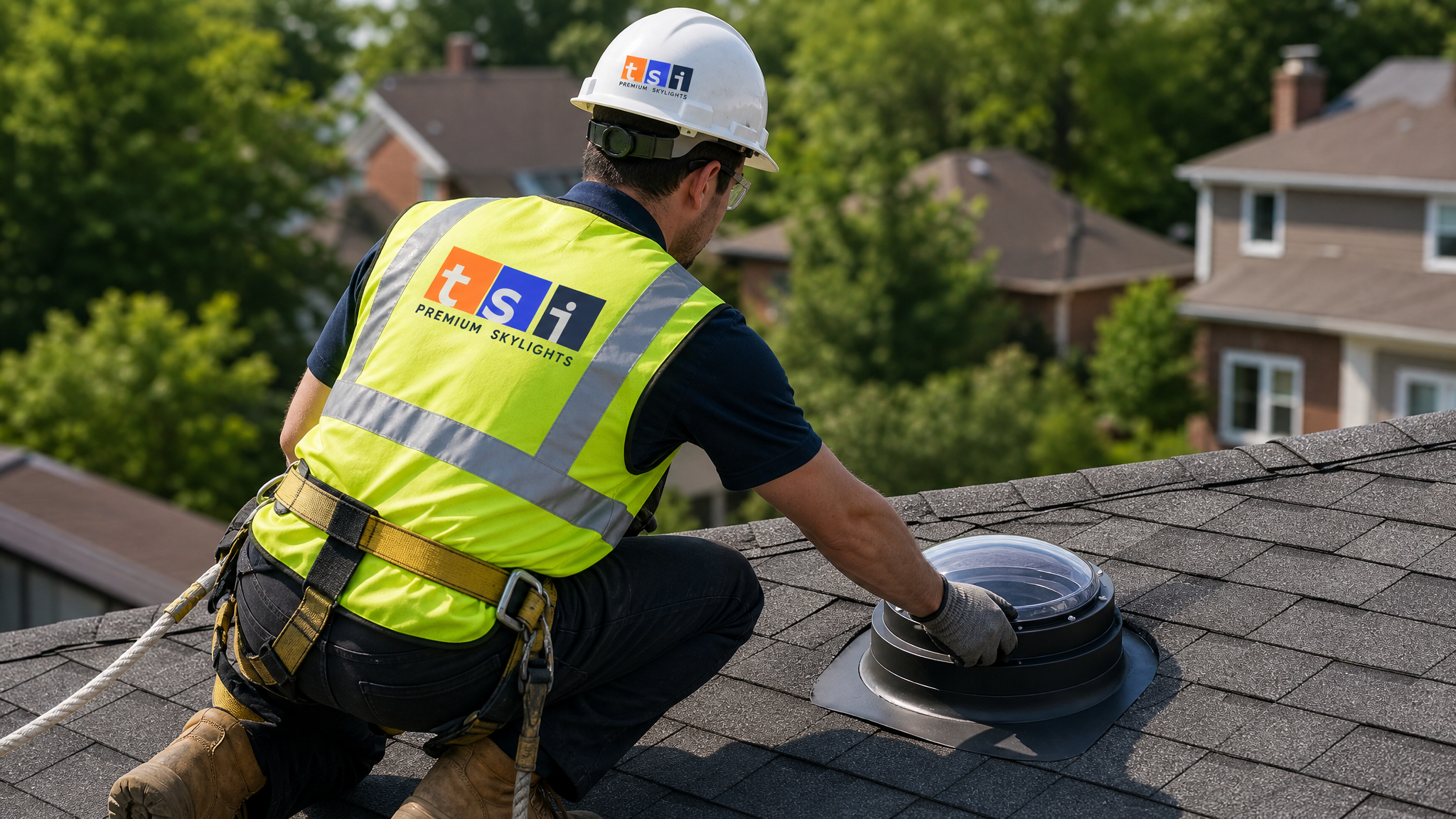
A professional tubular skylight installation is fast, clean, and non-invasive compared with cutting in a full skylight. The job begins on the roof, where the installer marks the exact opening between rafters, cuts the small hole, and mounts the dome on a flashing base that integrates with your existing roofing material. Correct flashing is the single most important step, because a poorly sealed dome is the leading cause of leaks. From there the reflective tube is assembled and run down through the attic to the ceiling, where a hole is cut and the diffuser is fitted flush with the drywall.
On a straightforward run, the entire process takes only a few hours, and because the ceiling opening is small the drywall patching is minimal. Our crews protect the interior work area, verify the seal at both the roof and ceiling, and test the light output before finishing. Should anything ever go wrong with an existing unit, our skylight repairs team can re-flash the dome, clear condensation, or replace a clouded diffuser. Every installation is backed by the same standards we bring to new skylight installation across the GTA.

Costs, Options, and Add-Ons
Because a tubular skylight uses standardized components and a small opening, it is one of the most cost-effective daylighting upgrades available to Toronto homeowners. Pricing depends on the tube diameter, whether the run is rigid or flexible, the roof pitch, and any optional accessories. Larger diameters and flexible offset runs cost more, as does adding electrical or ventilation options. Even so, a sun tunnel typically costs a fraction of a full traditional unit, and the daytime energy savings help offset the investment over time.
| Option or Add-On | What It Does | Good For |
|---|---|---|
| 10-inch tube | Standard brightness | Bathrooms, closets |
| 14-inch tube | Higher output | Larger rooms, hallways |
| Integrated LED kit | Night lighting through the diffuser | 24-hour usable light |
| Ventilation kit | Adds passive air exchange | Humid bathrooms |
| Dimmer add-on | Controls daytime brightness | Home offices, bedrooms |
Many homeowners pair a tubular skylight with a nighttime LED kit so the same diffuser provides electric light after dark, effectively turning one fixture into a round-the-clock light source. If your roof is low-slope, a specialized approach may be needed, and our flat roof skylights options address that. For those who want a fully self-contained daylighting solution, a solar powered skylight is a complementary product worth exploring alongside a sun tunnel.
Maintenance and Longevity of Sun Tunnels
One of the quiet advantages of a tubular skylight is how little it asks of you once installed. There are no moving parts in a standard fixed tunnel, the dome is self-cleaning to a large degree thanks to rain and its smooth surface, and the sealed tube keeps dust and insects out. A quick visual check of the roof dome once or twice a year, along with an occasional wipe of the interior diffuser, is usually all that is required. With quality components and correct flashing, a well-installed sun tunnel can perform for decades without significant attention.
The two issues that occasionally arise are condensation inside the tube and a gradual clouding of an older diffuser lens. Both are straightforward to resolve. Proper attic ventilation and a well-sealed ceiling ring prevent most condensation, and a diffuser can be swapped without disturbing the roof. Because we install with long-term reliability in mind, our residential daylighting work carries the same care as our sun tunnel skylights product line and our commercial skylights projects. You can review the full range on our homepage to see how a tubular skylight fits your plans.
Getting the Most From Your Tubular skylight Project
Every Tubular skylight project rewards planning. The homeowners who are happiest with the result are the ones who defined their scope clearly, chose materials suited to the GTA climate, and worked with an experienced crew rather than the lowest bidder. Taking the time to understand the process, ask the right questions, and confirm exactly what is and is not included in a quote consistently produces a smoother project and a longer-lasting result.
It also pays to think past the immediate work. Small decisions made during the project, from the grade of materials selected to the quality of the underlying preparation, determine how the finished result performs over the following years. Spending a little more on the parts that are hard or expensive to change later, while economizing on easily-updated finishes, is the balance that experienced contractors recommend to nearly every client.
How much light does a tubular skylight actually provide?
Will a tubular skylight leak on my Toronto roof?
How long does tubular skylight installation take?
Can a sun tunnel work in a room with no exterior wall?
Does a tubular skylight add heat in summer?
Can I use my tubular skylight at night?
Ready to Add a Tubular Skylight to Your Home?
If a dark room in your house has always needed daylight, a tubular skylight is likely the fastest and most affordable way to deliver it. The team at Toronto Skylight Installers will assess your roof and interior, recommend the right tube size and path, and install a leak-free, energy-efficient sun tunnel that transforms the space.
Call us today at (416) 365-7557 or request a free inspection to get started.
Toronto Skylight Installers proudly serves Toronto, Mississauga, Markham, Vaughan, Brampton and Oakville.