

If you’ve ever been caught off guard by a sudden summer downpour while your skylight was wide open, you understand exactly why the VELUX rain sensor skylight Toronto homeowners are installing in 2026 has become one of the most requested smart-home upgrades in the GTA. This innovative technology monitors outdoor moisture levels in real time and automatically closes your skylight the moment precipitation is detected — protecting your floors, furnishings, and ceilings without requiring any action on your part. For busy families in Toronto, Mississauga, Markham, and across the Greater Toronto Area, that peace of mind is invaluable, especially during the unpredictable summer storm season we experience every June through August.
At Toronto Skylight Installers, we have helped hundreds of GTA homeowners upgrade to VELUX rain sensor technology over the past several years. Whether you are retrofitting an existing electric fresh-air skylight with a rain sensor module or investing in a brand-new VELUX unit with the sensor built in, our certified installation team guides you through every step of the process. This article covers exactly how the rain sensor system works, what it costs, how it compares to competing options, and what Toronto’s summer climate means for homeowners considering this upgrade.
The demand for velux rain sensor skylight toronto installations has grown significantly since VELUX expanded its rain sensor compatibility to cover most of its Fresh Air series. With Toronto’s summers becoming more volatile — featuring intense heat waves punctuated by fast-moving thunderstorms — the ability to leave a skylight open for ventilation without worrying about sudden rain has shifted from a luxury to a genuinely practical investment. Read on to learn everything you need to know before booking your installation.
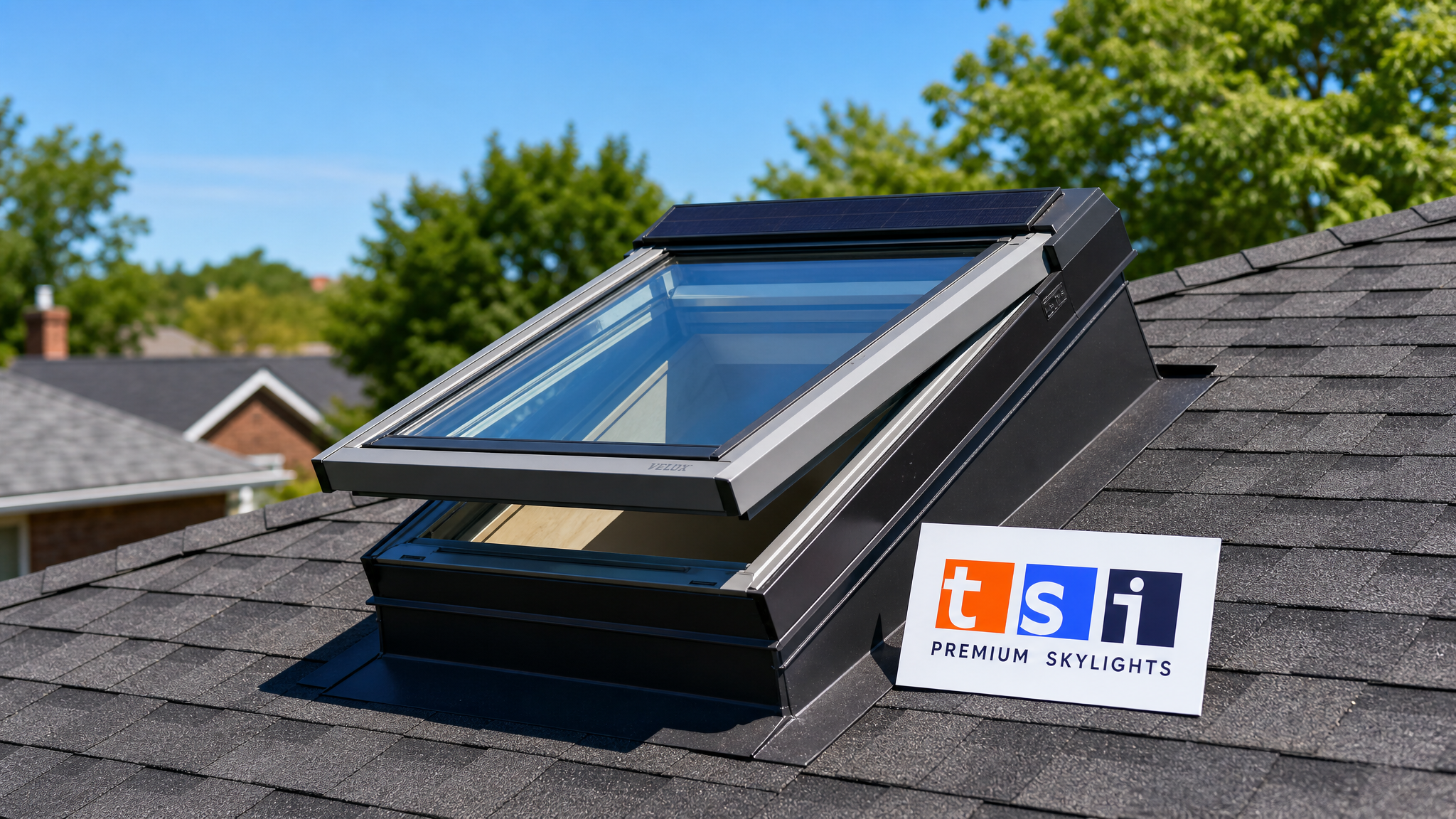
What Is a VELUX Rain Sensor Skylight Toronto Homeowners Are Choosing in 2026?
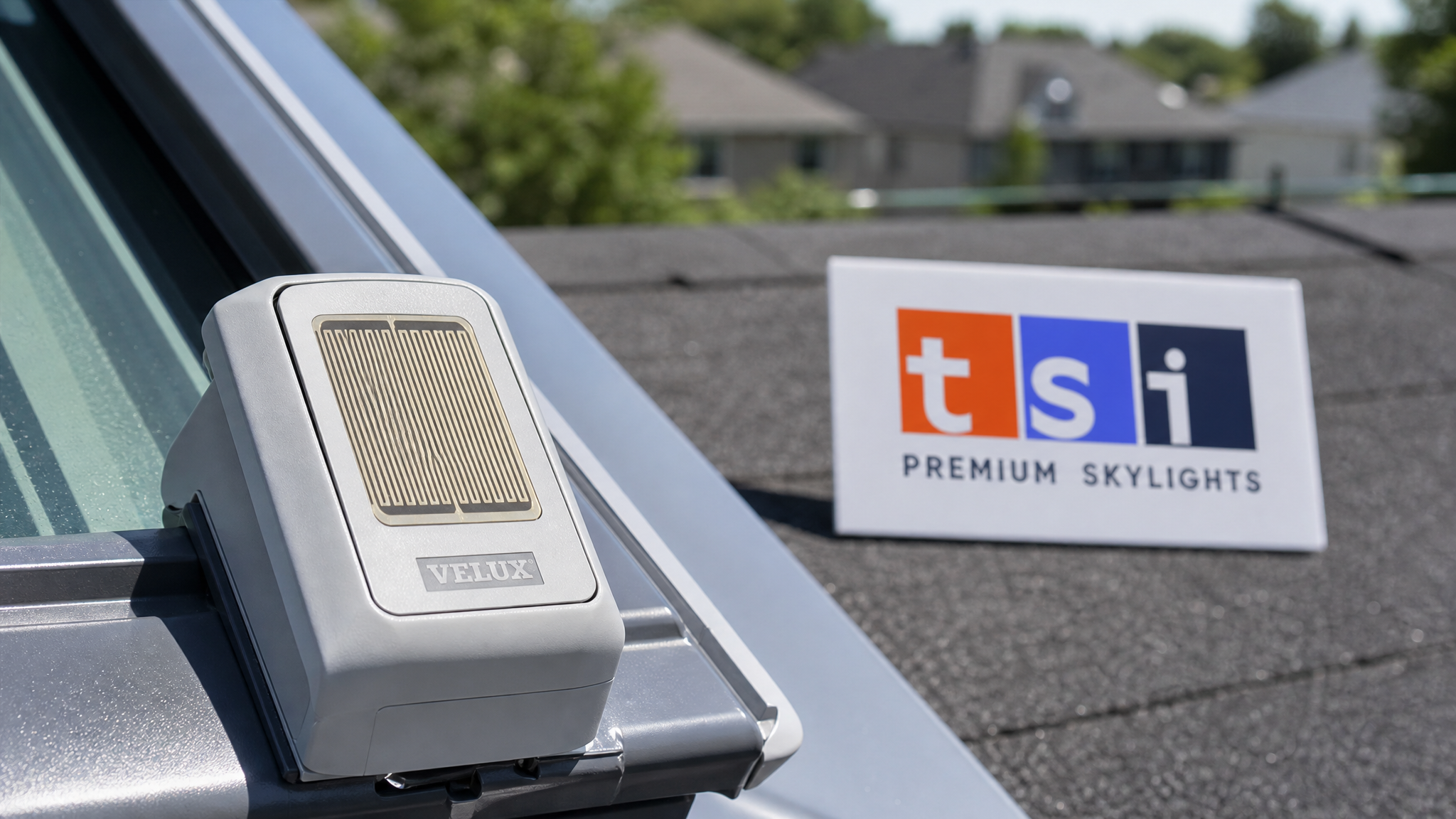
A VELUX rain sensor skylight toronto system combines an electrically operated skylight sash with a small, precision moisture-detection module mounted on the exterior of the unit. The sensor uses resistive detection technology — two sets of conductive tracks on a small PCB element that, when bridged by water droplets, complete a circuit and send a close signal to the skylight’s motor within seconds. The result is an opening that responds to rain faster than most homeowners would notice the first drops hitting the ground.
VELUX offers rain sensor compatibility across its FCM (fixed curb-mount), VSE (solar-powered), and VSS/VSE electric series. The most popular choice for Toronto homes is the solar-powered fresh-air skylight with an integrated rain sensor, because it requires no electrical rough-in — the solar panel on the exterior frame powers both the motor and the sensor module from sunlight alone. This makes it ideal for retrofit installations in homes where running a new electrical circuit to the roof would be expensive or disruptive.
Key features of the VELUX rain sensor system include:
- Automatic close in under 60 seconds of moisture detection — typically 20 to 40 seconds in real-world GTA conditions
- Manual override capability — you can reopen the skylight from your VELUX ACTIVE app or remote after rain passes
- Wind sensor pairing option — the rain sensor module can be combined with a wind sensor for dual-trigger auto-close protection
- Smart home integration — compatible with the VELUX ACTIVE with NETATMO system, Google Home, Apple HomeKit, and Amazon Alexa
- Battery backup on solar models — the onboard battery stores enough charge to operate the motor for several cycles even after multiple cloudy days
- Programmable open/close schedules — set the skylight to open each morning and the rain sensor overrides the schedule if weather turns
For Toronto homeowners who leave for work in the morning with a skylight cracked open — or who simply forget to close it before a barbecue turns into a storm — this technology eliminates the single biggest anxiety point associated with operable skylights.
How the Rain Sensor Technology Actually Works: A Technical Breakdown
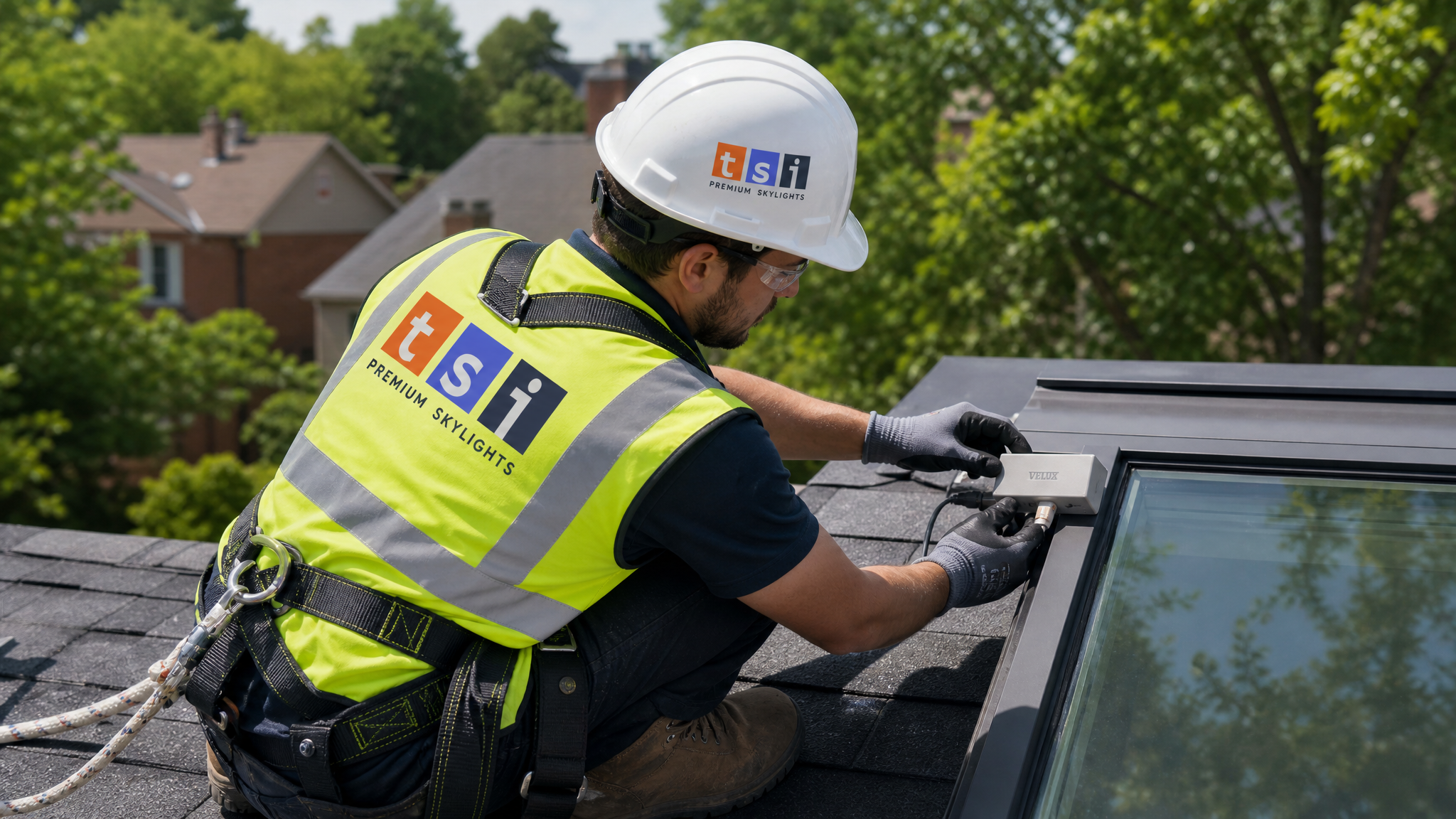
Understanding the mechanics behind the velux rain sensor skylight toronto system helps homeowners make informed decisions about placement, maintenance, and integration with existing smart-home platforms. The sensor itself is a small, roughly 80mm × 50mm module that mounts to the exterior frame of compatible VELUX units during installation. It is designed to sit at a slight angle so water runs off cleanly and does not pool on the sensor face.
The detection principle is straightforward: a grid of interdigitated electrodes on the sensor surface carries a very small electrical current. Dry air is an insulator, so the current cannot flow between the electrode sets. The moment a raindrop — or even a heavy mist — bridges the gap between electrodes, resistance drops sharply, the circuit closes, and the skylight’s control unit receives a “rain detected” signal. The motor then drives the sash to the fully closed position regardless of the current programmed schedule or the position of any manual remote.
The VELUX ACTIVE hub, which communicates with the sensor via a proprietary 868 MHz radio frequency, logs every rain-close event and makes that data available in the app. GTA homeowners who have been using the system for a full summer often find the app log instructive — it reveals just how frequently Toronto experiences brief afternoon pop-up storms that would otherwise have soaked their interiors.
Once rain stops, the skylight does not automatically reopen. This is a deliberate design decision by VELUX: the system cannot know whether the roof decking is still wet, whether you want ventilation again, or whether another storm cell is 20 minutes away. Reopening requires a deliberate user action — tapping the app, pressing the remote, or using a voice command if you have integrated with a smart-home platform. Many Toronto homeowners in Vaughan and Markham tell us they appreciate this behaviour because it keeps them in control of the final decision.
| Feature | VELUX Solar with Rain Sensor | VELUX Electric with Rain Sensor | Manual Skylight (No Sensor) |
|---|---|---|---|
| Rain detection & auto-close | Yes — integrated module | Yes — integrated module | No |
| Power source | Solar panel + onboard battery | Hardwired 120V circuit | N/A (manual crank) |
| Electrical rough-in required | No | Yes | No |
| Smart home integration | VELUX ACTIVE / Alexa / HomeKit | VELUX ACTIVE / Alexa / HomeKit | None |
| Wind sensor compatibility | Yes | Yes | No |
| Typical response time to rain | 20–40 seconds | 20–40 seconds | Manual — homeowner dependent |
| Battery backup (cloudy days) | Yes — up to 14 days typical | No (grid powered) | N/A |
VELUX Rain Sensor Skylight Toronto Cost Guide: What to Budget in 2026
One of the most common questions we receive at Toronto Skylight Installers concerns pricing. The total cost of a velux rain sensor skylight toronto installation depends on whether you are retrofitting an existing operable unit, replacing an old skylight entirely, or incorporating the sensor into a brand-new installation on a previously uncut roof deck. Below is a realistic cost breakdown for Toronto and GTA homeowners in 2026, including materials, labour, and any ancillary work typically required.
| Project Type | Unit Cost (Supply) | Installation Labour | Typical Total Range | Timeline |
|---|---|---|---|---|
| Rain sensor module added to existing compatible VELUX electric unit | $180 – $260 | $150 – $220 | $330 – $480 | 2–3 hours |
| New VELUX VSS Solar skylight with integrated rain sensor (standard size) | $900 – $1,350 | $400 – $600 | $1,300 – $1,950 | 1 day |
| New VELUX electric skylight with rain sensor + electrical rough-in | $1,100 – $1,600 | $700 – $1,100 | $1,800 – $2,700 | 1–2 days |
| Full skylight replacement (old unit removed, new VELUX with sensor installed) | $1,200 – $1,800 | $600 – $900 | $1,800 – $2,700 | 1 day |
| VELUX ACTIVE smart hub + rain & wind sensor bundle | $280 – $380 | $100 – $180 | $380 – $560 | 2–4 hours |
These ranges reflect Toronto and GTA market pricing as of June 2026 and include HST. Prices can vary based on roof pitch, accessibility, attic depth, and whether any flashing replacement or deck repairs are required at the same time. Homes in Oakville and Burlington with steeper-pitch roofs sometimes incur modest safety-equipment surcharges. We always provide a detailed written quote before any work begins so there are no surprises.
It is also worth noting that the solar-powered option typically offers the best value for retrofit projects. Because it requires no electrical rough-in, the installation is cleaner, faster, and less disruptive. The VELUX solar models we install use a 7-watt solar panel that keeps the internal battery topped up through Toronto’s long summer days — from June through August, a solar VELUX in the GTA will almost never need to draw on stored battery capacity.
Summer Installation Advantages: Why June to August Is the Best Window
Toronto’s summer season — particularly June and July — represents the ideal window for velux rain sensor skylight toronto installations and upgrades. The combination of warm temperatures, long daylight hours, and dry roofing conditions creates the optimal environment for skylight work, and our installation teams at Toronto Skylight Installers’ new skylight installation division maintain the most flexible summer scheduling of the year.
Here is why summer timing matters for your skylight project:
Roofing adhesives and sealants perform best above 10°C. The silicone-based flashing compounds and self-adhering membrane products we use around skylight curbs require warm temperatures to bond correctly to the roof deck. On a June or July installation day in Toronto — typically 22°C to 30°C — these materials set within hours, creating a watertight seal almost immediately. This dramatically reduces the risk of post-installation moisture infiltration during the curing period.
You get to test the rain sensor immediately. Installing a VELUX rain sensor skylight in summer means the unit will almost certainly encounter its first rain-close cycle within days of installation. Our team actually welcomes this: the first real-rain test confirms sensor sensitivity, motor operation, and app connectivity all at once. We often hear from homeowners in Mississauga and Brampton who call us the week after installation specifically to report the thrill of watching their skylight close automatically during a sudden July afternoon storm.
Ventilation demand is highest in summer. Toronto summers bring heat, humidity, and the natural desire to open the home to cooling breezes. A fresh-air skylight with a rain sensor is at its most useful from June through August precisely because homeowners want it open more often — and the sensor provides the confidence to leave it open all day while at work or away from home.
UV and heat considerations. Summer also reveals how much heat gain an unshaded skylight can create. Many homeowners who book a rain sensor installation in June also take the opportunity to add compatible room-darkening skylight shades or light-filtering shades to manage afternoon solar gain. VELUX shades are motorised and can be controlled from the same app as the rain sensor, giving complete environmental control over light, heat, and ventilation from a single interface.
Comparing VELUX Rain Sensor Skylights to Competing Products Available in the GTA
The velux rain sensor skylight toronto system is not the only automatic-close skylight on the Canadian market, though it is by far the most widely installed and best-supported option available through certified skylight contractors in the GTA. It is worth understanding how VELUX compares to other brands and approaches before committing to a purchase.
The primary competitors in the Toronto market are Fakro (a Polish manufacturer with Canadian distribution), Velite (a smaller brand found through some building-supply chains), and certain custom automated skylight systems offered through high-end home automation integrators. For most Toronto homeowners, VELUX remains the preferred choice for several reasons: national warranty support, local parts availability, certified installer networks, and deep integration with mainstream smart-home platforms.
Our skylight installation team works exclusively with VELUX products because the brand’s quality controls, flashing system compatibility, and manufacturer warranty (10 years on the unit, 20 years on the glazing) substantially exceed what competing brands offer in the Canadian market. The rain sensor module itself carries a 5-year warranty when installed by a VELUX-certified contractor.
| Comparison Factor | VELUX (GTA Certified) | Fakro (Canadian Distribution) | Custom Automation Add-On |
|---|---|---|---|
| Rain sensor — integrated option | Yes — native module | Yes — ZWP module | Third-party retrofit (varies) |
| Smart home platform support | Google Home, Alexa, HomeKit | Z-Wave / limited | Varies by integrator |
| Certified installer network in GTA | Extensive | Limited | Home-automation specialists |
| Unit warranty (Canada) | 10 years (20 yr glazing) | 5–10 years | Varies |
| Rain sensor warranty | 5 years (certified install) | 2 years | Varies |
| Solar-powered option available | Yes — no rough-in needed | Yes | Rarely |
| Parts availability in Ontario | Excellent | Moderate (lead times) | Poor |
One important distinction: some GTA homeowners inquire about retrofitting a rain sensor onto an older, non-VELUX electric skylight using a third-party controller. While technically possible in some configurations, we do not recommend this approach. The rain sensor module needs to communicate reliably with the skylight motor’s control board. VELUX’s proprietary protocol is optimised for this integration; third-party workarounds can result in delayed response times, false triggers, or motor damage, and they void the skylight’s existing warranty.
Maintenance and Long-Term Care for Your VELUX Rain Sensor in Toronto’s Climate
One of the questions we hear most often from homeowners who have recently installed a velux rain sensor skylight toronto system is how much maintenance the sensor requires. The good news is that VELUX rain sensors are remarkably low-maintenance by design. The electrode surface is coated with a self-cleaning compound that resists mineral deposits from rain, and the module’s housing is UV-stabilised to withstand Toronto’s high summer UV index without yellowing or cracking.
That said, a few simple maintenance practices will keep your sensor performing optimally through multiple seasons:
Annual cleaning. Once a year — ideally in spring or early summer before the storm season peaks — wipe the sensor face with a clean, damp cloth. Do not use solvents, abrasive cleaners, or pressure washing directly on the module. Removing pollen, bird droppings, and dust that accumulate over the season ensures the electrode surface can detect moisture accurately rather than being insulated by a layer of debris.
Check the sensor angle. The module should always sit at a 30 to 45 degree angle to allow water to run off cleanly. If the skylight is on a very low-pitch roof section — common in Mississauga and Brampton new-builds — confirm with your installer that the sensor was positioned correctly during the original installation. A sensor that retains pooled water after rain has stopped may trigger repeat close signals unnecessarily.
Test the auto-close function seasonally. The VELUX ACTIVE app includes a manual trigger test. Once per season, trigger a simulated close/open cycle to confirm the motor, sensor signal chain, and battery (on solar models) are all functioning correctly. If the skylight fails to respond to a trigger or moves sluggishly, it is an early indicator that the motor or battery may need attention — catching this before the height of summer storm season prevents inconvenient failures.
If your unit does experience a sensor malfunction, our skylight repair team stocks replacement sensor modules for all current VELUX Fresh Air series units and can typically complete a sensor swap on the same visit that the issue is diagnosed. We serve all of Toronto, Markham, Vaughan, Oakville, and the surrounding GTA, with summer repair appointments often available within 48 hours.
Integrating Your VELUX Rain Sensor with Toronto Smart Homes: Apps, Voice, and Automation
The velux rain sensor skylight toronto upgrade becomes significantly more powerful when integrated with the broader smart-home ecosystem that many GTA homeowners are building in 2026. VELUX’s connectivity approach centres on the VELUX ACTIVE with NETATMO system — a hub that bridges the skylight’s 868 MHz radio protocol to your home Wi-Fi network, enabling full app control, automation, and third-party platform integration.
Once the VELUX ACTIVE hub is connected, here is what GTA homeowners typically configure:
Morning ventilation schedule. Programme the skylight to open automatically at 7:00 AM when the air outside is freshest and temperatures are lowest. The rain sensor overrides this schedule silently if any overnight rain is still falling.
Afternoon heat management. In a city like Toronto where summer afternoons can hit 33°C or above, many homeowners create an automation that partially closes the skylight when the indoor temperature exceeds a set threshold — typically in combination with motorised venetian shades that tilt to block direct sun while still allowing some airflow.
Away mode. When leaving for vacation, set an away mode in the VELUX ACTIVE app that keeps the skylight closed unless you manually authorise an open event. The rain sensor remains active as a backup safety layer even in away mode, but the primary logic simply keeps the skylight shut.
Apple HomeKit and Siri. “Hey Siri, open the bedroom skylight” is a genuinely functional command once the VELUX ACTIVE hub is paired with HomeKit. The skylight appears as a standard accessory in the Home app and can be included in scenes — for example, a “Good Morning” scene that turns on your espresso machine, adjusts your thermostat, and opens the skylight simultaneously.
Google Home and Alexa. The same integration is available for both major competing platforms, making VELUX one of the few skylight manufacturers with truly universal smart-home support.
For homeowners who want to go further, VELUX ACTIVE also supports IFTTT applets and can be combined with indoor air quality sensors so that the skylight opens automatically when CO₂ levels rise above a set threshold — an especially popular configuration in home offices and bedrooms where air quality directly affects focus and sleep quality.
Choosing the Right VELUX Model with Rain Sensor for Your GTA Home
Not every VELUX skylight model is compatible with the rain sensor module, and choosing the right unit depends on your roof type, the size of the opening you want, and whether you prefer solar or hardwired power. Our team at Toronto Skylight Installers’ replacement division helps homeowners navigate the VELUX product line to find the best fit. Here is a summary of the most popular rain-sensor-compatible configurations we install across the GTA:
VELUX VSS (Solar Fresh Air Skylight). The most popular rain-sensor-compatible model for Toronto retrofit projects. No electrical rough-in required. Available in a range of sizes from FS C01 (44 cm × 55 cm) to FS SK06 (114 cm × 118 cm). The solar panel is integrated into the top frame and virtually invisible from street level. Excellent choice for kitchen and bathroom retrofits in Mississauga, Brampton, and Markham bungalows where accessing an electrical circuit in the attic would be disruptive.
VELUX VSE (Electric Fresh Air Skylight). Preferred for new construction or projects where a 120V circuit is already routed to the skylight location. Offers slightly faster motor operation than the solar model and can power larger sash sizes. Ideal for master bedroom skylights in Vaughan and Oakville new-build homes where the electrical rough-in is included in the original construction.
VELUX FCM with VELUX ACTIVE integration. For homeowners who already have a fixed skylight and want to add ventilation without a full replacement, VELUX does not offer a retrofit opener for FCM units. In this case, the correct path is a full skylight replacement — swapping the fixed unit for a compatible Fresh Air model with the rain sensor module included from the start.
Our team always recommends having a certified installer assess your roof before selecting a model. Factors like rafter spacing, roof deck condition, and existing flashing all influence which VELUX size codes will fit correctly and seal properly — particularly important on the older homes found throughout established Toronto neighbourhoods like the Beaches, Leslieville, and High Park.
What is a velux rain sensor skylight toronto homeowners should consider installing in 2026?
How quickly does the VELUX rain sensor close the skylight when it rains?
Does the velux rain sensor skylight toronto system reopen automatically after rain stops?
How much does a velux rain sensor skylight toronto installation cost?
Can I add a rain sensor to my existing non-VELUX skylight?
How do I maintain the VELUX rain sensor to keep it working through Toronto’s summer season?
Schedule Your velux rain sensor Consultation Today
If you are ready to stop worrying about sudden summer storms and start enjoying unrestricted skylight ventilation throughout the GTA’s warm season, Toronto Skylight Installers is your certified VELUX partner for rain sensor installation, replacement, and smart-home integration. Our team brings years of hands-on VELUX experience to every project, and our summer installation calendar is flexible enough to accommodate most bookings within one to two weeks.
Call us today at (416) 365-7557 or request a free consultation to get started.
Toronto Skylight Installers proudly serves Toronto, Mississauga, Markham, Vaughan, Brampton, and Oakville with expert VELUX skylight installation, replacement, and repair.