

Choosing the right VELUX skylight automation accessories can be the difference between a skylight you fight with on a humid August afternoon and one that quietly manages your home’s air and light on its own. For Toronto and GTA homeowners weighing VELUX ACTIVE against manual blinds and standalone sensors in 2026, the decision comes down to how much control you want, how your roof is configured, and what you are willing to invest upfront versus over the life of the skylight. This guide breaks down every accessory in the VELUX ecosystem, what each one realistically costs installed in the Greater Toronto Area, and how to match the right combination to your home.
As a certified VELUX dealer, Toronto Skylight Installers fits these accessories on fixed units, fresh-air units, and sun tunnels across Toronto, Mississauga, Vaughan, Markham, and the surrounding suburbs. The accessories ecosystem has matured considerably, and the gap between a basic manual blind and a fully automated, sensor-driven skylight is now both wider and more affordable than most homeowners assume.
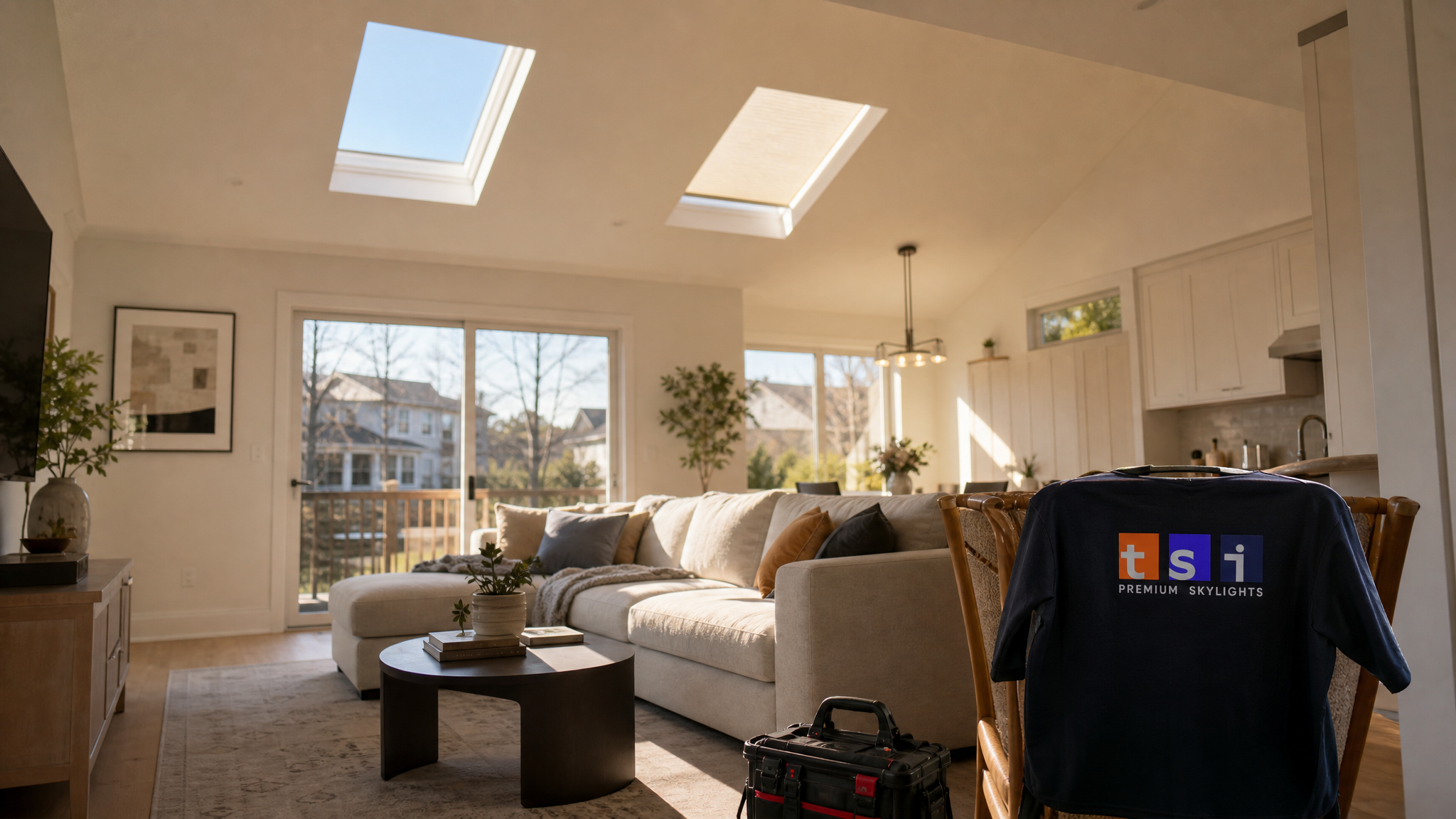
What VELUX Skylight Automation Accessories Actually Include
When homeowners hear “automation,” they often picture a single product. In reality, VELUX skylight automation accessories are a layered system, and you can adopt as much or as little as you want. The core building blocks are the motorised operator inside electric and solar skylights, the wireless control unit, the rain sensor, and the optional VELUX ACTIVE with NETATMO smart-home gateway. On top of these sit the blinds, which can themselves be manual, electric, or solar.
The simplest level is a manual fresh-air skylight with a manual blind, where you crank the unit open and pull the blind by hand or with a telescopic rod. The next level adds motorisation: an electric or solar-powered operator that opens and closes the skylight or blind from a remote. The top level is VELUX ACTIVE, which uses indoor climate sensors and outdoor weather data to open, close, and shade your skylights automatically based on temperature, humidity, and carbon dioxide levels. Each layer builds on the one below it, so a manual skylight today can often be upgraded with a solar conversion kit later.
Understanding which units accept which accessories matters before you buy. A manual fresh-air skylight can be retrofitted with a solar operator, while a fixed skylight cannot open at all and therefore only accepts blinds, not ventilation controls. This distinction shapes every recommendation that follows.
| Accessory | Function | Power Source | Compatible Units |
|---|---|---|---|
| VELUX ACTIVE with NETATMO | Automatic open/close/shade by climate | Battery sensors + plug-in gateway | Electric and solar units |
| Electric operator | Remote open/close | Hard-wired to mains | Electric fresh-air skylights |
| Solar operator | Remote open/close | Roof-mounted solar panel | Solar units and retrofits |
| Rain sensor | Auto-close on moisture | Integrated in operator | All motorised units |
| Solar blind | Light/heat control | Solar panel + battery | Most VELUX skylights |
| Manual blind | Light/heat control | None (hand or rod) | All VELUX skylights |
VELUX ACTIVE vs Manual Operation: The Real Difference
The headline comparison most Toronto homeowners are trying to make is VELUX ACTIVE versus manual operation. VELUX ACTIVE with NETATMO is the brand’s flagship automation package. It consists of an indoor climate sensor that measures temperature, humidity, and carbon dioxide, a departure switch, and a gateway that connects to local weather forecasts over your home’s Wi-Fi. The system opens fresh-air skylights to vent stale or humid air, closes them before forecasted rain, and lowers blinds during peak afternoon heat to keep rooms cooler.
Manual operation, by contrast, puts you in full control but demands attention. On a high ceiling, a manual fresh-air unit needs a telescopic operating rod, and a manual blind needs the same. This works well for skylights within easy reach and for homeowners who do not mind managing them by hand. The trade-off is that manual units cannot respond to a sudden Toronto thunderstorm while you are at work, which is precisely where automation earns its keep.
For homes in older Toronto neighbourhoods with high vaulted ceilings, reaching a skylight by hand is impractical, and motorisation moves from luxury to necessity. For a single accessible skylight in a bathroom or stairwell, manual operation may be perfectly sensible. A professional skylight installation assessment will weigh ceiling height, roof pitch, and how often the unit will actually be operated.
| Factor | VELUX ACTIVE | Electric Remote | Manual |
|---|---|---|---|
| Automatic rain response | Yes, predictive | Sensor only | No |
| Climate-based venting | Yes | No | No |
| Smartphone control | Yes | Optional | No |
| Reaches high skylights | Yes | Yes | Rod required |
| Added cost per unit (CAD) | $350 to $700 system | $250 to $450 | $0 to $120 |
| Ongoing maintenance | Sensor batteries | Minimal | None |
Rain Sensors and Why They Matter in Toronto’s Climate
The single most valuable accessory for any motorised skylight in the GTA is the rain sensor. Every VELUX electric and solar fresh-air skylight ships with an integrated rain sensor that automatically closes the skylight the moment it detects moisture. Given how quickly summer storms roll across the Greater Toronto Area, this feature alone prevents the most common skylight-related water damage call we see: a unit left open during a sudden downpour.
It is important to understand that the rain sensor closes the skylight but does not perfectly seal against wind-driven debris or leaves, and it is not a substitute for proper flashing. The waterproof integrity of the unit still depends on correctly installed skylight flashing kits matched to your roofing material. The sensor is a behaviour safeguard, not a waterproofing system. Homeowners who experience leaks despite a working rain sensor usually have a flashing or seal problem, which is a job for skylight repairs rather than an accessory upgrade.
One subtlety worth knowing: the rain sensor closes the skylight to a position that leaves a small ventilation gap unless you have it fully shut. In a heavy storm this gap is negligible, but homeowners who want a guaranteed full seal should pair the sensor with VELUX ACTIVE, which can be configured to close completely ahead of forecasted rain rather than reacting to the first drops.
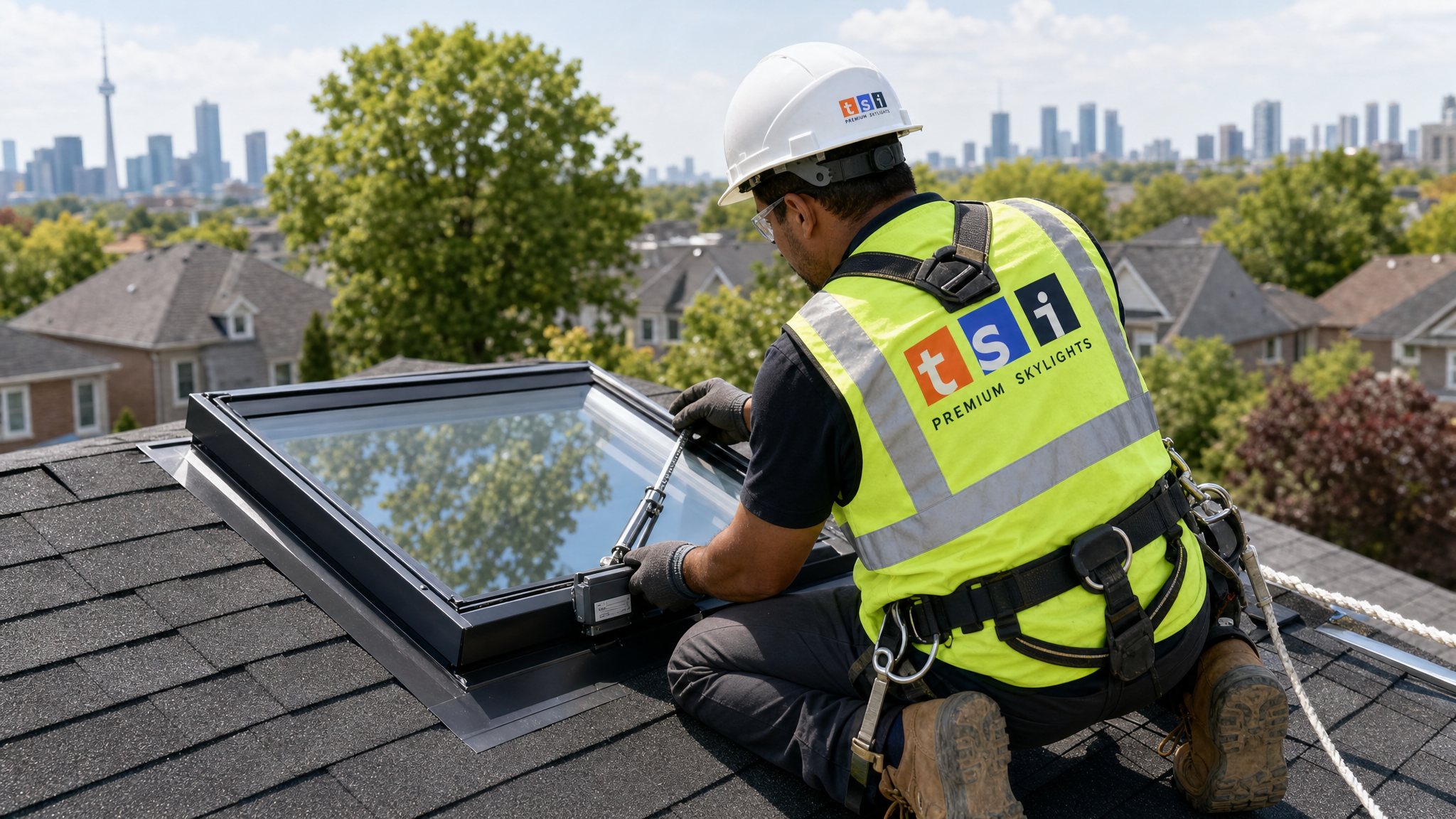
Blinds: Manual, Electric, and Solar Compared
Blinds are where most homeowners get the fastest comfort improvement, because Toronto’s combination of bright summer sun and dark winter mornings makes light control essential. VELUX offers blinds in three control types and several light-management styles. Blackout blinds block light fully and are ideal for bedrooms; light-filtering blinds soften daylight for living spaces; and venetian and pleated styles offer adjustable diffusion. The control type, manual versus electric versus solar, is a separate decision from the light style.
Manual blinds are operated by hand or by a control rod and have no power requirement, making them the most affordable and the most reliable over decades. Electric blinds are wired and operated by remote, suiting new builds or renovations where wiring is accessible. Solar blinds are the most popular retrofit choice in the GTA because they require no wiring; a small roof-mounted solar panel charges an internal battery, and the blind is controlled by remote or integrated into VELUX ACTIVE. For an existing skylight where running wires would mean opening a finished ceiling, the solar blind is almost always the practical answer.
The energy logic matters in our climate. A blackout or light-filtering blind on a south-facing skylight can meaningfully cut summer heat gain, reducing air-conditioning load, while the same blind retains heat on cold winter nights. When paired with a solar-powered fresh-air skylight, the blind and the venting work together to manage indoor temperature without any wiring at all.
| Blind Type | Installed Cost (CAD) | Wiring Needed | Best For |
|---|---|---|---|
| Manual blackout | $160 to $260 | No | Accessible bedrooms |
| Manual light-filtering | $150 to $240 | No | Living and dining areas |
| Solar blackout | $300 to $480 | No | High or hard-to-reach units |
| Solar light-filtering | $290 to $460 | No | Retrofits without wiring |
| Electric blackout | $320 to $520 | Yes | New builds and renovations |
| Venetian (manual) | $180 to $300 | No | Bathrooms and kitchens |
Matching Accessories to Your Skylight Type and Home
The right combination of VELUX skylight automation accessories depends almost entirely on which unit you have or plan to install. A fixed skylight, which does not open, only ever takes a blind. A manual fresh-air unit can run a manual or solar blind today and accept a solar operator conversion later. An electric fresh-air skylight is best paired with electric blinds and integrates seamlessly into VELUX ACTIVE. Sun tunnels are a special case: a sun tunnel skylight can accept a dimmer or a solar night-light kit but does not open and does not use blinds in the conventional sense.
Roof type also constrains choices. On low-slope and flat roofs common to many Toronto additions and modern builds, a flat-roof skylight uses a specific curb and operator assembly, and not every blind style fits the flat-roof cover. This is why a professional assessment beats ordering accessories blind. Getting the unit, blind, and control type to agree the first time avoids costly returns and re-installation.
For homeowners replacing aging units, an accessory upgrade is the natural moment to modernise. A skylight replacement lets you move from a manual unit with no light control to a solar fresh-air unit with a solar blind and full VELUX ACTIVE integration in a single visit, with the new flashing and accessories warranted together.
| Skylight Type | Opens? | Recommended Accessories | Automation Path |
|---|---|---|---|
| Fixed skylight | No | Solar or manual blind | Blind automation only |
| Manual fresh-air | Yes (manual) | Solar blind + rod | Solar operator retrofit |
| Solar fresh-air | Yes (motor) | Solar blind, rain sensor | Full VELUX ACTIVE |
| Electric fresh-air | Yes (motor) | Electric blind, rain sensor | Full VELUX ACTIVE |
| Flat-roof skylight | Some models | Compatible flat-roof blind | Model-dependent |
| Sun tunnel | No | Dimmer or night-light kit | Lighting control only |
Installation, Cost, and the Long-Term Value Picture
Installing VELUX skylight automation accessories ranges from a quick same-visit add-on to a more involved retrofit, depending on the accessory and whether wiring is required. A solar blind on an existing accessible skylight is often a single-hour job. Adding a solar operator to a manual fresh-air unit requires accessing the hinge and frame and takes longer. Setting up VELUX ACTIVE involves mounting the sensors, plugging in the gateway, pairing the units, and configuring the climate rules to your home’s layout.
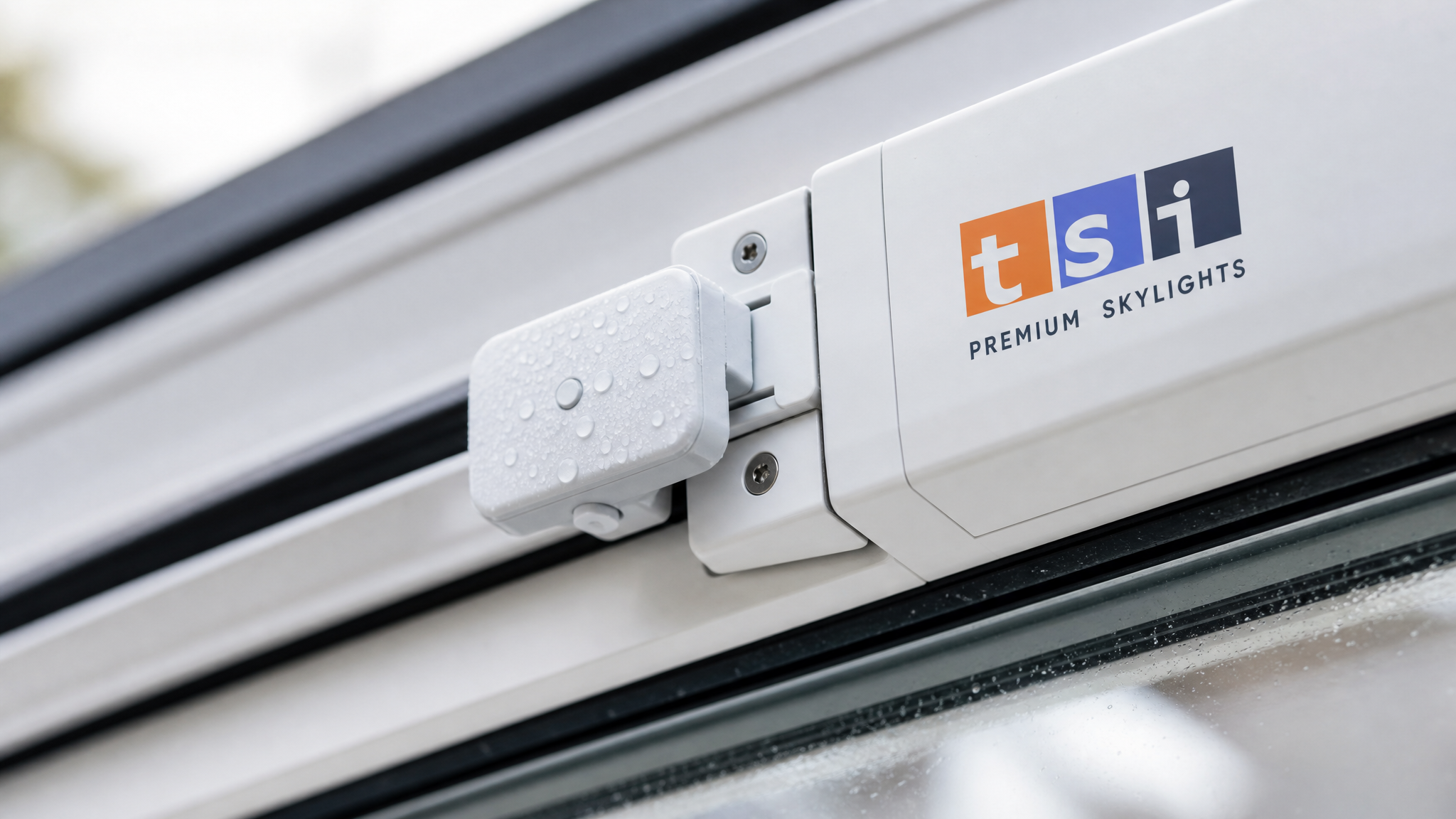
The value calculation in the GTA favours automation more than many homeowners expect. Reduced cooling load from automatic shading, prevented water-damage claims from the rain sensor, and the convenience of climate-driven venting all compound over the ten-to-twenty-year life of a quality skylight. For new units, having the accessories installed at the same time as a new skylight installation is more economical than retrofitting later, because the labour overlaps and the warranties align.
It is also worth noting that accessories age. Solar panels and sensor batteries have finite lives, and a failed operator on an otherwise sound skylight is a common service call. If an automated unit stops responding or a motor jams, that is a job for emergency skylight repairs rather than a full replacement. Knowing the difference saves homeowners thousands.
| Service | Typical Duration | Installed Cost (CAD) | Notes |
|---|---|---|---|
| Solar blind add-on | 30 to 60 minutes | $300 to $480 | No wiring required |
| Solar operator retrofit | 1 to 2 hours | $280 to $520 | Converts manual to motorised |
| VELUX ACTIVE setup | 1 to 2 hours | $350 to $700 | Sensors, gateway, pairing |
| Rain sensor service | Under 1 hour | $120 to $250 | Cleaning or replacement |
| Full unit + accessories | Half day | $1,400 to $2,800 | Aligned warranties |
What are the most useful VELUX skylight automation accessories for a Toronto home?
Is VELUX ACTIVE worth it compared to manual blinds and a remote?
Can I add automation accessories to a manual skylight I already own?
Do VELUX skylight automation accessories require Wi-Fi or wiring?
Does the rain sensor stop my skylight from ever leaking?
How much do VELUX skylight automation accessories cost installed in the GTA?
Get the Right VELUX Skylight Automation Accessories Installed Today
Matching the right blinds, sensors, and VELUX ACTIVE controls to your specific skylights is far easier with a certified dealer who fits these systems across the GTA every week. Toronto Skylight Installers assesses your unit type, roof pitch, and ceiling height, then recommends the most cost-effective combination of VELUX skylight automation accessories for your home, with aligned warranties on the unit and the accessories together.
Call us today at (416) 365-7557 or book a free skylight consultation to find out exactly which automation accessories fit your skylights and your budget.
Toronto Skylight Installers proudly serves homeowners across Toronto and the GTA, from Mississauga and Oakville to Vaughan, Markham, and beyond, as a certified VELUX dealer for installation, replacement, and automation accessories.