

A venting skylight bathroom is one of the nicest rooms in a house: daylight on the tile, a patch of sky above the tub, and a sash you can crack open to let a cloud of steam roll out. The question we hear most from homeowners planning one is simple: if the skylight opens, can I skip the exhaust fan? The honest answer is no, and the reasons have less to do with rules on paper than with how moisture behaves in a Canadian house from October to April.
Here we cover what an opening skylight does well, where it falls short, why glass and frames sweat, and how to pair the skylight with a properly ducted fan, whether you are renovating or just wondering why an existing unit drips now that the nights are turning cold.
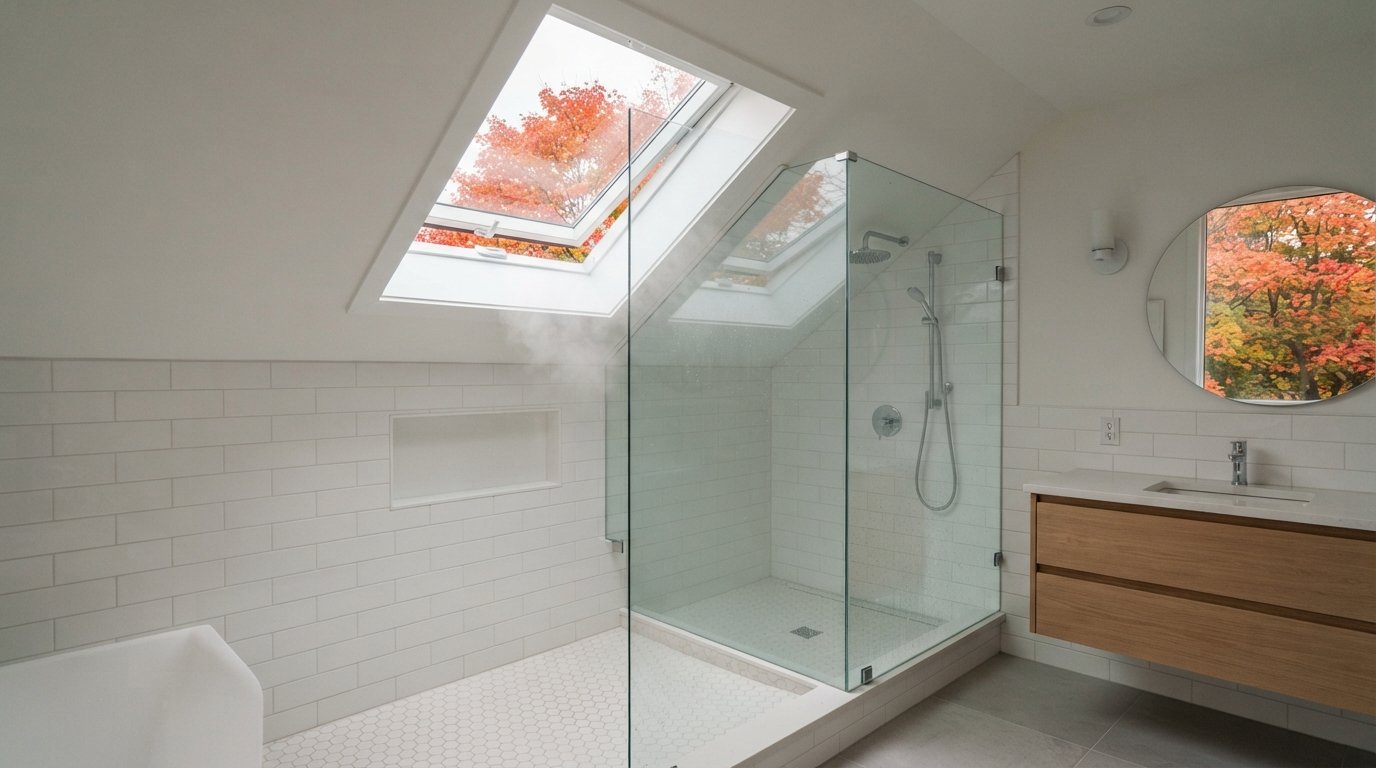
What a venting skylight bathroom gains from an opening sash
Warm, humid air rises. After a shower, the hottest and wettest air collects at the ceiling, and an opening skylight sits right at that high point. Open the sash a few centimetres on a mild, breezy autumn day and the mirror often clears faster than it would with the door shut and nothing running.
Light is the other gain. Many bathrooms have no room for a wall window, and a skylight puts daylight on the vanity without giving up privacy. A room that dries faster between uses grows less mould in the grout.
How the sash opens matters more in a bathroom than in most rooms, because a skylight that is awkward to open simply stays shut:
- Manual units open with a crank or a pole. They are simple and reliable, but on a high ceiling they tend to get opened less often. Our page on manual fresh-air skylights explains how they are set up.
- Electric units run from a wall switch or remote, and most include a rain sensor. For a high or sloped bathroom ceiling, electric fresh-air skylights with automatic rain sensors are usually the most practical choice, because you can open them after every shower without a ladder.
- Solar-powered units work like electric ones but charge from a small panel on the skylight, so no cable has to be fished through a finished ceiling. See our solar-powered fresh-air skylight page for details.
Why the skylight cannot replace the fan
An opening skylight is passive ventilation. It only moves air when something pushes air through it: a temperature difference, a breeze across the roof, or pressure from elsewhere in the house. A fan is active ventilation. It pulls a predictable volume of air out every minute it runs, whatever the weather is doing.
The skylight is shut for half the year
From late autumn until spring, most people keep their skylights closed. Opening a sash in freezing weather dumps heat, chills the room, and lets wet air condense and freeze on the seals. So the months when a bathroom produces the most condensation, because indoor air is heated and outside surfaces are cold, are exactly the months when the skylight is not venting at all.
Rain, darkness and wind
Showers happen at 6 a.m. and during autumn downpours. If the rain sensor has closed the sash, or you forget to open it, there is no ventilation. Wind across a roof can also push cold air down into the room rather than drawing steam out, and a range hood or dryer running elsewhere can pull air in through any opening. A fan sets the direction of airflow; a skylight only provides a hole.
What the codes generally expect
In general terms, current Ontario Building Code ventilation requirements for new houses expect mechanical exhaust in bathrooms rather than an openable window or skylight alone, and renovations under a permit are often reviewed against current rules. What applies depends on the scope and whether a permit is involved, so confirm with your municipal building department or designer before finalizing plans. A venting skylight bathroom should not be planned without a fan unless your building official has confirmed that is acceptable for your situation.
| Factor | Venting skylight | Ducted exhaust fan |
|---|---|---|
| Works in freezing weather | Usually kept closed, so little or no ventilation | Runs normally year round |
| Predictable airflow | Depends on wind, temperature and house pressure | Close to rated airflow when ducted correctly |
| Works during rain | Rain sensor closes electric and solar models | Unaffected |
| Natural light | Yes, often the main reason to install one | None |
| Fresh air on mild days | Excellent, large opening at the highest point | Removes air but brings in no breeze |
| General code expectations for bathroom exhaust in new work | Generally not sufficient on its own; confirm locally | Generally yes when sized, ducted and terminated properly |
Condensation on skylight glass and frames
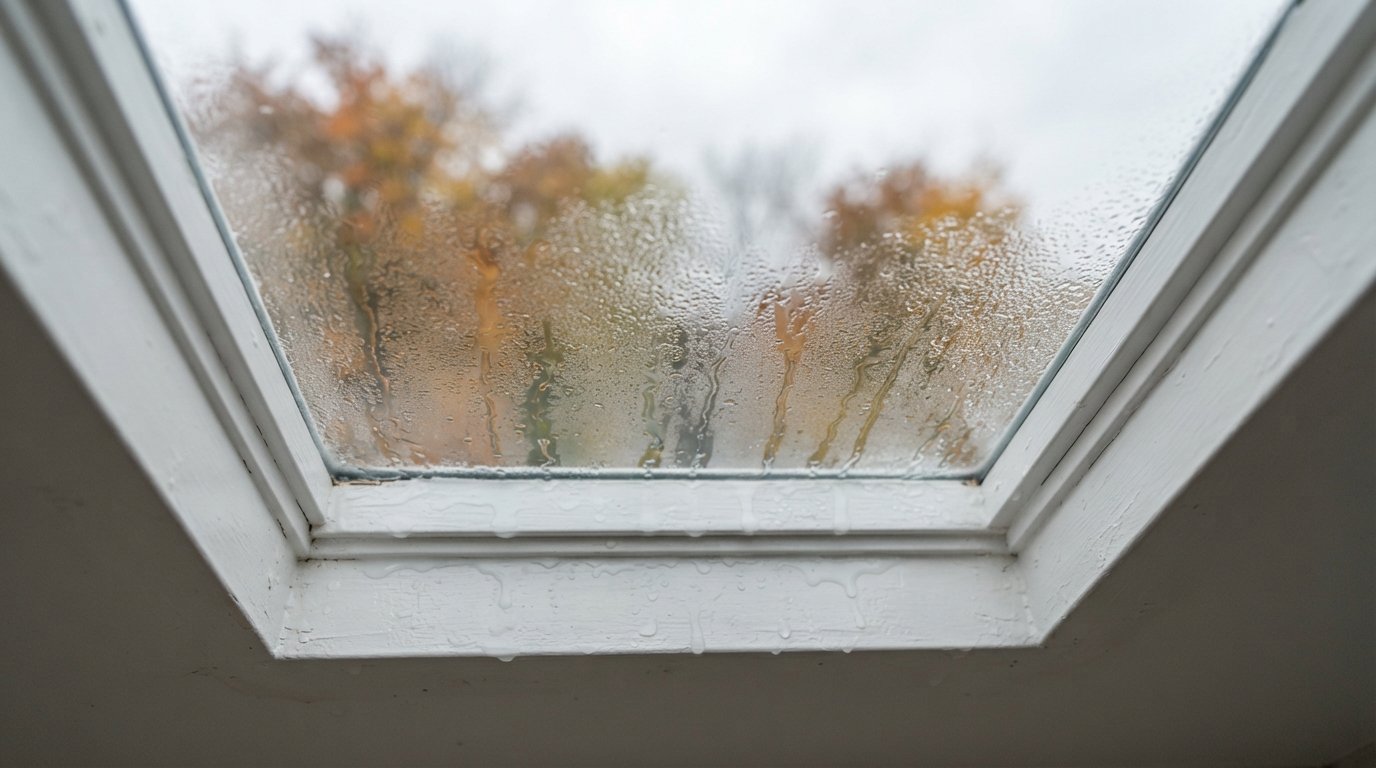
Condensation forms when warm, moist air touches a surface colder than its dew point. After a hot shower almost any cool surface will fog, and the skylight is often the coldest surface in the room: it faces the open sky, which draws heat away at night, and it sits where the wettest air collects. In a venting skylight bathroom, each part of the unit sweats for a different reason:
- The centre of the glass fogs first on older units. Insulated glass with a low-e coating and gas fill keeps the inner pane warmer, though no glass is immune in a steamy room.
- The glass edges run colder than the centre because the spacer between panes conducts heat. Warm-edge spacers help, but a band of moisture along the bottom edge on cold mornings is common.
- The frame and sash can be colder still, especially metal frames on older skylights. Water collects on the lower rail and runs onto the shaft.
- The shaft passes through a cold attic. Thin insulation or unsealed drywall seams leave its surfaces cold and wet, and the paint blisters or grows mould.
Telling condensation from a leak
Condensation appears after showers and on cold mornings even when it has not rained for days. A leak appears during or after rain, often with a particular wind direction, and can worsen when wet autumn leaves pack against the upper side of the skylight. Water on dry, cold days points to humidity and the fan. Water only with rain points to flashing, seals or glass, and our skylight repair service can trace the source.
| What you see | Most likely cause | What usually fixes it |
|---|---|---|
| Glass fogs after every shower and clears within an hour | Normal steam with weak or no exhaust | Run a ducted fan during the shower and for a while after |
| Drips from the frame on cold, dry mornings | Condensation on a cold frame or glass edge | Better exhaust, lower humidity, possibly a better insulated unit |
| Mould or peeling paint on shaft walls | Cold shaft from missing insulation or air leaks | Insulate and air seal the shaft, moisture resistant board and paint |
| Fog trapped between the two panes | Failed insulated glass seal | Glass or unit replacement; cleaning will not fix it |
| Stain only during or after rain | Flashing, seal or glass leak | Professional leak investigation and repair |
Rain sensors and closing up before winter
Most electric and solar venting skylights sold in Canada come with a rain sensor, a small pad on the exterior frame that detects droplets and tells the motor to close. It is what makes an opening skylight practical over a bathroom: you can leave it open after a morning shower and trust it to shut if a storm rolls in.
- The sensor sits outside, so leaves and grime can cover it. Have it cleaned during professional skylight maintenance rather than going onto the roof yourself.
- It reacts to water, not wind. On a gusty, dry day an open sash can still be caught by wind, so close it before a forecast windstorm.
- Solar models rely on the battery. Short autumn days and leaves on the panel reduce charging, so a unit that hesitates or stops partway may need the battery or panel checked.
As October turns to November, most Ontario households stop opening their skylights. Before then, close the unit fully and check that the sash seals evenly. A flattened or torn seal lets wet air into the gap between sash and frame, where it condenses and can freeze, so have worn seals looked at before the cold settles in.
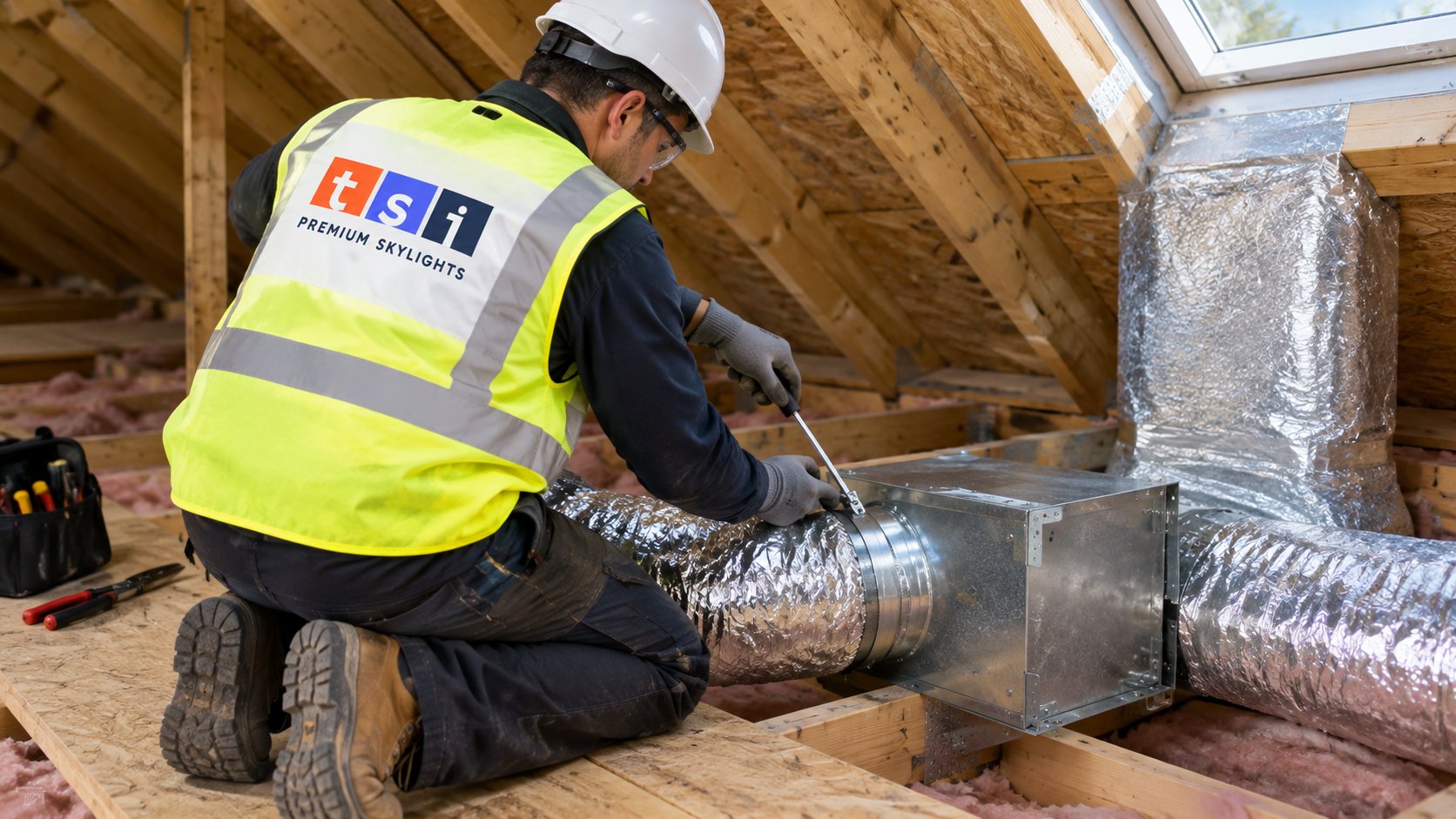
Pairing a venting skylight bathroom with a properly ducted fan
The best venting skylight bathroom treats the fan as the workhorse and the skylight as the bonus. The fan handles every shower, all year; the skylight adds daylight and a quick purge when the weather allows. Getting the fan right involves decisions that renovations often skip.
Size and noise
A common North American rule of thumb is about one cubic foot per minute (CFM) of airflow per square foot of floor in a typical bathroom with an ordinary ceiling, with a minimum of around 50 CFM. Large rooms, tall ceilings and steam showers may need more. Rated airflow is measured under test conditions, and long or kinked ducts reduce it, so a fan that is borderline on paper often under-performs. Noise is rated in sones, and a quiet fan is one people actually leave running. Confirm sizing against current code and the manufacturer’s guidance.
Duct it all the way outside
The fan must discharge outdoors through its own roof or wall termination with a backdraft damper. It should never dump into the attic, and it should not just point at a soffit vent, where moist air can be drawn straight back in through the intake vents. Insulate the duct through the attic so warm air does not condense inside it and drain back into the fan, and keep the run short, straight and free of sagging loops.
Location and controls
Put the fan near the shower or tub to capture steam at the source, and keep it away from the skylight shaft. A fan right beside the shaft can short-circuit, pulling air from the well instead of the wet part of the room. A fan over a tub or shower must be rated for that location, and the wiring should be done by a licensed electrical contractor with an ESA notification where required. A countdown timer or humidity-sensing switch keeps it running after you leave, which is when most of the drying happens; about 20 minutes after a shower is a common habit, but a humidity control removes the guesswork.
Shaft details that keep the ceiling dry
In a venting skylight bathroom under an attic, the shaft running from roof deck to ceiling is part of the building envelope, and it handles more moisture than any other shaft in the house.
- Insulate the shaft walls to exterior-wall standard or better. Gaps in batt insulation around a shaft are a common cause of cold, wet drywall.
- Air seal the joint between shaft and ceiling and every drywall seam on the attic side. Moist bathroom air leaking into the attic can frost on the underside of the roof deck in winter and drip back down in a thaw.
- Use moisture resistant drywall and a good bathroom paint.
- Keep attic ventilation clear. Framing the shaft must not block the baffles at the eaves.
When our skylight installation, replacement and repair team in Halton Region replaces a bathroom skylight, the shaft is checked as part of the job, because a new unit on top of a cold, leaky shaft will still drip.
Choosing the right unit and glass
Ceiling height and roof slope narrow the choice for a venting skylight bathroom quickly. A small ensuite with a tall, sloped ceiling benefits most from an electric or solar unit, because a pole would rarely be used. A bathroom in an attic conversion, with the ceiling right under the roof, may suit a manual roof window you can reach by hand. Under a flat roof, curb-mounted venting units are available, but they need careful flashing and the right curb height.
For glass, look for insulated glazing with a low-e coating designed to keep the inner pane warmer, and consider obscured glass if a taller house next door looks down on the skylight. Skylight blinds help with privacy but trap moist air against the glass, so open them after showers.
| Option | Best suited to | Things to consider | Rough installed range (estimate) |
|---|---|---|---|
| Fixed skylight plus ducted fan | Rooms where light is the goal | No opening, lowest maintenance | Often about $2,000 to $4,500 for the skylight work |
| Manual venting skylight plus fan | Reachable ceilings, attic conversions | Opened less often on tall ceilings | Often about $2,500 to $5,000 |
| Electric venting skylight plus fan | Tall or sloped ceilings, ensuites | Needs wiring; rain sensor on most models | Often about $3,000 to $6,000 |
| Solar-powered venting skylight plus fan | Finished ceilings where wiring is hard | Battery and panel need occasional service | Often about $3,200 to $6,200 |
These are broad estimates only. Cost for a venting skylight bathroom project depends on unit size, roof type, access and shaft condition, the fan and electrical work are usually priced separately, and only a site visit gives a real number.
Mistakes to avoid in a venting skylight bathroom
- Removing the fan during a renovation because the new skylight opens. The room is fine in summer and drips by midwinter.
- Venting the fan into the attic or leaving the duct disconnected, which wets insulation and roof sheathing.
- Leaving the sash cracked open overnight during the first cold snaps, which frosts the frame and wears the seals.
- Re-caulking the roof side again and again when the real problem is indoor humidity.
- Ignoring a fogged sealed unit. Once moisture is between the panes, the inner pane runs colder and condensation gets worse.
Before you sign, ask which operator suits your ceiling, what insulation and air sealing the shaft will get, whether a permit is needed, and who will confirm the fan duct runs outdoors. Warranties on glass, motors and flashing vary by manufacturer, and the current warranty documents for your chosen unit spell out the terms.
Can an opening skylight replace a bathroom exhaust fan?
Why does my bathroom skylight drip on cold mornings when it has not rained?
Should I open my bathroom skylight in winter?
What does the rain sensor on a venting skylight do?
Where should the bathroom fan go if there is a skylight?
Does fog between the panes mean I need a new skylight?
Planning a venting skylight bathroom that stays dry all year
An opening skylight and a well-ducted fan make a strong pair: daylight and fresh air when the weather is mild, and reliable moisture control when it is not. Toronto Skylight Installers can help you choose the right unit, check the shaft and flashing, and coordinate with your electrician or renovator so the fan and skylight work together.
Call us today at (416) 365-7557 or request a free estimate.
Bathroom skylight installation and repair for homes in Halton Region and the wider GTA.