

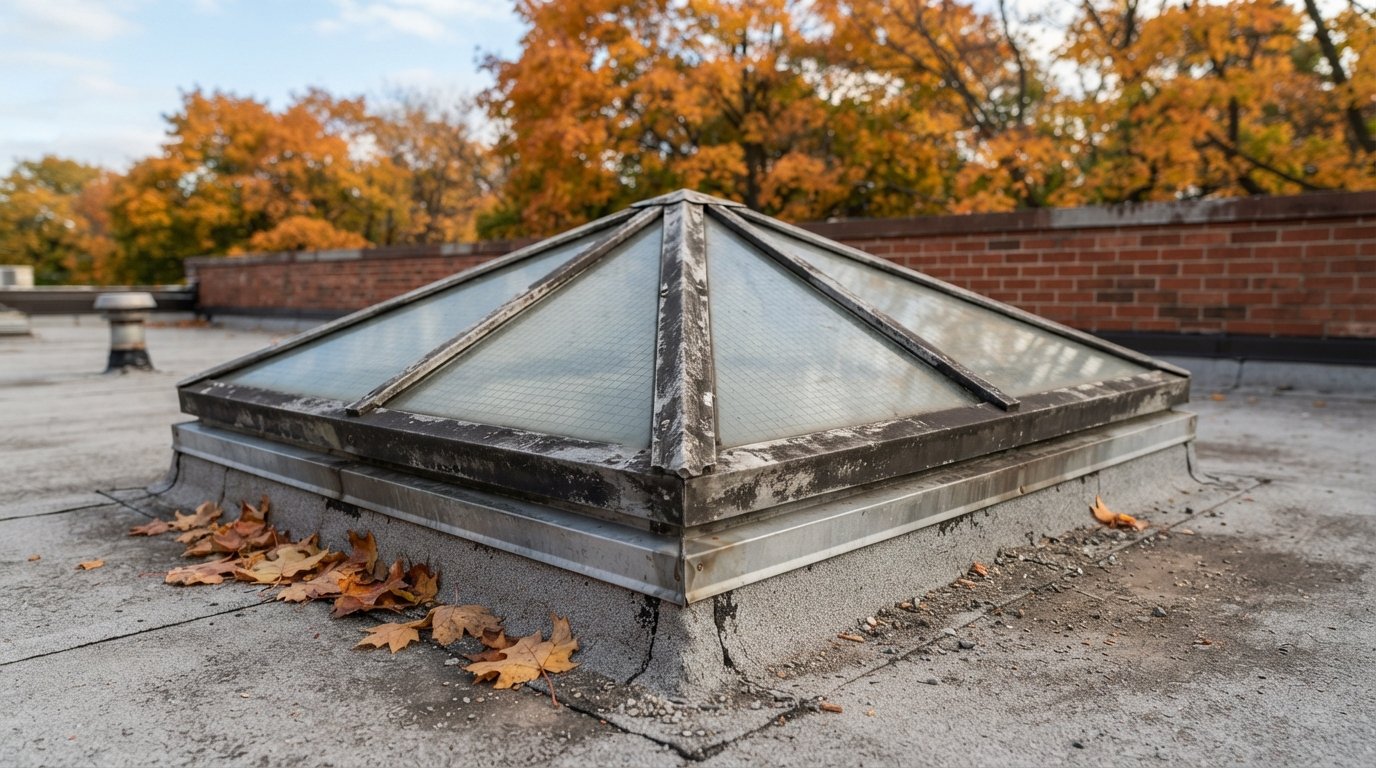
If you look up at an older skylight in a school, church hall, plaza, warehouse or mid-century house and see a grid of fine steel wire running through the glass, you are looking at a wired glass skylight. For decades it was the standard choice for overhead glazing. Today many of these units are at the end of their service life, and owners usually find out when a crack appears, a frame starts leaking during autumn rain, or an insurer or property manager asks questions about the glass.
The sections that follow explain what wired glass is, how it differs from tempered and laminated safety glass, why older units crack and leak, and what the realistic replacement options look like for commercial and residential buildings.
What a wired glass skylight is and why it was used
Wired glass is ordinary annealed glass with a steel wire mesh embedded in it during manufacturing. The mesh is usually a square or diamond grid. Some wired glass is polished smooth on both faces so you can see through it; much of what was used in skylights is patterned or rough-rolled, which lets light through but blurs the view.
The wire was never meant to make the glass stronger. Its job is to hold the pieces together when the glass breaks. That made it attractive for two purposes:
- Overhead glazing. Glass above people’s heads needs to stay put if it breaks. When a wired glass skylight cracks, the mesh usually keeps the shards in the frame rather than letting them fall into the room below.
- Fire resistance. Wired glass was long used where glazing had to resist fire for a period of time, because the mesh keeps the softened, cracked glass in its opening. That is why you also see it in older fire doors, stairwells and corridor windows.
It was also relatively inexpensive and easy to cut on site compared with early safety glass, which made it common on large commercial and institutional skylights, sloped glazing over atriums, and some residential units from the 1950s through the 1980s.
How wired glass differs from tempered and laminated glass
The terms get mixed up, and the differences matter when you plan a replacement. In general terms, here is how the main glass types behave:
- Annealed glass is standard glass that breaks into large, sharp pieces.
- Wired glass is annealed glass with a mesh. It breaks as easily as annealed glass, and often more easily, because the wire creates weak points and edge defects. The mesh holds the fragments, but the jagged glass and exposed wire can still cut anyone who strikes it.
- Tempered glass is heat-treated to be much stronger than annealed glass and breaks into small, relatively blunt pieces. Those pieces can still fall if nothing holds them.
- Laminated glass is two or more layers bonded with a plastic interlayer. When it breaks, the interlayer holds the fragments together, much like a car windshield.
Wired glass cannot be tempered, because the embedded wire prevents the glass from going through the heat treatment cleanly. That is one reason it has been largely replaced by laminated glass, by insulated units with a laminated inner pane, and by specialty fire-rated glazing where fire resistance is required.
Codes and standards for safety glazing and overhead glazing have changed over the years, and the rules that apply depend on the building type, the location of the glazing and whether it forms part of a fire separation. For any replacement, confirm current requirements with your designer, the glazing supplier and the local building department rather than assuming the old glass type is still acceptable.
| Glass type | How it breaks | Strength compared with plain glass | Typical modern role in skylights |
|---|---|---|---|
| Wired glass | Cracks, mesh holds jagged pieces in place | Similar or lower | Found in older units; rarely chosen for new residential skylights |
| Tempered glass | Shatters into small, blunt pieces | Much higher | Common as the outer pane of insulated skylight glass |
| Laminated glass | Cracks, interlayer holds pieces together | Similar for a single layer, better retention | Common as the inner pane facing the room |
| Insulated unit, tempered outer and laminated inner | Outer pane resists impact, inner pane retains fragments | Higher overall | A common configuration for residential skylights |
| Specialty fire-rated glazing | Depends on product | Depends on product | Used where glazing must meet a fire rating |
Why older wired glass cracks
Owners often see a crack in a wired glass skylight and assume something hit it. Sometimes a branch or a dropped tool is to blame, but many cracks have nothing to do with impact.
Thermal stress cracks
When sun heats the middle of a pane while the edges stay cool inside the frame, the glass expands unevenly and stress builds at the edges. Annealed glass has limited tolerance for that stress, and wired glass has even less because the cut ends of the wire leave tiny flaws along the edge. A thermal crack typically starts at the edge, at roughly a right angle to it, and then wanders across the pane. Autumn days with bright sun after cold nights, or sun moving off a shaded section, can be enough to trigger it on aged glass.
Rusting wire at the edges
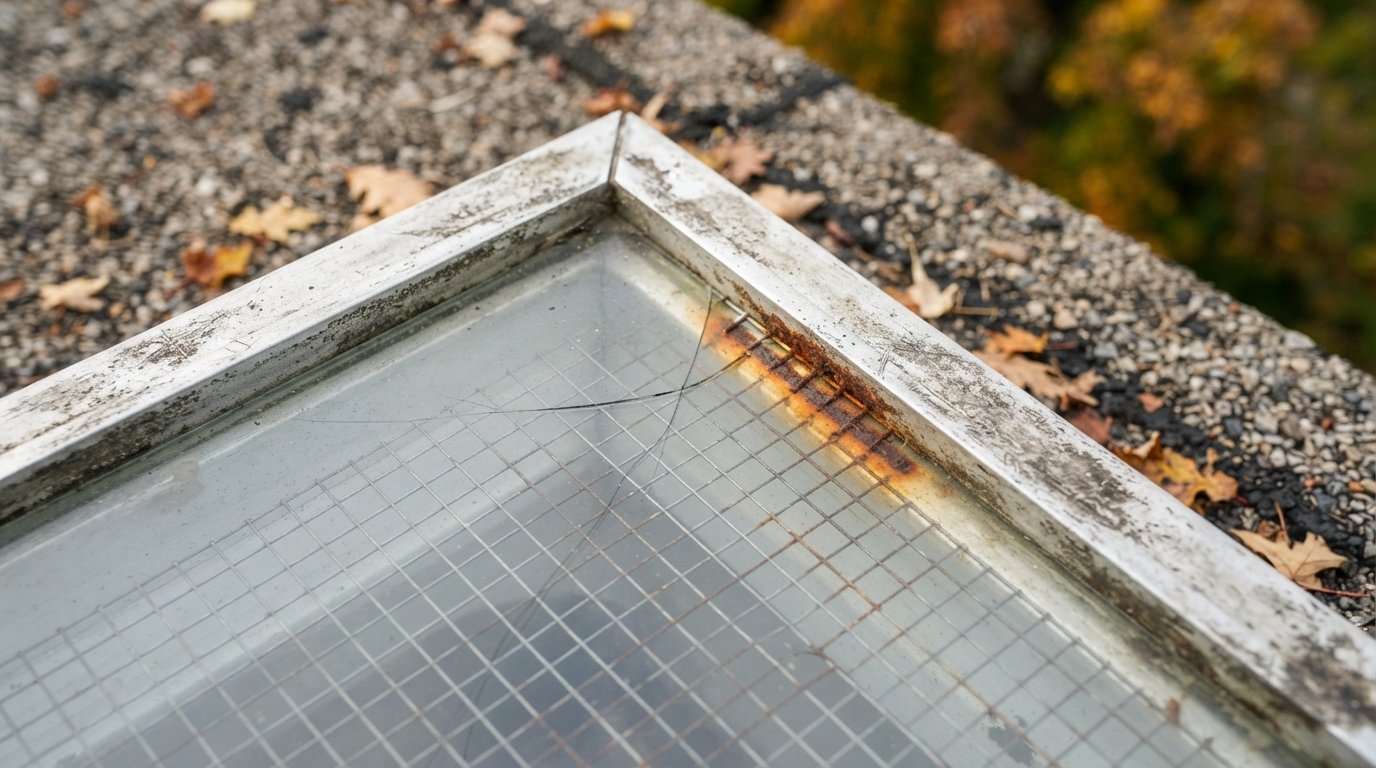
Where the glass is cut, the ends of the wire mesh are exposed. If water sits in the glazing rebate because the sealant has failed or the weep holes are blocked, the wire rusts. Rust takes up more space than the original steel, and that expansion can split the glass from the edge inwards. You may see brown staining along the frame line or small cracks spreading from the edge of the pane.
Frame movement
Older metal frames expand and contract with the seasons, and roofs deflect under load. If the glass is held too tightly, or settling blocks have shifted, the pane can be pinched. Repeated cycles over many years can crack glass that otherwise looks sound.
A cracked pane in a wired glass skylight usually stays in place for a while, but it should not be left indefinitely. The crack lets water into the frame, the wire keeps rusting, and the pane gets weaker every season.
Leaks at old skylight frames
On most older commercial skylights, the glass is not the main leak source. The frame is. Typical problems include:
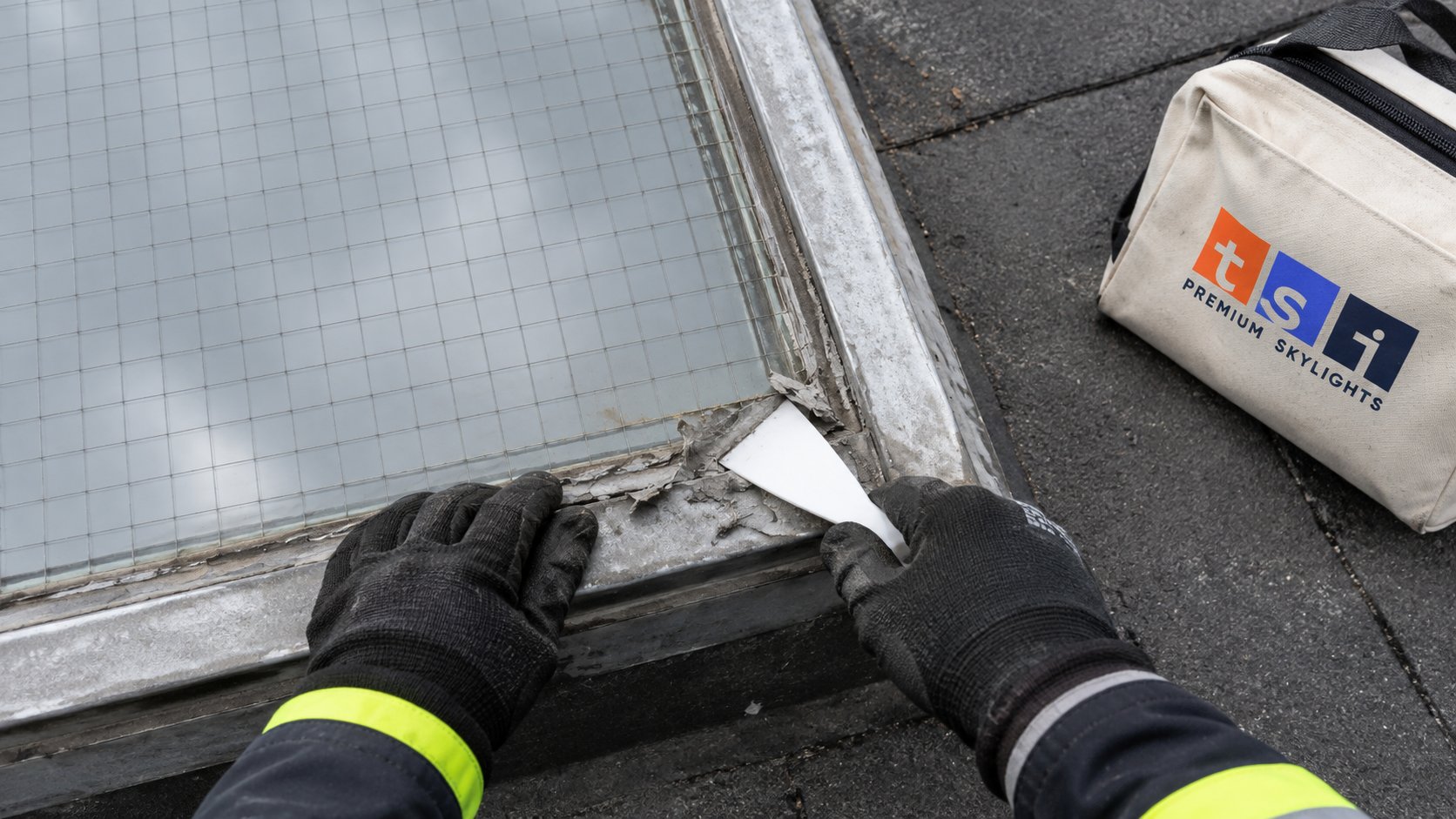
- Dried-out putty or glazing tape that has shrunk away from the glass, letting rain run straight into the rebate.
- Failed cap sealant along glazing bars on ridge and hip skylights.
- Blocked weep holes and condensation gutters. Many older frames were designed to collect condensation and minor water in an internal gutter and drain it outside. When those channels fill with dirt and leaf debris, the water overflows into the building.
- Corroded steel frames on very old units, where rust has eaten through or swollen the metal.
- Curb and membrane failures at the base of the skylight, where the roofing meets the curb. On flat roofs this is often where water really gets in, and it needs to be addressed together with the skylight.
Older units are also single glazed in most cases, so they run cold in winter and drip condensation onto floors and stored goods. Building operators sometimes chase this as a roof leak for years before realizing the water is forming on the underside of the glass.
Signs your wired glass skylight is due for replacement
Not every old unit needs replacing tomorrow, but certain signs point that way. This table helps sort out what you are seeing.
| What you notice | Likely cause | Usual direction |
|---|---|---|
| Crack starting at the edge of a pane | Thermal stress or edge rust | Replace the glass or the unit; check frame drainage |
| Brown staining along the frame line | Wire rusting where water sits in the rebate | Usually points to replacement rather than resealing |
| Drips during rain at a glazing bar | Failed cap sealant or putty | Short-term reseal; plan for replacement if frames are aged |
| Water at the base after storms | Curb flashing or membrane failure | Curb and roofing repair, often with skylight replacement |
| Dripping on cold mornings, no rain | Condensation on single glazing | Insulated replacement glazing, check drainage gutters |
| Broken pane, glass hanging in the mesh | Impact or advanced cracking | Make safe immediately, then replace |
A broken overhead pane is a safety issue. Keep people out from underneath, and call for emergency skylight repairs so the opening can be made safe and weathertight until permanent work is done. Leaks that are slow but steady can usually be handled through regular skylight repairs while you plan the bigger job.
Replacement options for older wired glass skylights
The right approach depends on the building, the size and shape of the skylight, the condition of the frame and curb, and whether the glazing has a fire or safety role. Most projects fall into one of four paths. For an overview of how we handle full units, see our page on skylight replacement for older and failing units.
Reglazing an existing frame
If a large commercial frame is structurally sound, it may be possible to remove the wired glass and install new glazing, such as laminated or insulated laminated units, with new gaskets and sealants. This keeps the frame geometry and avoids reworking the roof opening. It only makes sense if the frame can accept the new glass thickness and weight, and if its drainage system still works.
Replacing the unit on the existing curb
Many flat-roof skylights sit on a curb. If the curb is solid, dry and the right height above the roof surface, a new unit can be fitted to it, with new flashing tied into the roofing. This is a common route for smaller commercial skylights and for residential units on flat roofs. Our flat roof skylights page covers the types often used.
Rebuilding the curb and replacing the unit
If the curb is rotted, too low, or the membrane around it has failed, the curb is rebuilt or raised and the roofing is redone around it before the new skylight goes on. On low-slope roofs, a taller curb keeps water and debris away from the skylight’s edges, which is often where old units failed in the first place.
Switching to domes or a different system
Some owners choose acrylic or polycarbonate domes for warehouses, industrial buildings and service areas where clarity matters less than impact resistance and cost. Our commercial skylight domes and broader commercial skylights pages explain the options. For residential skylights, the usual replacement is a modern insulated unit, often with a tempered outer pane and a laminated inner pane.
| Approach | Suits | Trade-offs |
|---|---|---|
| Reglaze existing frame | Large frames in good structural condition | Frame must accept new glass weight and thickness; drainage must work |
| New unit on existing curb | Sound curbs of adequate height | Fast, but only as good as the curb and membrane underneath |
| Rebuild curb, then new unit | Rotted or low curbs, failed membrane | Larger scope, but fixes the usual root cause of leaks |
| Change to domes or another system | Industrial and service spaces, budget-driven projects | Different look and light quality; check fire and safety requirements |
Fire separations and other special cases
Before replacing any wired glass skylight in a commercial or institutional building, find out why wired glass was used. If the skylight forms part of a fire separation or sits close to a property line or another building, the replacement may need to meet a fire rating, and ordinary laminated or insulated glass may not qualify. Specialty fire-rated glazing products exist for this, but the requirement and the product choice belong with a designer, the glazing supplier and the building official. In a house, wired glass in a skylight is usually there because it was a common overhead choice at the time rather than for fire reasons, but check before assuming.
Other points to settle before work starts:
- Permits. Like-for-like replacement may not need one in some cases, while changes to the opening, structure or fire separations usually do. Confirm with the municipality.
- Roofing warranties. If the roof membrane is relatively new, coordinate with the roofer so cutting and flashing work does not affect their warranty.
- Occupied buildings. Schools, offices and stores may need work scheduled around occupancy, with protection below the opening while glass is out.
- Older materials. Very old glazing compounds, coatings and roofing materials may contain hazardous substances. If they are suspected, they should be tested before disturbance.
Wired glass in older homes
Wired glass also turns up in houses: on flat-roofed additions, sunrooms, old kitchen skylights and the occasional bungalow from the mid-century era. These are usually single glazed, uninsulated and prone to heavy condensation. Replacing them with an insulated unit typically improves comfort, cuts down on drips, and gives a chance to fix the curb and flashing at the same time.
For a typical residential unit, replacement cost often falls somewhere in the range of $1,800 to $4,500 per opening as a rough estimate, depending heavily on size, roof type, access and whether the curb, framing or interior finish needs work. Commercial projects vary far more and need a site assessment. Our Durham Region skylight installation, replacement and repair team and crews across the GTA handle both residential and commercial replacements.
When you ask for quotes, ask each contractor to explain what glass they propose and why, whether the curb and flashing are included, how the opening will be protected during the work, and what the manufacturer’s warranty covers. Warranty terms vary by product and are set out in each manufacturer’s current documents.
Is wired glass the same as safety glass?
Why did my old skylight crack without anything hitting it?
Can a cracked wired glass pane just be resealed?
What should a wired glass skylight be replaced with?
Where does the water come from when an old skylight drips on dry days?
Is a permit required to replace a wired glass skylight?
Planning your wired glass skylight replacement
Older wired glass did its job for a long time, but cracking, rusting edges and tired frames catch up with every unit eventually. Toronto Skylight Installers can inspect your skylight, explain whether reglazing, replacement on the existing curb or a full rebuild makes sense, and help you plan the work around your building.
Call us today at (416) 365-7557 or request a free estimate.
Serving homes and commercial properties across Durham Region and the wider GTA.